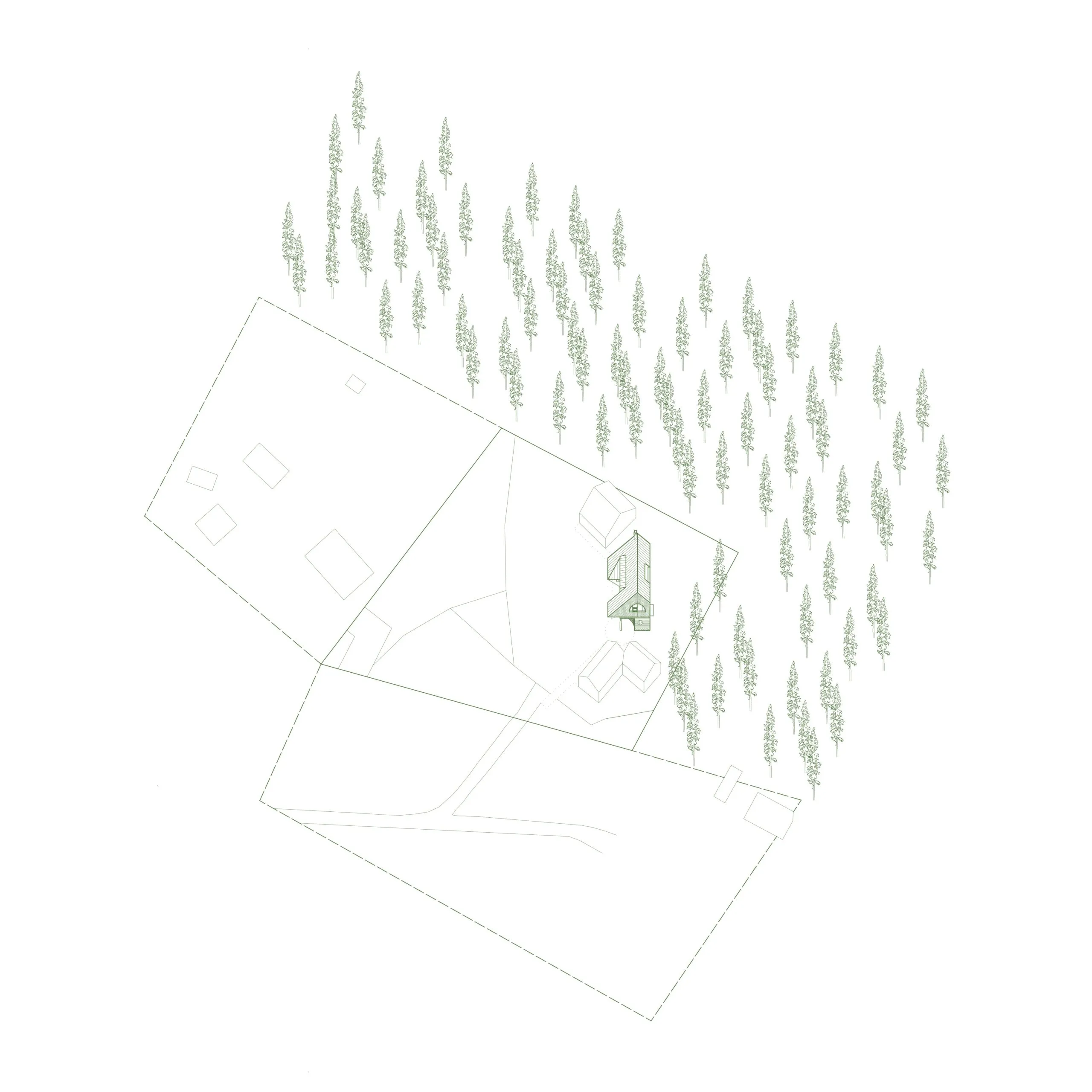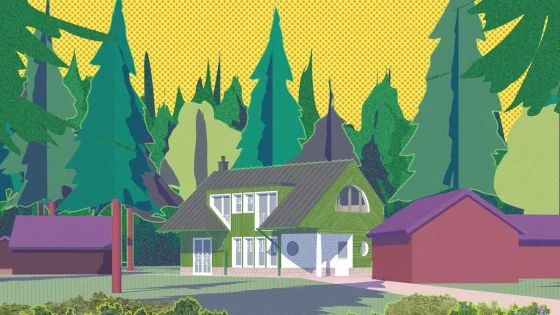
The 110m² family home on the edge of a forest, with views towards the Gulf of Bothnia, the northernmost arm of the Baltic Sea, will sit on a site currently occupied by two barns and a summer house.
The practice was commissioned by an English academic, who worked as an architect in London, and his Swedish partner, also an academic.
According to Charles Holland Architects, consent for the house was complicated by a 1980s local plan that, in principle, did not allow for new, two-storey houses to be built on the site.
However, the practice said it successfully made the case for an exception to the rule ‘based on both the specific qualities of the design and the logic of its siting and composition’, leading to an approval at a committee meeting.
Due to the long winter months, construction on site will be confined to the summer and be overseen by a yet-to-be-appointed Swedish architect.
The timber frame is expected to be fabricated offsite by a local company, ready for erection on foundations to be poured this summer.
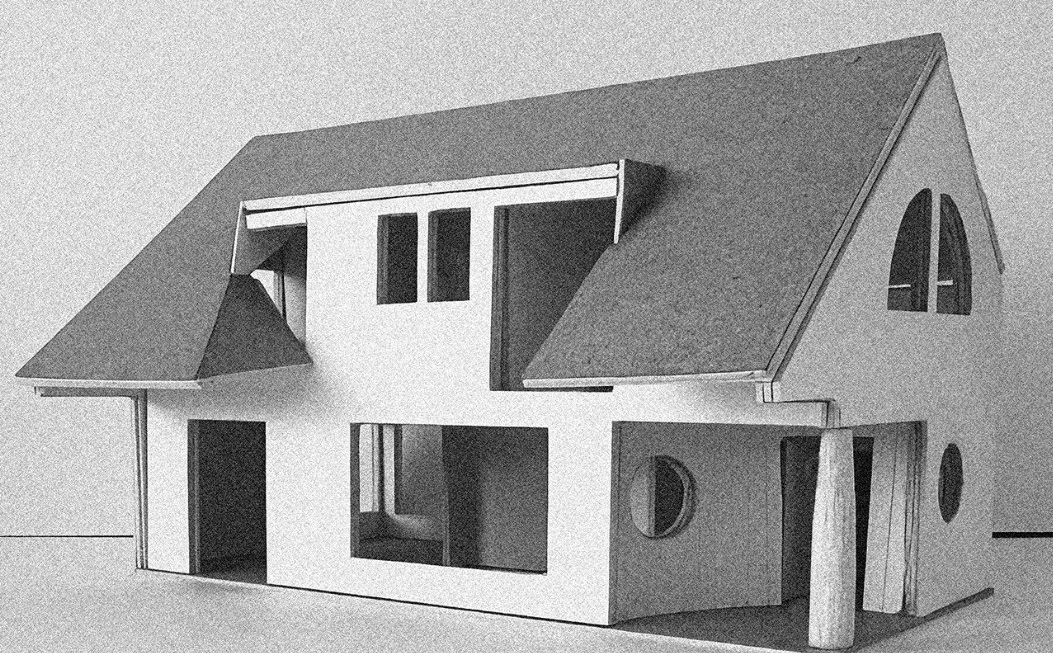
Model shot
Architect’s view
The design has been developed with careful regard to its setting. The form draws inspiration from historic examples of one-off Swedish houses that are more characterful than the typical rural vernacular. These houses might typically be described as ‘snickarglädje’ [carpenter’s joy] in reference to their decorative joinery, finely honed profiles and elaborate windows.
Other references to key Swedish houses of the early part of the 20th century, including examples by Peter Celsing and Gunner Asplund, have helped to elaborate an approach that combines traditional elements with modernist influences.
The house lies at the end of a long, straight track running between pine trees. It is positioned at an angle to this approach, a condition acknowledged by the circular ‘bite’ taken out of the plan to form a covered entrance porch. By being angled in this way, the house pulls the various other structures on the site together into a gentle arc of buildings facing an area of lawn with the forest behind.
The house is constructed in timber from the forest in which it sits
The form of the house is simple but with notable complexities. The overall massing is that of a single-storey house but with a central bay that pushes through the roofline to form an upper floor. This allows the house to conform broadly to the requirements of the local plan that dictate single-storey structures only, whilst offering an ‘inhabited loft’ with views towards the sea. Broad overhangs on the southern side protect the interior from the intense midsummer sun and help to shed the snow in winter.
The house is constructed from timber from the forest in which it sits, using traditional Swedish housebuilding techniques. It will be clad in timber boards laid in vertical, horizontal and diagonal directions to form patterns that accentuate the geometry. Rather than the typical red oxide paint used generally on rural Swedish houses, the exterior will be finished in a natural, mud-based paint. The deep green colour and rough texture of this paint will contrast with the bright white-painted joinery and smooth, pink concrete blocks that form a plinth.
The semi-circular porch leads to a circular vestibule which protects the interior from cold winds and snow. The ground floor is largely open plan but subtly zoned into cooking, dining and relaxing areas. The living areas face south across the lawn towards the sea while a large, glazed bay captures the afternoon sun from the west and allows views into the forest. The ground floor has been designed to provide a third bedroom complete with a fully accessible bathroom accessed via a glazed gallery that runs along the rear of the house.
Ceiling and floor timbers are painted in gloss powder-blue paint
Upstairs are two bedrooms, a shower room and a study that looks down over the dining area. A recessed balcony at the rear, faces the forest and lights the stair which is in the centre of the plan. Internally the house expresses its mode of construction with visible timbers and plywood linings.
On the ground floor, the walls are painted with a white wood stain while the ceiling and floor timbers are painted in gloss powder-blue paint. The kitchen units are yellow, and the stair balustrade is formed from a long, timber sapling. A green tiled stove provides a focus for the living area.
Charles Holland
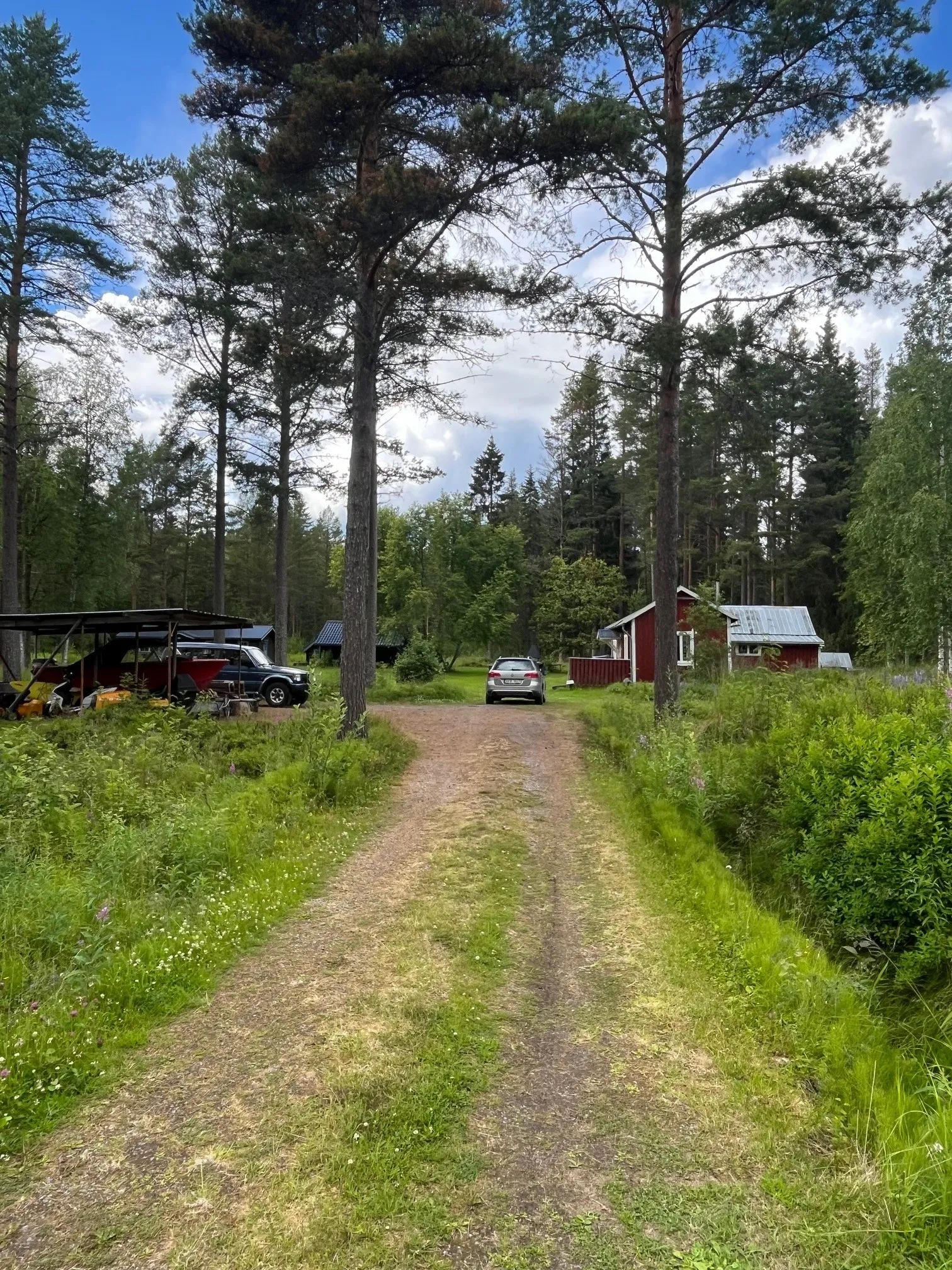
The site is currently occupied by two barns and a summer house
Project data
Location Byske, Sweden
Local authority Skellefteå
Type of project Single family house
Client Confidential
Architect Charles Holland Architects
Structural engineer To be confirmed
Quantity surveyor To be confirmed
Principal designer Charles Holland Architects
Main contractor To be confirmed
Funding Private
Tender date April 2026
Start on site Summer 2026
Completion Summer 2027
Contract duration 12 months
Gross internal floor area m² 110m²
Procurement Bespoke
Annual CO2 emissions To be confirmed
Total cost Confidential
Planning application reference BMN-2025-000149230