
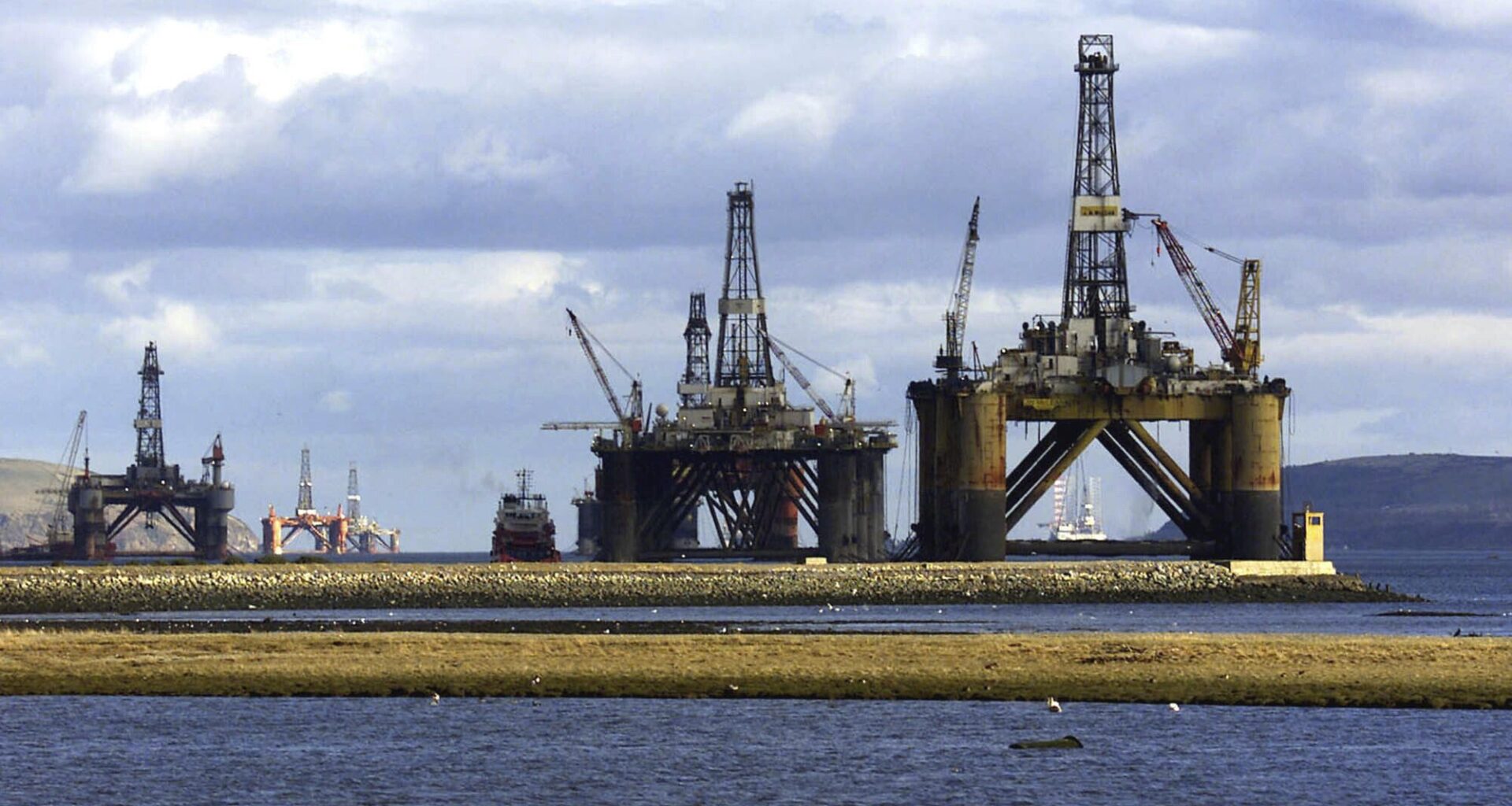
Energy prices have surged globally due to the US-Iran war, with prime minister Keir Starmer announcing measures in the UK to help people with the costs of rising bills.
A £53m fund was announced last week to help households that use heating oil to warm their homes and the new lower price cap for those using mains gas and electricity will come into place for three months in April.
A number of prominent political voices, including the leader of the Conservative Party, Kemi Badenoch, have said that “drilling in the North Sea is the answer to the energy crisis”.
We’ve spoken to experts to find out more.
How much does the UK rely on North Sea oil?
The UK currently uses North Sea oil, but only from drilling operations that were already in place before the end of last year – and these will only continue for their natural lifespan.
This is because on 26 November 2025 the UK government announced there will be no new oil and gas exploration licenses, becoming the largest economy to officially take this step.
The UK currently has hundreds of active offshore and onshore oil and gas production sites. Dr Hafez Abdo, an associate professor of accounting at Nottingham University who examines the role of the oil and gas industry in supporting the transition to net zero, told us that domestic production meets approximately 40 per cent of the UK’s oil demand, “with the remainder primarily imported from Norway”.
He also said that additional supply requirements are met through imports from other countries, including the United States, Saudi Arabia, Nigeria, and Kazakhstan.
Should new sites be used for more oil and gas production during the price surge?
FactCheck asked two experts if drilling for more oil in the North Sea would help the current energy price crisis caused by the US-Iran war.
The experts we spoke to told us that instead of opening up sites that have been closed, or drilling in new areas, it would be better to ramp up production in sites that are still active.
But why?
Dr Abdo told us that the UK should “prioritise accelerating production” from existing energy projects to “address potential short-term supply shortages”, as new drilling projects are “unlikely to provide immediate benefits” as they “typically require significant time before production begins”.
Drilling new areas would also be “ethically problematic,” he added, as it “contradicts” the UK’s net zero objectives and would therefore “undermine efforts to mitigate climate change risks and may slow the implementation of renewable energy initiatives”.
But Dr Abdo noted that drilling more in existing oil and gas sites during a price surge such as the one happening right now, would “just be a short-term solution”.
Would drilling active sites for more North Sea oil and gas bring energy prices down?
Drilling could be a short-term solution for providing more gas and oil, but it depends on the initiatives that the government takes – and the incentives they provide.
Dr Mark Ireland, a lecturer in energy geoscience at Newcastle University, told FactCheck that increased North Sea production “would be extremely unlikely to directly reduce energy prices”.
However, indirectly, the government revenues from the production “could be used to mitigate the volatility of the global market,” he said.
For example, when Russia invaded Ukraine in February 2022 and both wholesale and retail energy prices rose, the government introduced a series of policies, including the windfall taxes on energy producers via the energy profits levy (EPL).
Dr Ireland explained that while the revenue from EPL “was not directly ring fenced and went into general taxation”, it can be seen “as part of the government balancing the books when it comes to packages of support to insulate the UK from price spikes”.
Therefore, if companies were “incentivised to bolster production in the North Sea”, then using the revenue from taxation “could be used to support consumers,” he added.
However, Dr Abdo noted that any potential contribution of these existing fields to start with depends on a number of factors.
These include the “production capacity of the sites, the incentives provided, and the political will of the UK government to pursue this option”.
Dr Abdo said managing the prices is “challenging” because oil and gas prices are “largely determined by international markets rather than local factors”.
He explained that extra drilling is “unlikely to have a significant impact” on prices due to the influence of these international markets, and the UK government currently being “unwilling to reduce taxes or duties on energy consumption”.
Dr Abdo also noted that the government could potentially influence costs through measures such as “modest reductions in fuel duties at the pump,” but said this is “unclear whether such action would be politically feasible”.
What would a longer-term solution be?
Both Dr Abdo and Dr Ireland told us they think the UK government making further investments in renewables is the best course to continue on, and one which would help with price surges due to unprecedented events, such as the US-Iran war, in the future.
Ms Badenoch also mentioned renewables in an article she wrote about North Sea drilling.
She said that drilling for North Sea oil to help with the energy crisis “doesn’t mean throwing all progress with renewables out the window”, but means “drilling in the North Sea and expanding other sources of generation too”.
“This is the only way we can protect families from rising bills, keep the cost of energy down for business, and control inflation,” the Conservative Party leader added.
FactCheck verdict
It’s been suggested, including from leader of the Conservatives Kemi Badenoch, that the UK government should be drilling for more oil in the North Sea to help with the energy price crisis caused by the US-Iran war.
FactCheck spoke to two experts in the field, Dr Hafez Abdo and Dr Mark Ireland, who both told us that although drilling in active sites in the North Sea would be a better short-term solution compared to drilling in new areas, this wouldn’t be that directly effective in bringing prices down for the consumer.
They said that the UK government should continue its investment in renewable energy in order to both meet their net zero targets and be better prepared against rising prices should another unprecedented event, such as the war, happen in the future.