
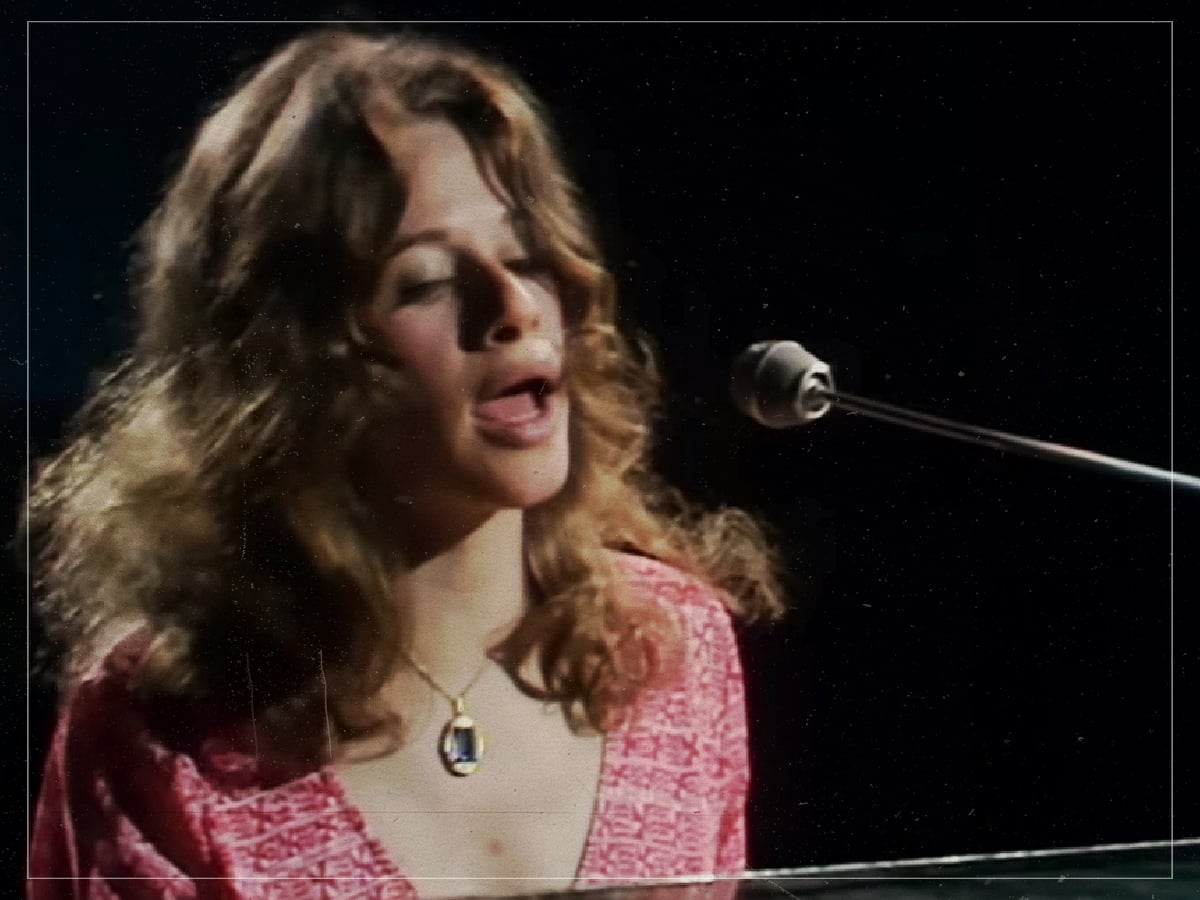
(Credits: Far Out / YouTube Still)
Wed 25 March 2026 2:00, UK
For the longest time, before making her own name as an artist, Carole King was already hugely famous. Maybe the world wasn’t quite so aware of her, but in the circle of artists, she was one of the most respected figures around.
“In the early days, Paul and I, we wanted to be the [Gerry] Goffin and [Carole] King of England, you know,” John Lennon once said, referencing King and her writing partner. Back in the 1960s, they were coming to be a newer, cooler Jerry Leiber & Mike Stoller, writing songs that were being picked up by both the R&B world and the new age of rock and roll bands.
‘Chains’ is a great example of that, penned by King when she was only 20 years old, but swiftly picked up by girl group The Cookies, then The Beatles themselves, as King’s work managed to pass over any lines of genre.
Instead, it was celebrated for being broadly beloved, appealing just as much to doo-wop girls as it did to guitar-slinging boys, so before King had even sung a note publicly herself, her name was already out there, known and respected.
It also meant that long before King gained her own incredible success from her own recordings, namely in 1971 with Tapestry, she’d already ticked off a lengthy bucket list. She’d already achieved things that would be enough all on their own to make her forever proud of her career, and when thinking back on the peaks, one clear one stands out.
As it still often goes with these things, a songwriter writes a track, and then it basically disappears into the ether. Beyond a few business meetings or taxes, they don’t really get to know exactly what’s happening with a song until suddenly, it’s on the radio. For King, one day in 1967, she turned on the radio and there it was – Aretha Franklin singing her song, ‘(You Make Me Feel Like) A Natural Woman’.
It’s the sort of thing she didn’t even dare to dream about. While she’d obviously had major success before with some incredible collaborations, this was a whole new level as she outright said, “It was just the height of all my dreams and expectations.”
Part of that came down to Franklin’s own name and celebrity and the obviously shiny allure of having a star of her stature love one of King’s songs enough to pick that one from the pile and decide to put her voice to it. It was obviously a career-changing moment for King, too, as a status like that attached to her songwriting naturally gave her a huge boost, sending more clients her way for tunes.
But overwhelmingly, King’s joy towards Franklin’s version of her song was a creative joy, as if she was finally hearing how the song was actually supposed to sound, rather than the version she was singing herself with her own vocal limitations.
“Aretha Franklin could do things I can’t do, but I can hear them singing it in my head,” she said. Even if she doesn’t have the vocal range, that doesn’t stop her from dreaming it. That was part of the reason why she loved songwriting for others so much, and especially for acts outside of her immediate musical realm. It was like getting to hear her dreams come to life as she passed the words and melodies over to a singer with the ability to pull off notes and tunes that she could never really do justice to.
“When it’s actualised, wow,” she said, and the brightest example of that was obviously the moment when she heard the ‘Queen of Soul’ put her powerful, strong, emotive voice to her track, taking something that was already beautiful, but making it utterly goose-bump inducing as the song’s climaxes build bigger and bigger thanks to the singer’s staggering vocals.
