
Have a closer look before you get the polish out (Picture: Getty Images)
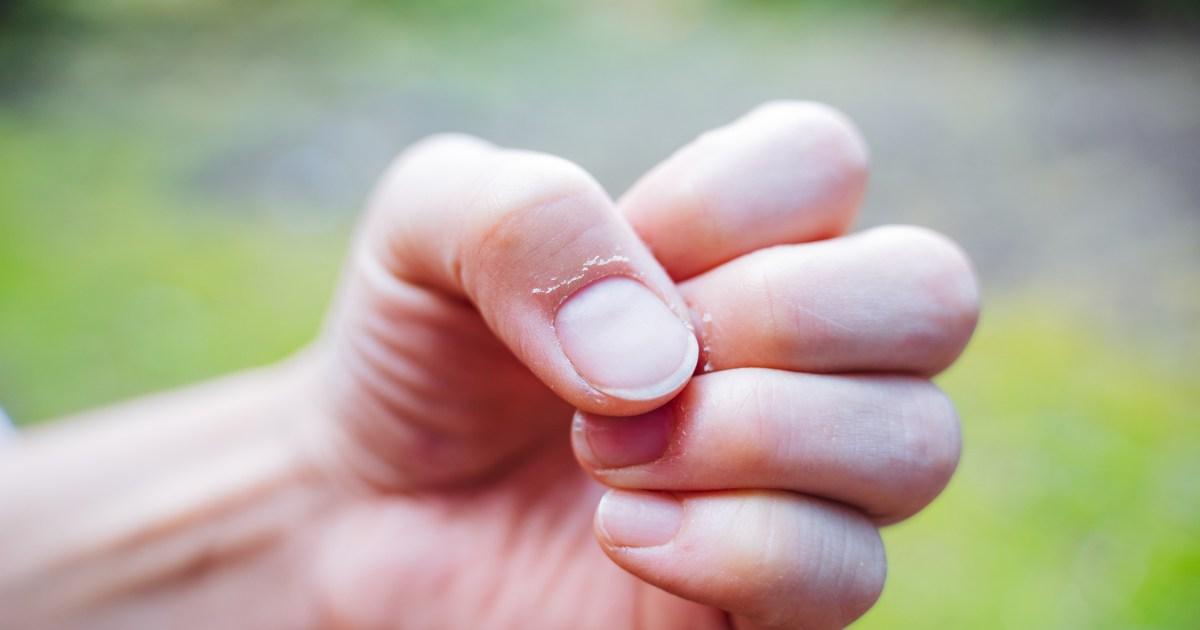
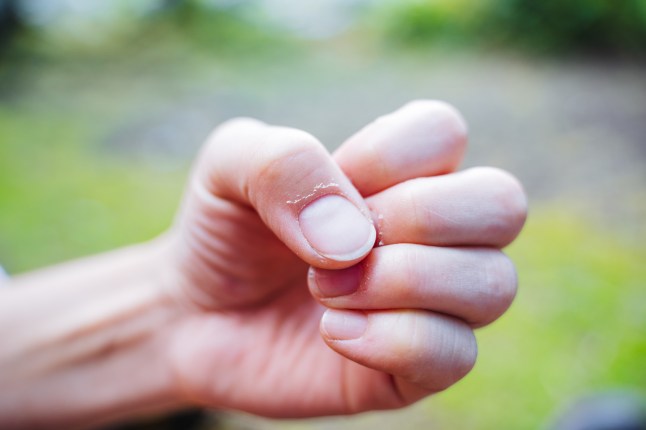
You may not know it, but there are 10 potential health indicators right at your fingertips.
From subtle color changes to variations in texture and shape, fingernails often provide early clues about your overall health — and paying attention to these small details can sometimes reveal issues long before other symptoms appear.
Healthy nails are typically smooth, strong, and uniform in colour, with changes to look out for including the appearance of ridges, discolouration, brittleness, or unusual growth patterns.
Sometimes, irregularities arise because you’re dehydrated or deficient in a certain nutrient, but certain markers signal more serious issues.
Dark lines, for example, can in some cases suggest melanoma, while clubbing could point to everything from gastrointestinal disorders to chronic lung disease.
If you spot something different about your nails Dr Giuseppe Aragona, GP and medical adviser for Prescription Doctor, warns it’s ‘always important to interpret these signs in the wider clinical context rather than in isolation.’
However, patterns and persistent changes are worth noting — and if needed, discussing with a healthcare professional.
Here, Dr Aragona tells Metro what various different changes in your fingernails might mean.
Yellow nails
This is likely caused by a fungal infection (Picture: Myles Goode)
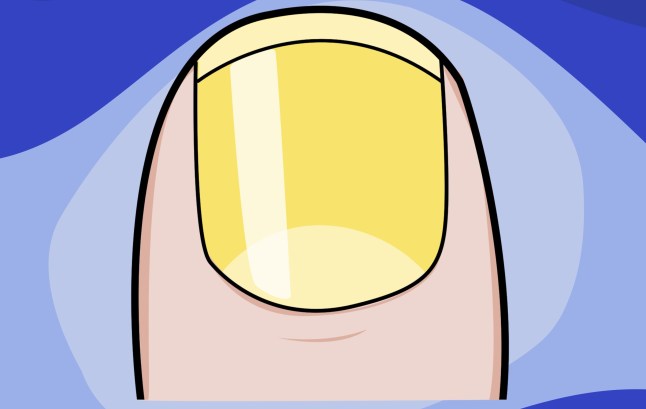
According to Dr Aragona, yellowed nails are most commonly associated with fungal infections, especially ‘if they are thickened and slow-growing’.
However, he notes that ‘in rarer cases they can be linked to conditions such as chronic respiratory disease or lymphatic disorders, particularly if accompanied by swelling elsewhere.’
Brittle, thin, or splitting nails
Are you getting enough iron? (Picture: Myles Goode)
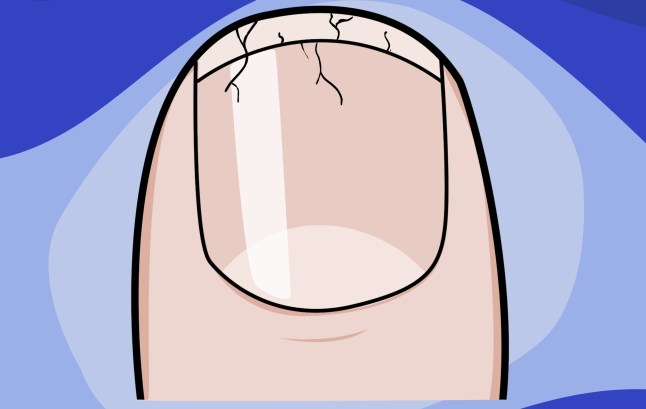
‘Brittle, thin, or splitting nails are something we see quite frequently and are often related to repeated exposure to water, detergents, or aging,’ explains Dr Aragona.
They can sometimes reflect nutritional deficiencies though, such as low iron levels ‘or, less commonly, thyroid dysfunction.’
Pale or white nails
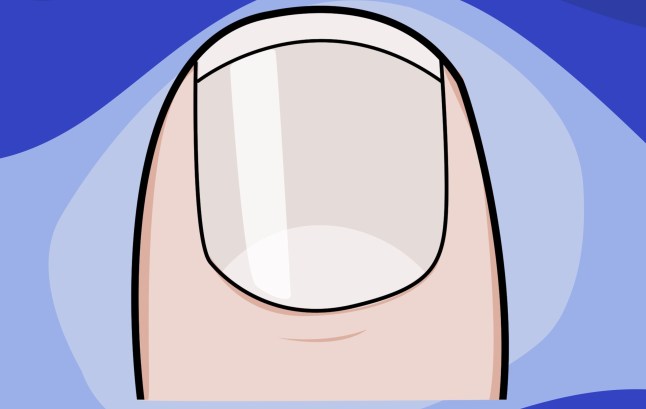
Your nail beds can also provide clues (Picture: Myles Goode)
Some people have naturally lighter nails, but if the nail beds appear ‘washed out’ it can be a marker of anaemia.
‘More uniformly white nails, especially with darker rims, may suggest liver disease, although this tends to be in more advanced cases rather than something seen early on,’ Dr Aragona adds.
Dark lines or streaks
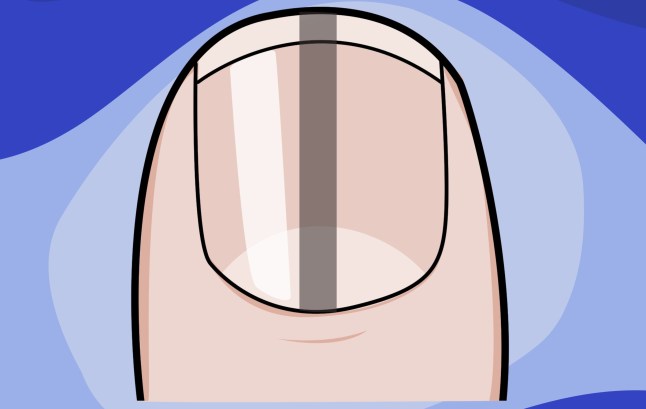
It’s worth booking in for a checkup (Picture: Myles Goode)
‘Dark lines or streaks running along the nail should always be taken seriously, particularly if they are new, changing, or irregular,’ says Dr Aragona.
‘While they can occur in people with darker skin as a benign feature, they may in some cases represent a melanoma under the nail and would warrant prompt assessment.’
A new black or brown vertical line on the fingernail — known as melanonychia — might be a result of physical trauma, medication or simply genetics, but it’s important to get it checked out just in case.
White spots
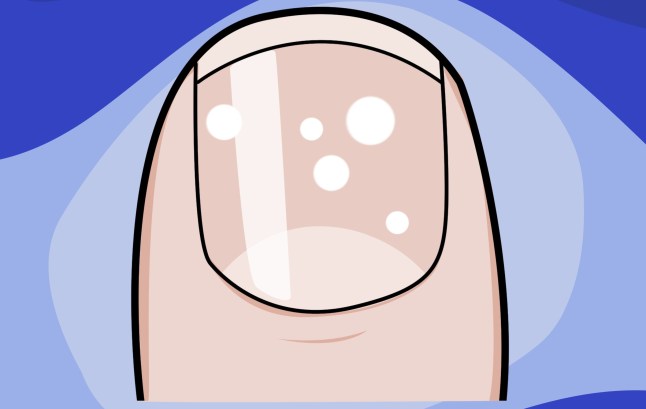
No, you don’t need to drink more milk (Picture: Myles Goode)
Despite the common belief that white spots on the nail mean you’re lacking in calcium, this isn’t actually the case.
Dr Aragona says they’re ‘very common’, and ‘usually the result of minor trauma to the nail matrix rather than indicating any deficiency.’
Pitting or dents
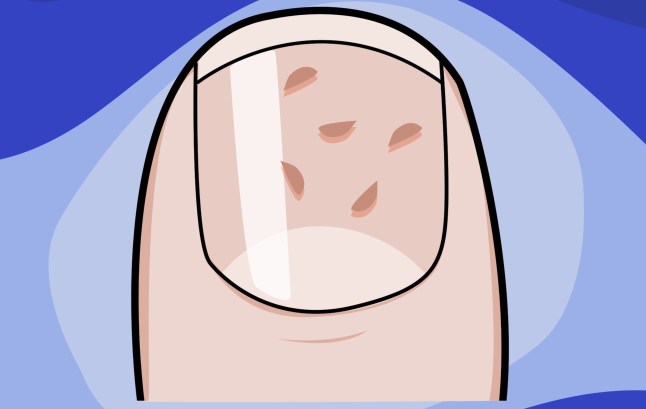
It’s commonly associated with psoriasis (Picture: Myles Goode)
‘Pitting of the nails, which appears as small dents in the nail surface, is most commonly associated with psoriasis, although it can also be seen in other dermatological conditions such as alopecia areata, and would be interpreted alongside changes in the skin or hair,’ explains Dr Aragona.
Up to 50% of people with psoriasis experience nail issues, with more than 20 of these depressions highly suggestive of this condition. Other signs include crumbling, discolouration, or nails separating from the nail bed (onycholysis).
Horizontal ridges or lines
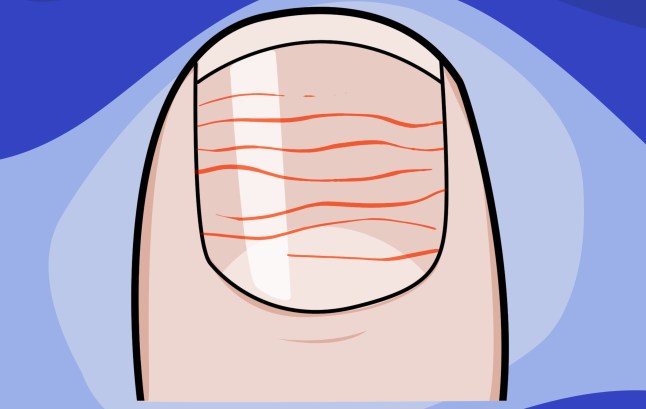
Beau’s lines are sometimes known as ‘time stamps’ (Picture: Myles Goode)
There are a few different types of horizontal markings which may appear on your nails, with Beau’s lines being among the most common.
Dr Aragona notes that these indentations ‘can occur after a period of significant illness or physiological stress where nail growth temporarily slows or stops’.
On the contrary, Muehrcke’s lines — white transverse bands with no palpable ridges — ‘may be associated with low protein levels in the blood, often in the context of chronic illness.’
Vertical ridges
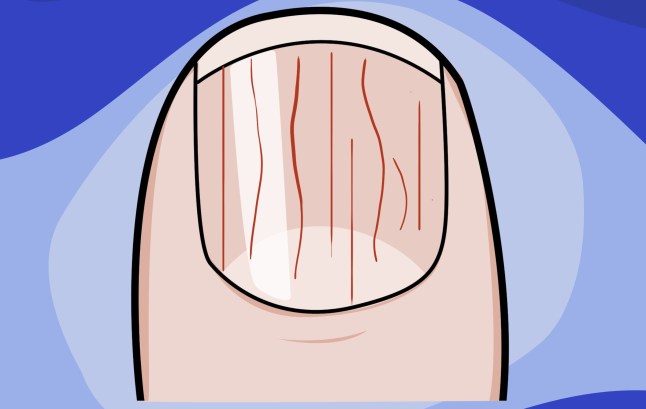
Nothing to see here (Picture: Myles Goode)
If you’re worried about vertical ridges or indentations on your nail, don’t.
‘These are usually a benign feature of ageing and are not typically a cause for concern unless accompanied by other changes,’ says Dr Aragona.
Spoon-shaped nails
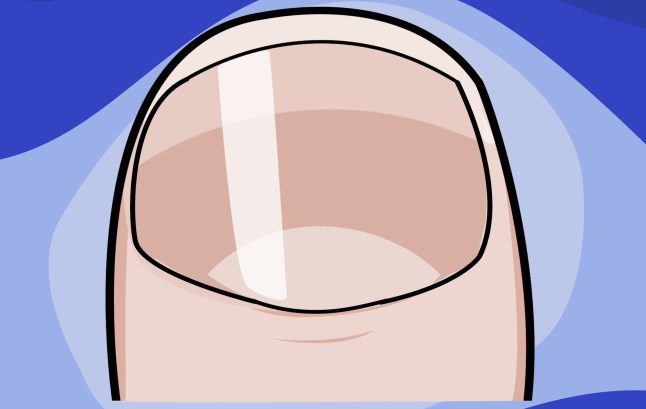
This can come alongside brittleness or thinning (Picture: Myles Goode)
Koilonychia is the medical term for spoon-shaped nails; when the nail develops a flat or concave appearance, as if it’s bending upwards from the edges.
While Dr Aragona notes this can be associated with iron deficiency anaemia, it’s ‘something [doctors] would consider alongside symptoms such as fatigue or breathlessness.’
There are other potential causes, but once the underlying issue is dealt with, the nail usually corrects itself, which is why it’s important to get checked out.
Clubbed nails
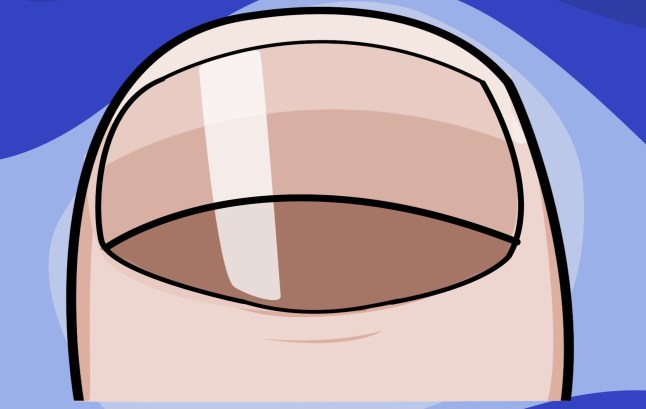
This is a ‘significant’ finding (Picture: Myles Goode)
‘Clubbing of the nails, where the fingertips become bulbous and the nails curve around them, is a more significant finding,’ says Dr Aragona.
As this can be linked to chronic lung disease, heart conditions, or gastrointestinal disorders, he warns that clubbed nails ‘would always merit further investigation.’
In general though, if you notice changes to your nails with no obvious cause (such as trauma) it’s a good idea to visit your GP or pharmacist to rule out anything sinister.
As with all health concerns, it’s better to be safe than sorry.
Do you have a story to share?
Get in touch by emailing MetroLifestyleTeam@Metro.co.uk.
Arrow
MORE: Early colon cancer signs to look for as Mel Schilling dies aged 54
Arrow
MORE: Ringworm is rife in gyms and barbershops — but many people don’t realise they have it
Arrow
MORE: The number of sit-ups you should be able to do, according to your age
Comments
Add Metro as a Preferred Source on Google
Add as preferred source
The Slice
Your free newsletter guide to the best London has on offer, from drinks deals to restaurant reviews.