
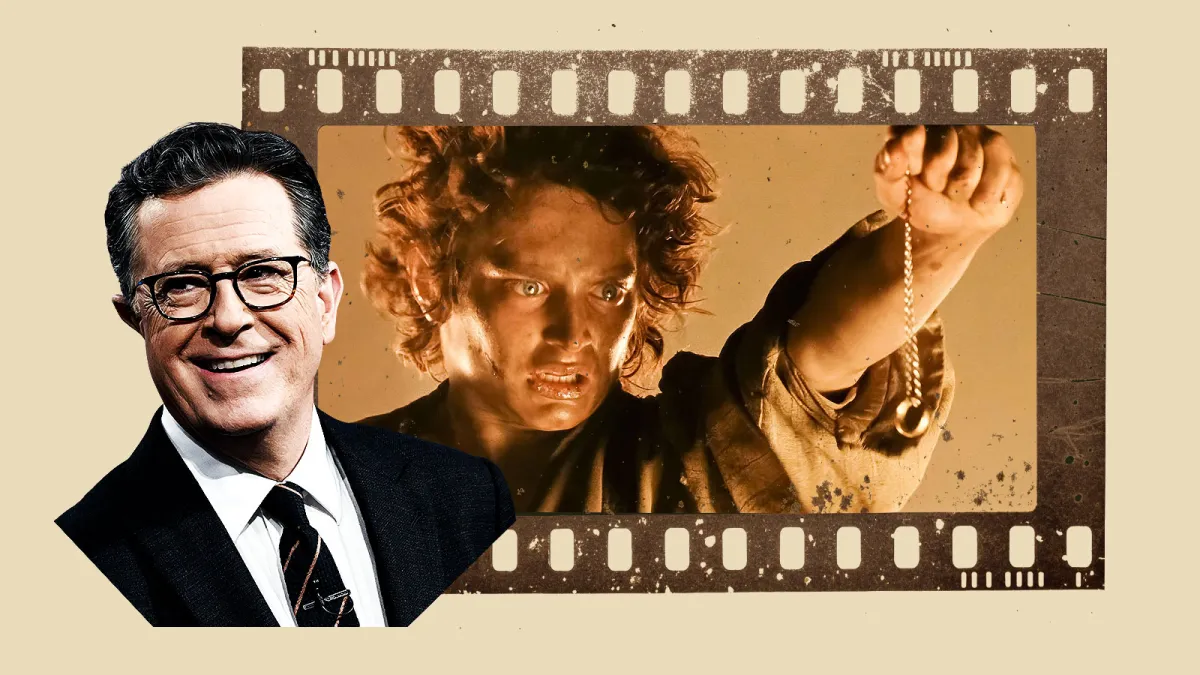
‘Was he being serious, or was it a joke?” That was my editor’s first question, after reading the interview transcript.
It was August 2012. I’d just spent the better part of a morning with Stephen Colbert at his studios on West 54th Street in New York. At the time, he was best known for The Colbert Report, his Comedy Central show where he played a blowhard conservative pundit, three years before he’d take over The Late Show from David Letterman.
Playboy had sent me to Manhattan to speak to him for his first major out-of-character interview. My editor had expected comedy, politics, maybe some shop talk about his career. What he got instead was 40 minutes of a man who couldn’t stop talking about hobbits.
For the past two years, quietly and without any fanfare, Colbert has been developing a Lord of the Rings movie with Peter Jackson.
The announcement landed with the type of backlash that tends to greet any news involving a beloved franchise and an unexpected name. Fans questioned his qualifications, worried about the franchise’s direction, and a vocal contingent wondered whether a former late-night host with strong political opinions had any business writing in Tolkien’s world.
They couldn’t be more wrong. When I spoke to Colbert in his office that day, there was a Lord of the Rings pinball machine in the corner, and a framed piece of Middle Earth artwork on the wall, and at one point he gestured at both of them and said: “As you can tell, I’m a little obsessed.”
There was a moment when Colbert hinted — grinning, shuffling papers with theatrical innocence — that he might have a cameo in the upcoming Hobbit film. That cameo turned out to be real. He appeared briefly in The Hobbit: The Desolation of Smaug the following year.
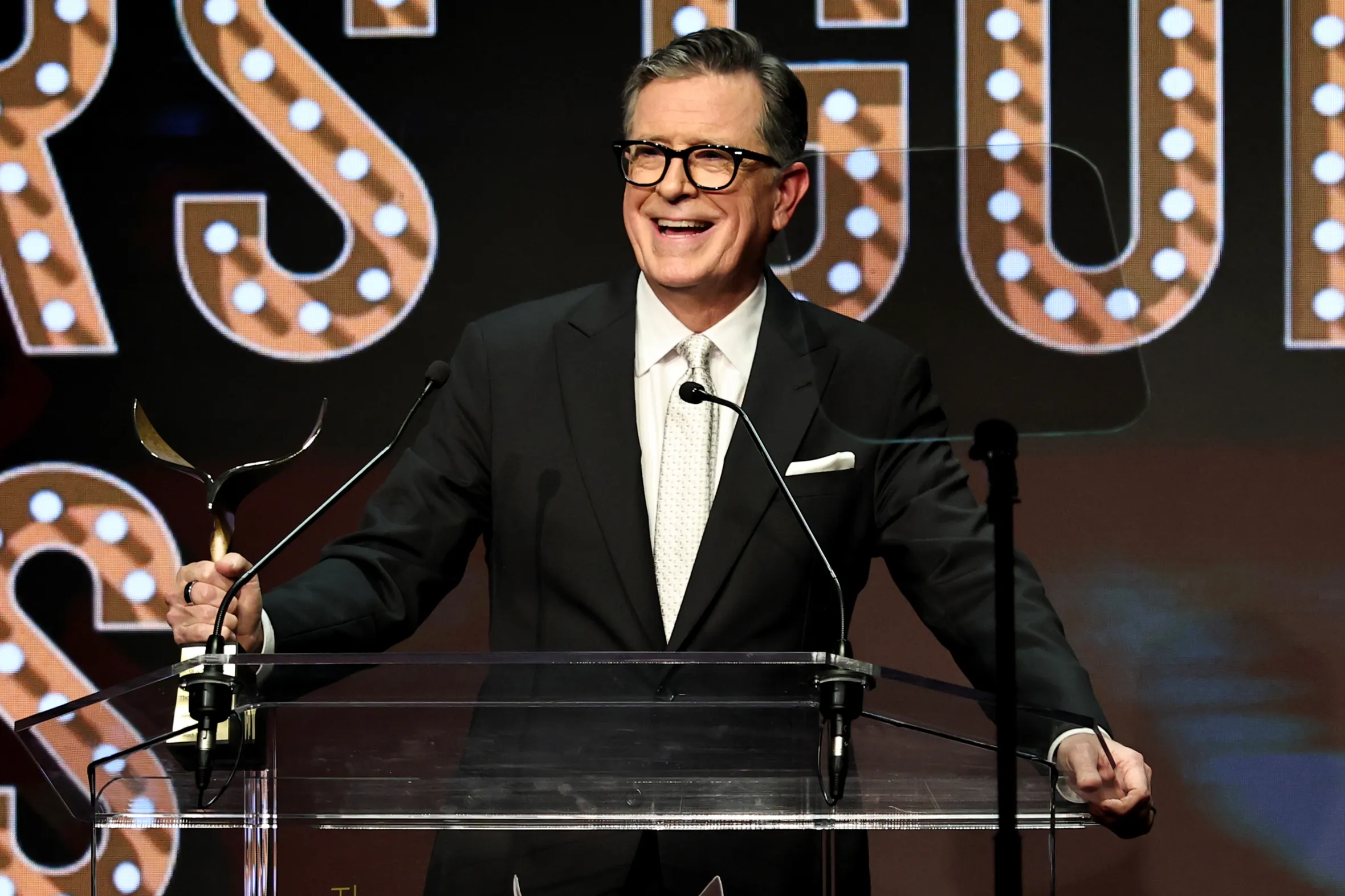 Stephen ColbertJAMIE MCCARTHY/GETTY IMAGES
I’d known Colbert since the early 1990s, when he was performing at Second City in Chicago — the comedy theater that fostered future legends such as John Belushi, Mike Myers, and Tina Fey — and I was a kid just out of college working the box office. He was friendly with everyone on staff, treating us like peers, and was even my Secret Santa two years in a row.
I grew up loving the Lord of the Rings, and after hearing rumors of Colbert’s Tolkien obsession, I had hoped we’d have a real connection. The first time I brought it up with him, he started speaking fluent Elvish. I smiled, nodded, and quietly surrendered. I was not remotely in his league.
Years later, he explained the genesis of this passion for Middle Earth. “When I was 13, one of my friends pressed The Lord of the Rings into my hands and said, ‘You’ve got to read this,’” he told me. “And I looooved it.”
What surprised me was what came next, and what the books meant beneath the surface enthusiasm.
Colbert was ten in 1974 when his father and two of his brothers — James, 53, Paul, 22, and Peter, 18 — died in a plane crash outside Charlotte, North Carolina.
He was the youngest of eleven children, and suddenly there were three fewer people in the world who were supposed to look after him. A few years later, staying at his older brother Ed’s house, he pulled a Lord of the Rings book off a shelf and didn’t stop reading for the next several years.
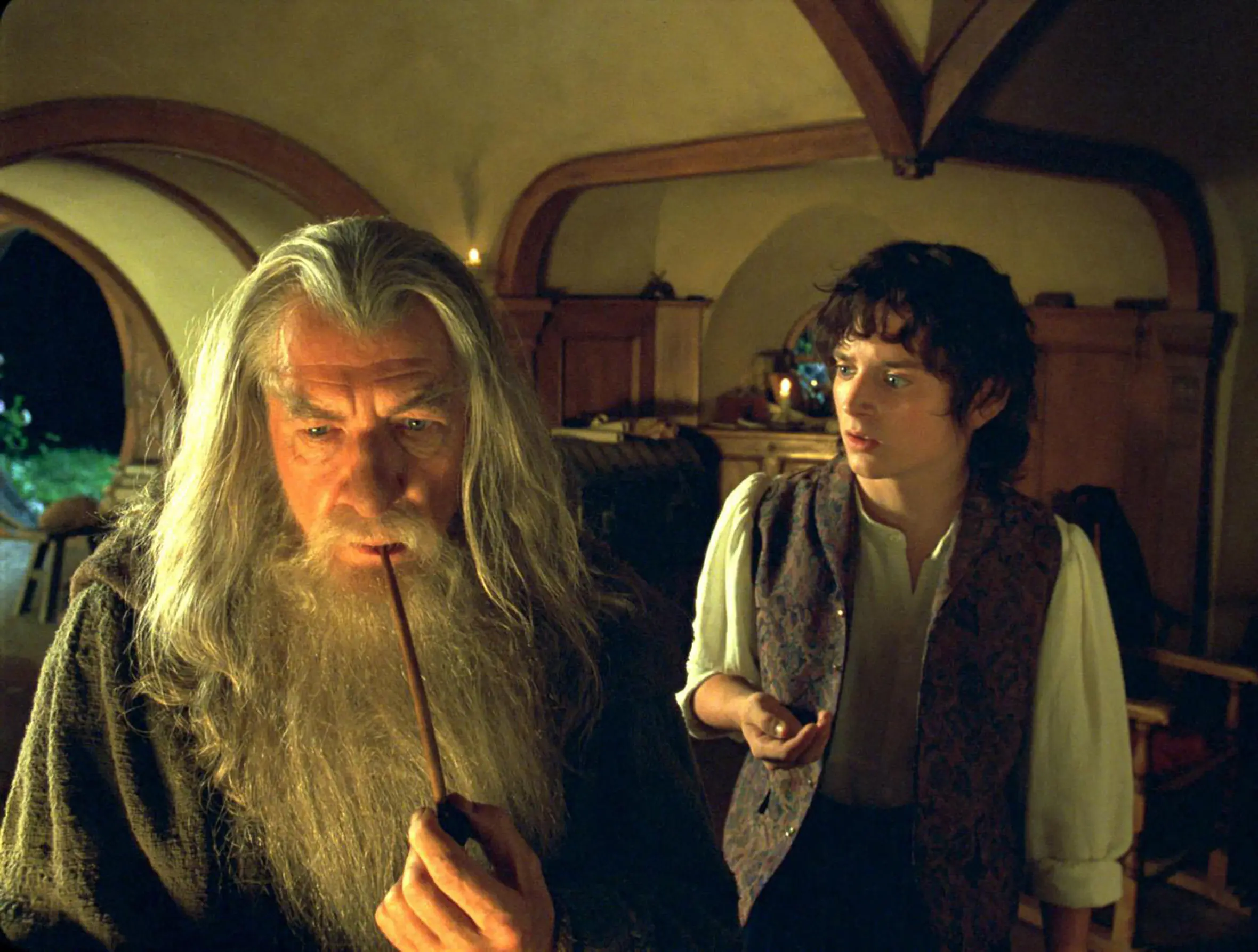 Gandalf (Sir Ian McKellen) and Frodo in The Lord Of The Rings: The Fellowship Of The RingAlamy
“In some ways it was about escape,” he told me in 2012. “There’s absolute truth to escaping the reality of your present predicament.” He paused, and added: “I think Aragorn is the model of manhood. He’s a warrior, a scholar, a poet, a healer. He’s all things that you can aspire to be. As a kid I thought, ‘I want to be like that’.”
I lost my father young too, though nothing like what Colbert experienced, so I understood the books as a place you went when the present was too much to bear. I even tried writing my own Lord of the Rings sequel as a kid — it did not go well.
Tolkien’s world is not an escape from grief so much as a place to practice surviving it. Lord of the Rings is, at its core, a story about loss — the loss of Gandalf, of Boromir, of the Shire’s innocence, of the long, slow fading of everything the elves loved.
Tolkien called it “the long defeat,” and he was not speaking metaphorically. He had watched friends die at the Somme and built a mythology around the question of how you keep going after beauty leaves the world.
Tolkien was also a devout Catholic, and so is Colbert, which matters more than it might seem. The book’s deepest consolation is not that loss can be avoided but that it is not the final word. When Aragorn lies dying, he tells Arwen that they are “not bound forever to the circles of the world, and beyond them is more than memory.”
That line is doing theological work. It’s Catholic hope dressed in the language of Middle Earth, the suggestion that what we once loved does not simply stop existing. A man who has spent his adult life processing the loss of his father and brothers through the lens of both Tolkien and that faith is not approaching this material as a franchise opportunity. Colbert is approaching it as someone who knows what the stories are for.
This is what critics are missing. Last week, Warner Bros. and New Line Cinema announced that Colbert was co-writing The Lord of the Rings: Shadow of the Past alongside his son Peter McGee and Philippa Boyens. Boyens is the New Zealand screenwriter who co-wrote all three Lord of the Rings films and all three Hobbit films, and won the Academy Award for best adapted screenplay for The Return of the King in 2004.
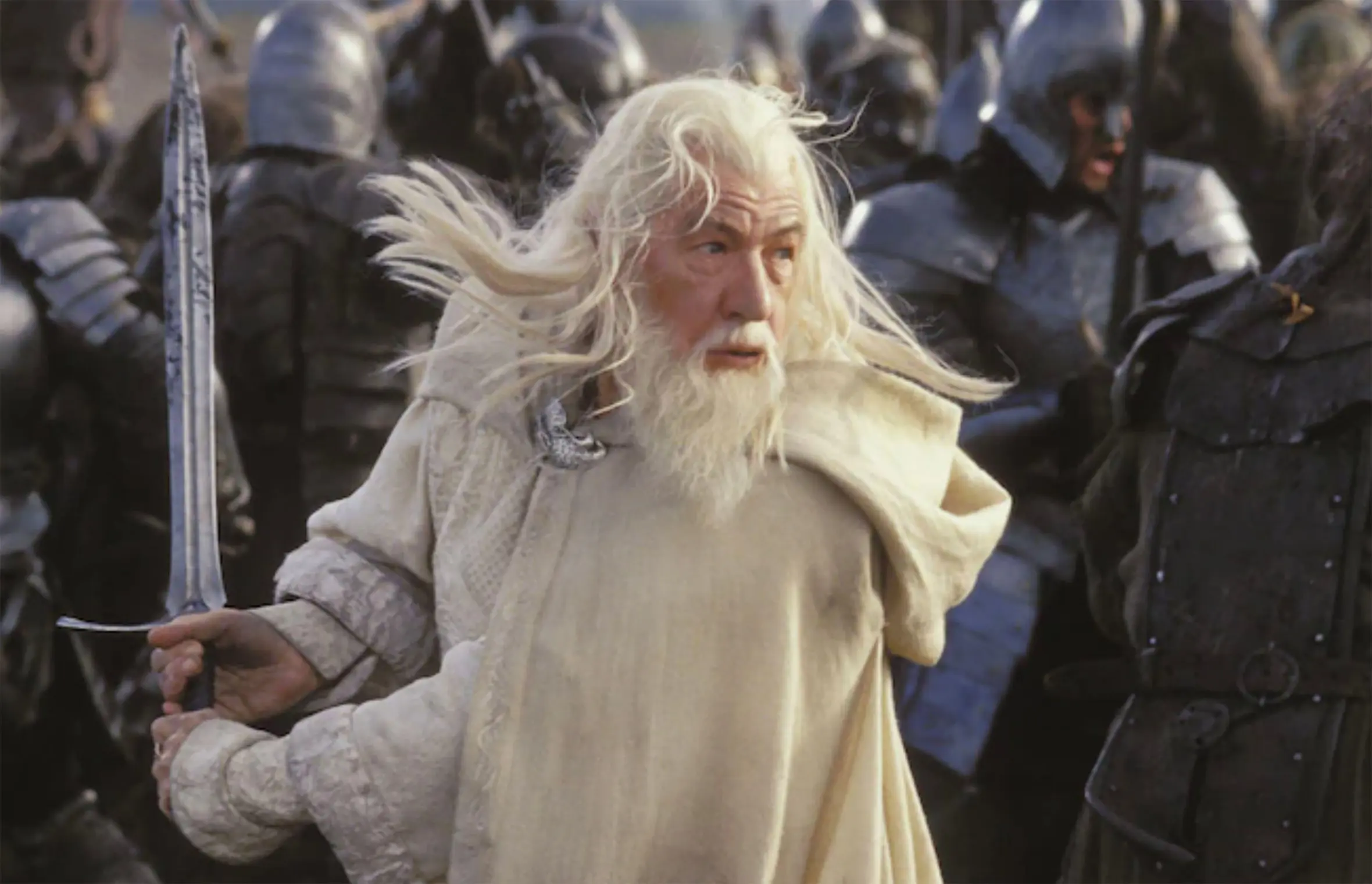 Gandalf in The Return of the KingAlamy
The film draws from six early chapters of The Fellowship of the Ring, the first book in the trilogy. It’s set fourteen years after Frodo leaves Middle Earth, following Sam, Merry, and Pippin as they retrace their old steps while Sam’s daughter Elanor uncovers a secret that nearly cost them everything before the story even began.
The announcement, revealed via a video call between Colbert and Jackson on Tolkien Reading Day, landed with immediate fan backlash. “Hollywood finally found the bottom of the barrel,” one person posted on X. Another called it “almost sacrilege against Tolkien’s work”.
On Reddit, a user put it more bluntly. “Has Colbert ever written anything aside from television sketches? Also, how in the world are they turning Fog on the Barrow-Downs into a feature-length film? We thought Hunt for Gollum was reaching for scraps.”
Others worried about the franchise itself, warning that a story set fourteen years after the original trilogy risked drifting into what some called “fan fiction” territory. Some of the pushback had nothing to do with Tolkien at all. A contingent of critics raised the concern that Colbert might infuse the story with his personal politics.
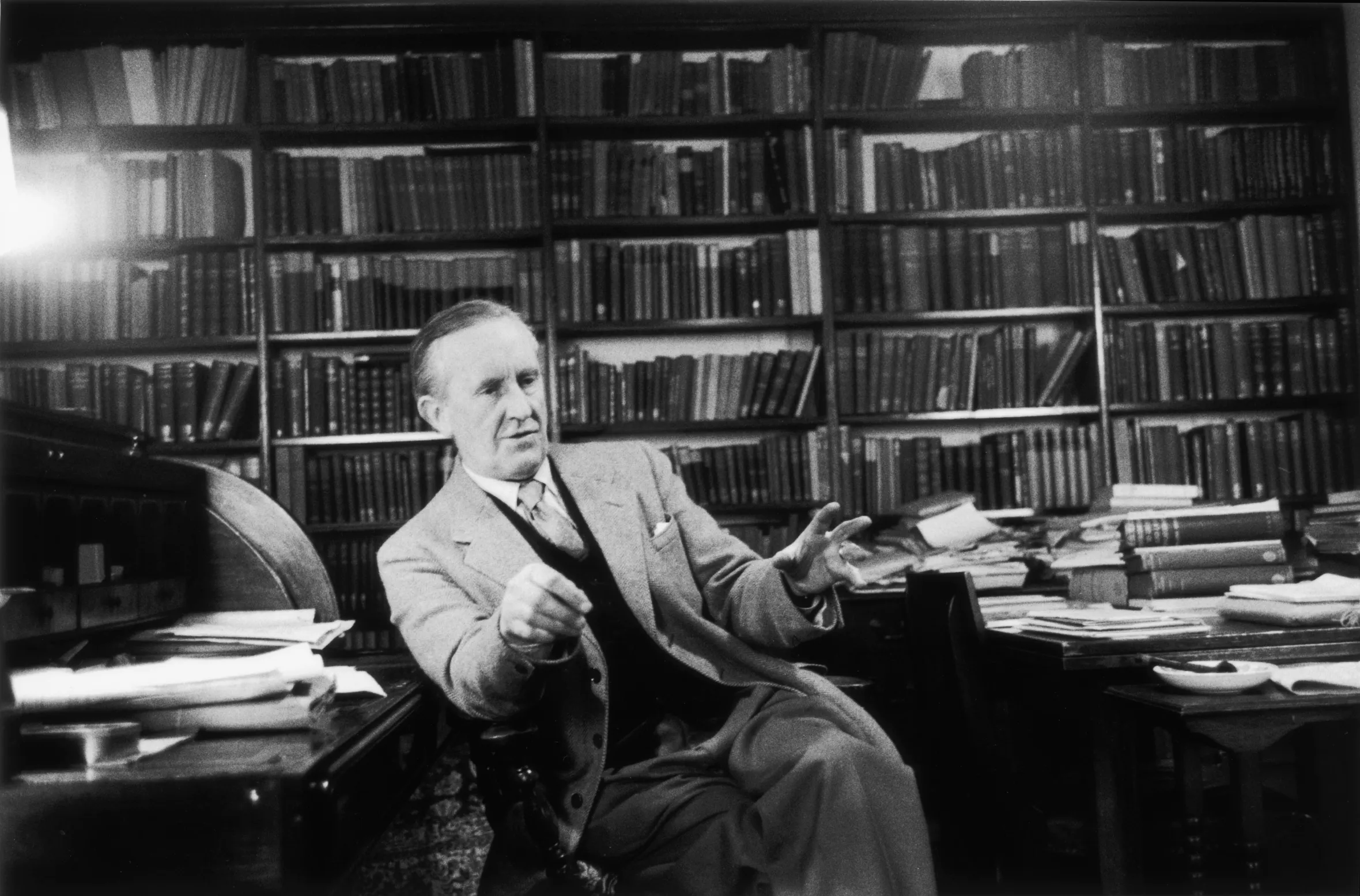 JRR Tolkein, the author of The Lord of the Rings, in 1955HAYWOOD MAGEE/GETTY IMAGES
Colbert has written for the screen before, having co-written the Strangers with Candy (2005) film with Amy Sedaris and Paul Dinello. But the critics have a point — a cult comedy prequel is a far cry from a Lord of the Rings epic. What Boyens brings, however, is the institutional knowledge to bridge the gap. What Colbert brings that no conventional screenwriter could is a specific kind of emotional authority. The authority of someone who needed these books to survive adolescence and who has spent the decades since understanding exactly why.
Shadow of the Past centers on characters returning to the beginning of the journey, trying to understand what was almost lost before it even began. That is not a story you hand to someone doing research. That is a story you hand to someone who already knows what it costs.
“It took me a few years to scrape my courage into a pile to give you a call,” Colbert told Jackson in the announcement video. Then he laughed and said he’d have plenty of time for the script once The Late Show wraps in May.
There was something inspiring about watching him say it — a man in his early 60s, taking on a new challenge by turning toward the book that got him through the worst years of his life and seeing what else it might have to teach him.
“I’ve gotta finish a television show and I’ve gotta write a movie script,” he said. “But I will see you all in the Shire.”
He was, as I can tell you from experience, being completely serious.