
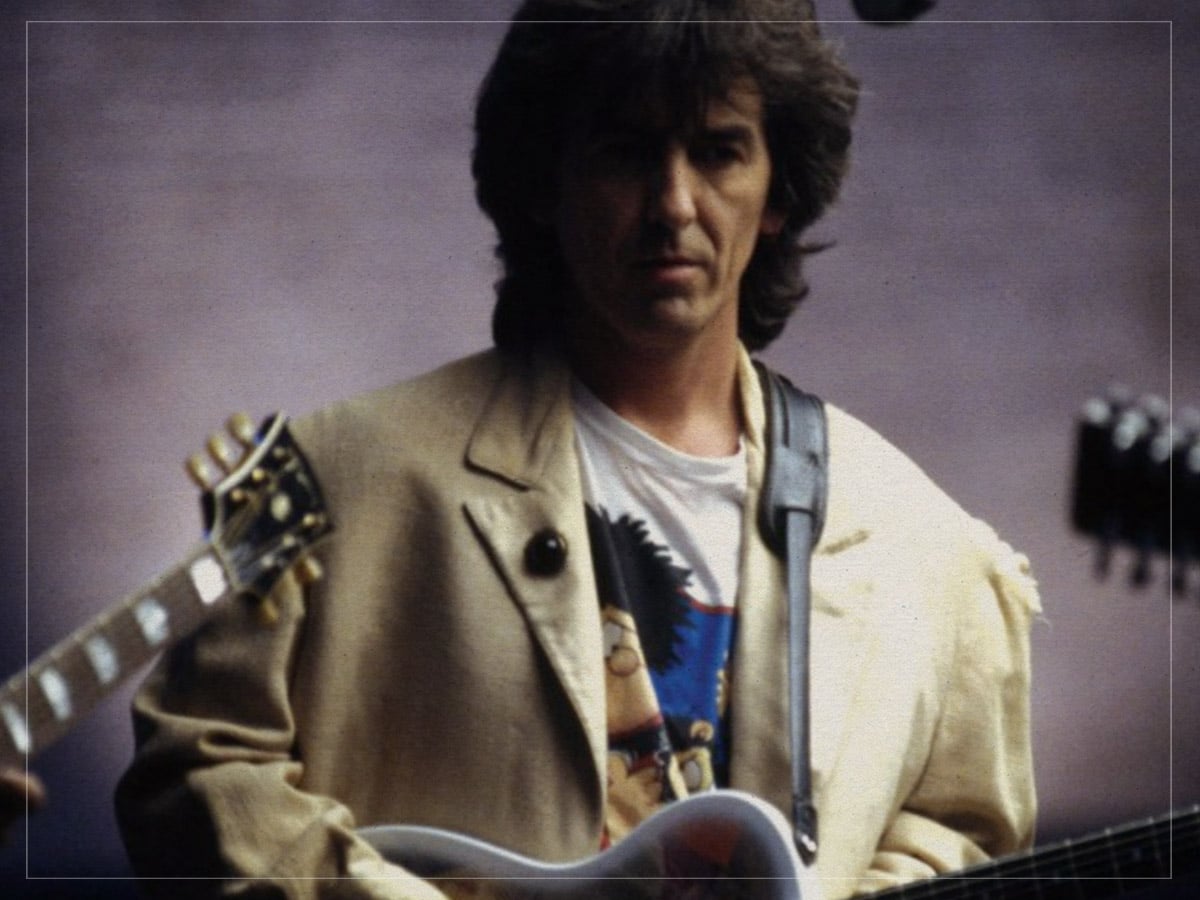
(Credits: Far Out / The Travelling Wilburys)
Sat 28 March 2026 8:00, UK
There was never a moment in the 1960s when The Beatles needed to worry about changing with the times.
The entire rock and roll world was progressing by leaps and bounds every single year, but even when the Summer of Love turned the entire music industry inside out, The Beatles were the ones who were leading the revolution rather than following behind. And while they all managed to keep their ears open whenever they performed, George Harrison admitted that he never got the chance to play the kind of music that he loved every single time he made a new record.
Then again, expecting all of The Beatles to keep track of every new band that came out while they were still touring wouldn’t have been fair. They were already being thrown into one new town after the next when they started making records, and they were bound to spend the rest of their lives on the road if they didn’t decide to call it off when they did. Their music had overpowered the potential of the live show, and Harrison had a lot more time to listen when he finally took a break.
But after discovering Indian music around 1965, Harrison seemed to be less and less interested in conventional pop songs. He still wrote brilliant tunes for the Fab Four whenever he got the chance, but listening to ‘Within You Without You’ and ‘The Inner Light’, his heart was clearly in making that kind of music instead of fumbling through whatever whimsical ditty Paul McCartney had come up with whenever they performed.
He wanted to study this music, and while he had a brilliant teacher in Ravi Shankar, he knew that he was never going to become a true master. There were sitarists who had been working on their craft since birth, and while Harrison could dabble in Indian music as best he could, he knew there was no point in trying to be the best in that field when he already saw some of the greatest musicians of all time in India.
While he did eventually make his way back to the pop market, a lot had changed since he had been gone. He was always keeping tabs on what his friends, like Eric Clapton, had been doing when he was working with Cream, but even when England had become one of the biggest blues cities in the world, Harrison felt that he had arrived on the scene way too late to make any kind of impact.
Cream had already become one of the biggest bands in the world, and with Led Zeppelin nipping at their heels, Harrison felt that he watched an entire generation of rock and roll pass him by, saying, “All the young kids coming up were all playing so good, and I hadn’t been involved with it for so long, both being in the Beatles just playing the same old tunes, and playing Indian music. So I felt a long way behind. That was one of the reasons I started playing slide, you know, because I felt so far behind in playing hot licks. With slide, I didn’t have any instructions, I just got one and started playing.”
And in doing so, Harrison created the best of both worlds whenever he played guitar. He didn’t necessarily have to worry about playing the most electrifying guitar licks of all time, but since the sitar was all about finding certain tones that no one thought were possible, the slide gave him the ability to make his guitar speak every single time he played, whether it was working on those gorgeous harmony parts on All Things Must Pass or even sprinkling in that last piece of Harrison-ian magic on The Beatles Anthology.
Because as much as it would have been fun to see Harrison trade licks back and forth with Clapton over the course of his career, he didn’t sign up to be that kind of musician. His goal was to let his personality shine through every single note he played, and even if he wasn’t the flashiest guitarist in the world, you could sing the melodies to nearly everything that he ever played on.
