
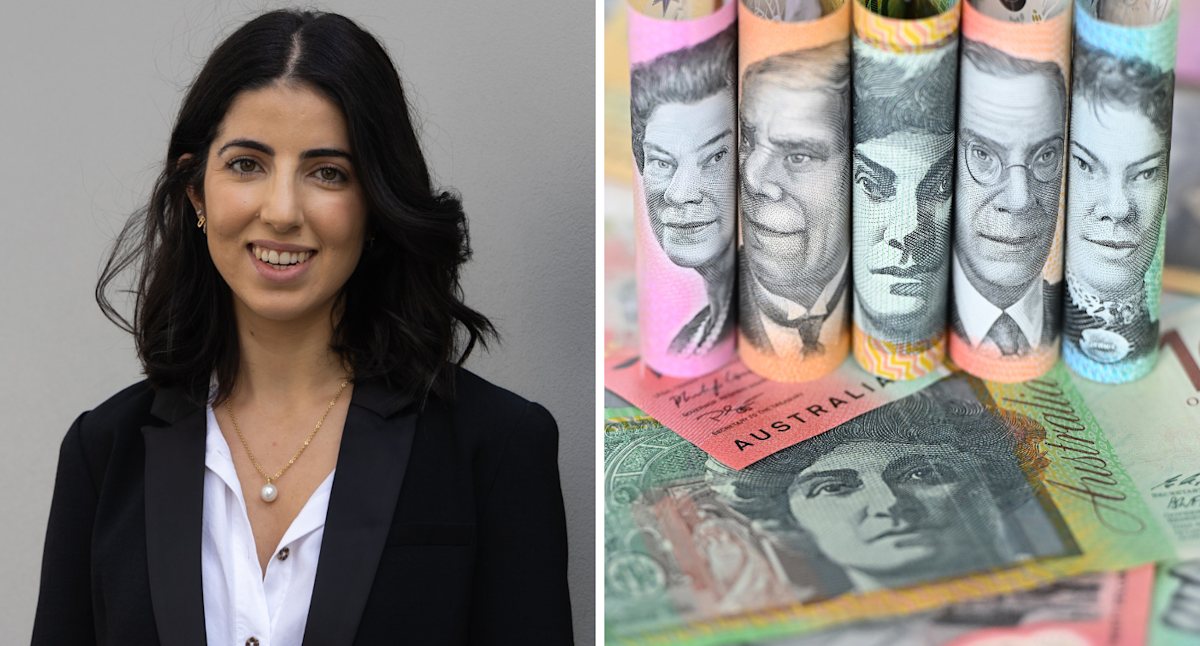
 Safewill principal solicitor Isabelle Marcarian (left) says it’s becoming more common for Aussies to skip their kids and leave inheritances to grandkids. (Source: Supplied/AAP)
A $600,000 inheritance has “dropped a bomb” on one Sydney family after it was revealed the windfall was left to just one sibling. Australia is about to enter the biggest intergenerational wealth transfer in history, with $5.4 trillion to be passed down over the next two decades – and fights over wills are becoming increasingly common.
Cronulla mum-of-one Sarah, 38, said she was in “total shock” after discovering she was the sole executor and beneficiary of her grandma’s estate. Sarah’s grandma passed away in December, leaving behind more than $600,000 in her will once her mortgage is paid off.
“I had zero idea. We had never had conversations around the topic, and I had assumed it would go to my mum, so I was surprised for sure,” Sarah, who didn’t wish to share her surname, told Yahoo Finance.
“It’s absolutely life changing, and will set my family up in a way we never could have afforded, like finally buying a house we’ve been saving almost a decade for, and once we buy it, we can pay off most of the mortgage immediately. I still get chills thinking about it.”
RELATED
But the windfall has sparked a “huge and awful” dispute between Sarah and her two siblings, who were both left out of the will.
Sarah said the siblings had drifted apart over the last decade and described them as “very different people leading different lives” who only really saw each other at Christmas.
“This has totally dropped a bomb on the relationship, and I have actually had to block their numbers to stop getting irate phone calls threatening legal action to contest the will, even though it was witnessed, signed by officials, and all the official and legal steps had been taken properly,” Sarah said.
The mum admitted the situation has also been “difficult” for her and her siblings’ parents. They had assumed the money would go to the grandkids, not to them, but they still feel stuck in the middle of everything happening with their children.
Do you have a story to share? Contact tamika.seeto@yahooinc.com
While Sarah initially thought about splitting the inheritance with her siblings, she said she ultimately decided she wanted to respect her grandma’s final wishes.
“It’s been extremely emotionally exhausting, but I am trying to find peace with knowing that leaving me this money was her specific wish,” she said.
Story continues
“She knew that I needed financial help to afford to give my family the life they deserve. Both my siblings are well and truly set up. So this is her way of giving me a leg up, and I’ll forever be grateful to her for that.”
Safewill principal solicitor Isabelle Marcarian said while she did see wills structured around a sole beneficiary, in most cases, clients still preferred to distribute their estate across multiple beneficiaries.
“What is becoming more common, however, is clients choosing to direct assets to grandchildren,” she told Yahoo Finance.
“This is often driven by a desire to have a more meaningful impact further down the family line – particularly where they feel they have already supported their children financially during their lifetime.”
Safewill’s research found Aussies were questioning the traditional assumption that kids automatically inherit everything.
Out of more than 1,000 people surveyed, it found 51 per cent believed inheritance should go to charity or be passed down the family line if their adult kids were already financially secure or debt-free.
 Disputes over wills have also increased, as estates get bigger. (Source: Getty)
About 10 per cent cited concerns that the money would be wasted by younger generations and would be better used by charity, while 13 per cent thought kids should build their own wealth.
Another 6 per cent pointed to strained family relationships and 7 per cent to frustration over entitlement.
Overall, the number of people contesting wills is on the rise.
In NSW, there was a 60 per cent increase in contentious probate filings between 2020 and 2024, from 291 to 464. Contested estate court cases in Queensland increased three times in the same period.
Marcarian said she was seeing a slight increase in disputes with individuals contesting the outcome or provision.
“A key driver appears to be economic. With rising cost of living pressures and significant increases in asset values – particularly property – there is more incentive for individuals to pursue a claim, as the potential upside is higher,” she said.
“That said, recent decisions in the courts reinforce that these claims are far from guaranteed to succeed. It is not a given that a challenge will be upheld – applicants still need to clearly demonstrate need and justify why further provision should be made.”
Marcarian said it was important for individuals to ensure their will was properly executed, meaning it needs to be printed and signed in the presence of two appropriate witnesses.
For older individuals or those with a history of capacity issues or an existing diagnosis, Marcarian said it can be worth considering a medical capacity assessment at the time of signing the will.
“Finally, where someone is being excluded from a will, it is advisable to seek legal guidance,” she said.
“In many cases, preparing a statutory declaration that clearly outlines the reasoning behind those decisions can be helpful in reducing the risk of future disputes.”
Get the latest Yahoo Finance news – follow us on Facebook, LinkedIn and Instagram.