
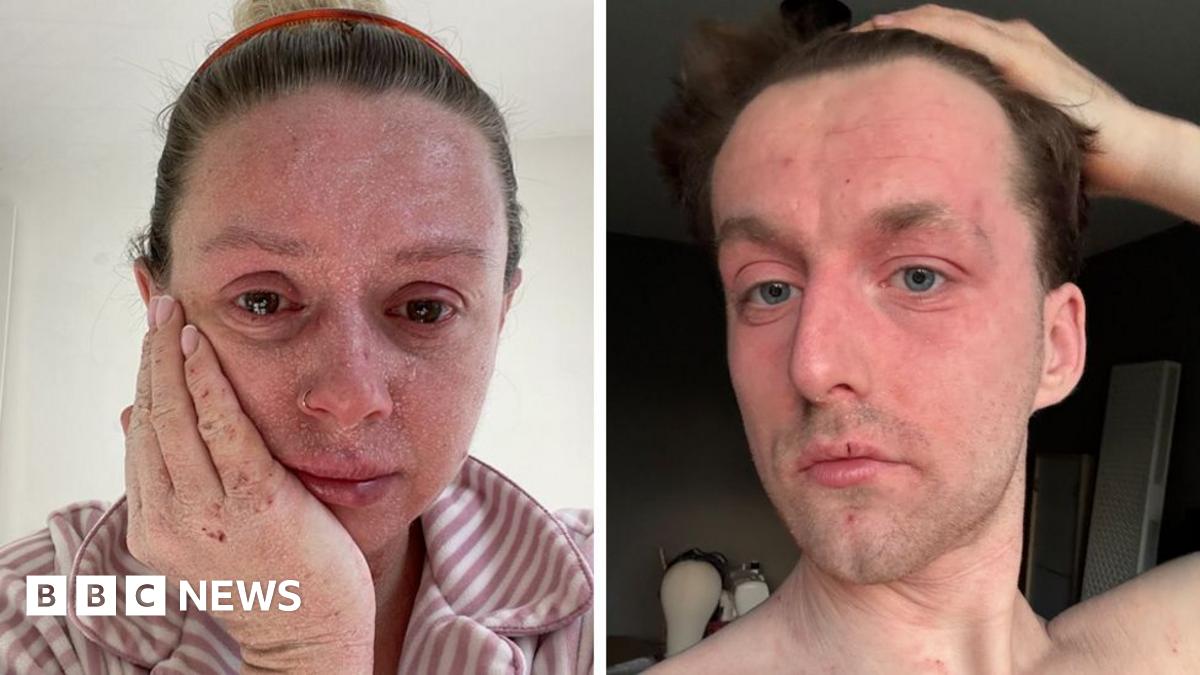
Karishma Leckraz, from Kent, says she spent many years in denial, convinced that this could not be happening to her because it looked markedly different to the posts from white people she had seen on socials.
“TSW took everything away from me. I had to hide from the world for so long, my skin was so bad, the pain, the lack of sleep, just not recognising myself,” she explains.
The 32-year-old decided to stop using steroid creams five years ago and says that since then her skin has mainly healed, but she still struggles mentally.
“My social anxiety is huge.”
Andrew Procter, from the National Eczema Society, says that while steroid creams can still be very effective for the majority, patients are “stuck between a rock and a hard place”.
“We know that steroids work for the many millions who use them, but we also have a condition that at the moment, can’t be explained.
“Which is causing real fear and that is completely understandable. That is why more research is desperately needed.”
For those with TSW-like symptoms already facing challenges with anxiety and confusion about what condition they have, getting treatment can pose another obstacle.
GPs can refer patients to dermatologists for more specialist care but there are long waits, often more than a year. For the majority, steroid creams are often the only option.
At the Royal London hospital in London, consultant dermatologist Dr Alia Ahmed runs a specialist NHS clinic for people with chronic skin disease, offering options including psychological support, immunosuppresants and phototherapy, which aim to reduce inflammation and calm the body’s immune response.
“The psychological impact, as well as the physical effects, is huge,” says Dr Ahmed, who is a member of the British Association of Dermatologists. “We have to work with the patient to understand the best course of treatment for them.”