
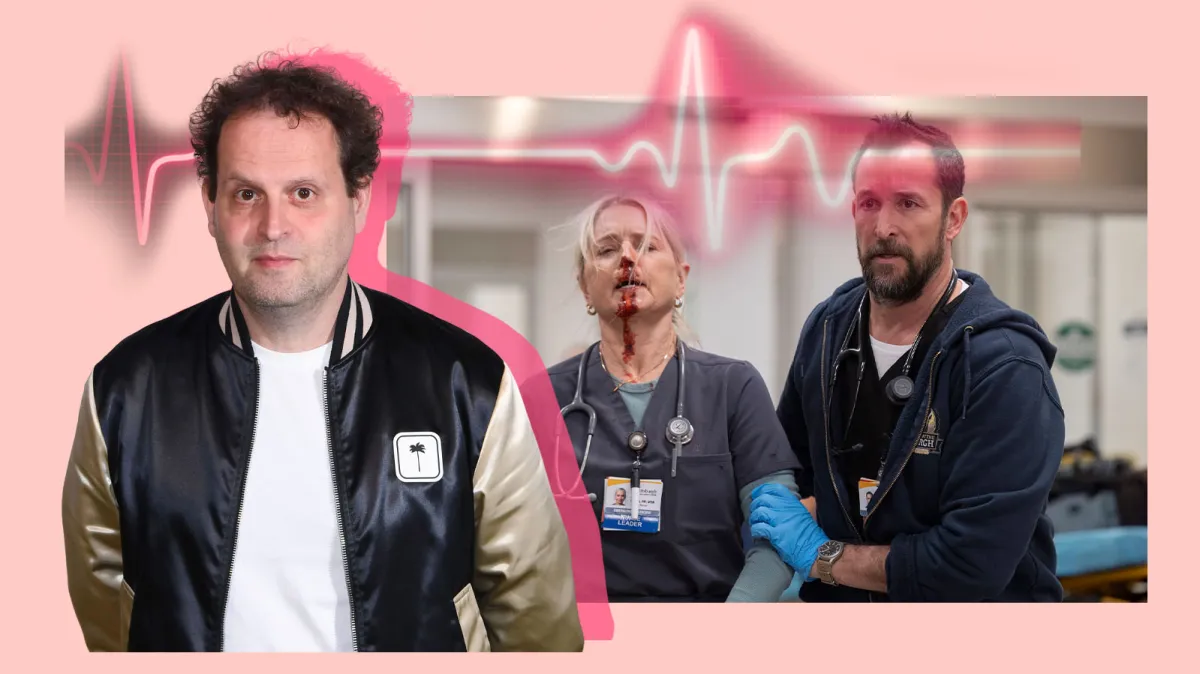
I’m not a prolific consumer of medical dramas on the basis that they are generally either full-on tripe or wildly unrealistic, and quite often both. But for more than a year now, friends from both my current life as a writer and my former life as a junior doctor have been asking me whether I’ve watched The Pitt. Before the weekend, I hadn’t — in large part because it wasn’t available to watch in the UK through legal channels and my technological prowess just about extends to Microsoft Word, rather than torrenting hooky shows on the dark web.
But now HBO Max has made its way to the UK. And until the first term of wizard school kicks off next year, the streamer is rather hoping that two series of the mega Emmy-winning hospital smash-hit will be enough of a draw.
If the show has not yet crossed your cultural orbit, the headlines are that it’s set in an emergency room, stars the ER lead Noah Wyle, was created by the ER writer R Scott Gemmill and is directed by the ER showrunner John Wells. It would be unfair to simply call it an ER reboot (we’ll leave that to the live lawsuit between the ER creator Michael Crichton’s estate and Warner Bros, the owner of HBO Max), because it’s also quite a lot like 24, having borrowed the conceit that it takes place in real time, an hour per episode.
And while ER was obviously named after the noise an ambulance makes, The Pitt is named after the Pittsburgh Trauma Medical Center, the nightmarishly busy department we find ourselves in for the 15-hour shift that is each series.
I binged the first series and the four episodes of the second over one pretty intense weekend. This was partly on the advice of a doctor mate who recommended the full immersive experience. Mega-shift now over, this review is centred on my two key criteria for a medical show.
Is it full-on tripe?
Categorically not — it’s a great bit of television. This is unremitting, breathless, stressful drama; a brutal shift at work that manages to get worse by the hour/episode, from individual overlapping emergencies to the crescendo of a mass casualty event (spoiler, soz).
A lot of people will be forking out for an HBO Max subscription off the back of it, and the dark web will no doubt be heaving with people who refuse to add another direct debit on top of their Netflix, Disney+, Apple TV+, Prime Video and Now packages.
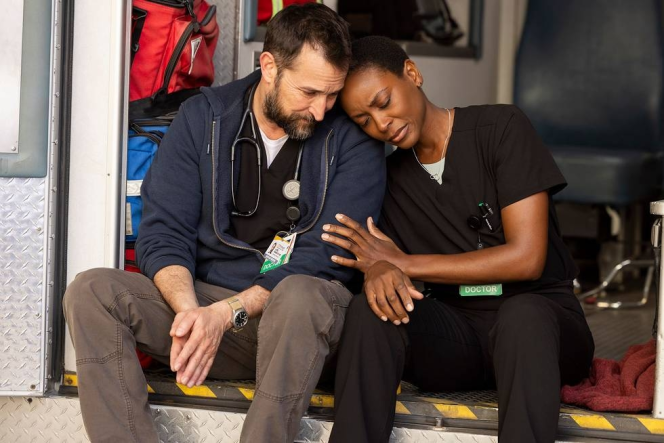 Noah Wyle as Dr Robby and Tracy Ifeachor as Dr Collins in The Pitt season onehbo
Wyle is a top-notch lead, playing the grizzled and traumatised but absurdly proficient attending physician Michael “Robby” Robinavitch battling through his day. He’s accompanied by a swarm of doctors, nurses, social workers and medical students of all descriptions. If I’m being picky, I’d add that they are also of all levels of acting ability (although special mention goes to Tracy Ifeachor as the principled senior resident Heather Collins, who easily stands toe to toe with Wyle).
I could also mention that not every character is painted as roundly as you might like, that the dialogue sometimes crosses into high egginess (“We need to laugh otherwise we’d never stop crying”) and that once it’s all stripped back, you realise you’re basically watching a soap. But you’ll have to trust me when I say this doesn’t actually matter in the slightest. It’s not high art and doesn’t pretend to be — it’s just proper, old-fashioned, compelling, kinetic telly. Better than ER, blue-gloved hands down.
Is it wildly unrealistic?
With the caveat that the bar isn’t set exceptionally high, The Pitt is probably the most authentic of the medical shows I’ve watched — it’s no Monroe, starring the House-lite James Nesbitt as a neurosurgeon (remember that?). I suspect it realises when it’s prioritising the drama over the veritas, cramming in every imaginable ethical dilemma, from doctors pocketing benzos to US abortion restrictions. And, fair enough, it’s not pretending to be a documentary.
I was particularly impressed with the way the show highlights the fallibility of the staff and the impact of the job on real human beings — elements that are often surgically excised from hospital dramas in favour of unflappable, godlike doctors. The medicine and procedures are spot on and interesting, even to a quack like me, although there is the inescapable fact that the amount of once-in-a-career pathology that hobbles through the door during one shift would see most doctors through a memoir. Then again, who wants to watch a show where four people an episode have twisted their ankle or have a bead wedged up their nose?
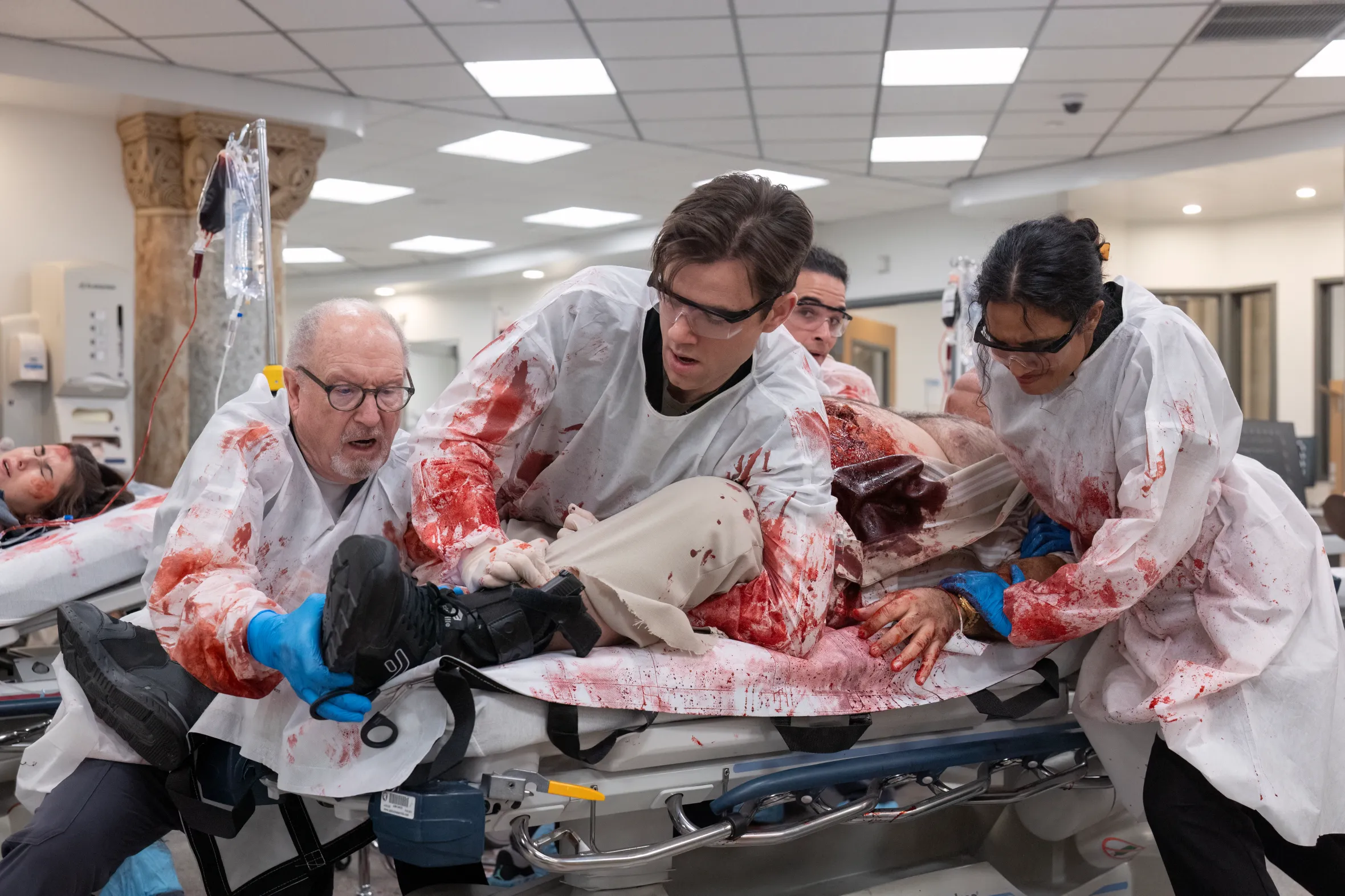 “I was particularly impressed with the way the show highlights the fallibility of the staff and the impact of the job on real human beings”hbo
It’s also fair to say that time is often a little distorted. The results of blood tests and scans appear instantaneously rather than after three hours of hitting F5 on a knackered ward computer and bleeping radiologists; patients with catastrophic injuries and illnesses are discharged with registration-endangering speed to get them home before the closing credits.
On the other hand, this allows for a huge number of cases to be stretchered through the door. Episode one treats us to a bloke with his head stoved in by a train, a lady with a degloved (don’t google it at work) open fracture to her leg, a man with more alcohol in his blood than blood, a runner whose heart annoyingly keeps stopping, an old boy with pneumonia, a woman with intractable vomiting and a mardy son, a toddler off his face on cannabis gummies, an elderly woman being given CPR by a Lucas (magic resuscitation robot), a guy with a missing tooth, and a chap with a bullet in his shoulder. And that’s not even a particularly busy episode. Meanwhile, they are spending just as much time fighting Byzantine bureaucracy as they are disease — something I could especially relate to, although magnified here, in the American system, thanks to the horrors of health insurance.
TV newsletter
What to watch or stream, plus news and reviews from our small-screen experts.
Sign up with one click
I would say that my experience of hospital medicine was rather more collegiate than The Pitt necessarily portrays. The job actually involves a lot of people mucking in together like the crew of a particularly leaky ship, but here we find ourselves watching regular bickering between professions, specialities and ranks. “I never trust the doctors,” the staff nurse Perlah says in one of the opening lines of the show, although perhaps that’s fair enough. Talking of nurses, there don’t seem to be enough of them, but every patient gets the attention of a few doctors and about 50 medical students, who appear to be allowed to attempt anything short of a heart-lung transplant.
And while I’m nitpicking, I realise that filling out paperwork doesn’t make for particularly riveting television but I did start to get anxious after a couple of episodes that nobody seemed to be documenting anything. Were they going to stay behind for another 15 hours after the show to write in the notes of 290 patients?
But, look, nobody’s ever going to write the medical drama that stops a retired doctor from spotting a heart monitor beeping at the wrong pitch, or a mislabelled blood tube. For all its minor transgressions and soapy silliness, The Pitt brilliantly captures the messy chaos of the job and the toll it takes on the people underneath the scrubs. Book yourself in for a shift.
Love TV? Discover the best shows on Netflix, the best Prime Video TV shows, the best Disney+ shows , the best Apple TV+ shows, the best shows on BBC iPlayer , the best shows on Sky and Now, the best shows on ITVX, the best shows on Channel 4 streaming, the best shows on Paramount+ and our favourite hidden gem TV shows. Don’t forget to check our comprehensive TV guide for the latest listings