
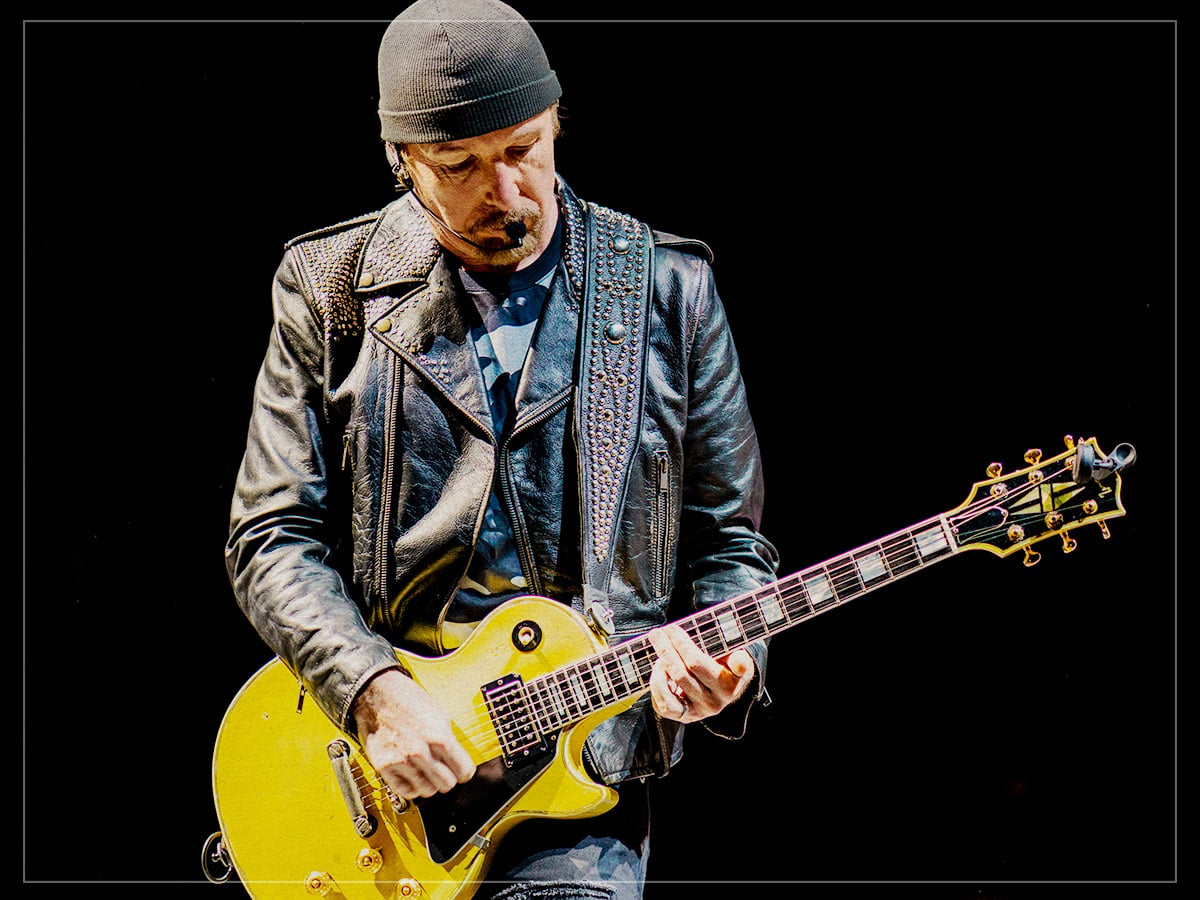

(Credits: Far Out / Joe Ahorro)
Sun 29 March 2026 19:15, UK
The Edge didn’t get into the rock and roll business to stomp out any rocker’s dreams with U2.
They might have started a sea change in the world of rock when they first started making waves, but when you look at all of their tunes, Bono’s lyrics are all based on hope and the struggle to make the world a better place while those shaky guitar parts coat every single one of the lines he’s singing. What The Edge does might be best described as colouring their music half the time, but there were more than a few times where he felt that artists weren’t pulling their weight like they were supposed to.
Then again, it’s all about whether or not someone’s abilities serve the song at the end of the day. If you take away all of Edge’s effects, chances are a lot of his tunes would sound pretty boring, but critiquing him for relying on effects is like saying that an action movie would be nothing without the explosions. You’re probably right in some respects, but that’s not the kind of thing that The Edge set out to make.
He always wanted to find different sounds that could express what he was feeling, and it’s not like he didn’t have some decent chops behind him. ‘Love is Blindness’ was the first time that he really cut loose on his instrument during Achtung Baby, and while he’s not exactly Jimmy Page by any stretch, you can hear every single piece of his broken heart as he’s trying not to fall to pieces in that studio.
It isn’t perfect, but no great rock and roll is. Even going back to the earliest Beatles recordings, some of them have more than a few blemishes, and no one would want them to change them at all. Those rough moments in any song are what make it special for millions of people to go back and listen to them, and if someone spent their entire career playing everything perfectly, it would start to sound calculated.
Which is probably why everyone had such an aversion to prog-rock after a while. The progressive movement may have grown out of a need to match some of the biggest rock and roll bands of all time, but even when you look at the experiments that Led Zeppelin worked on during their career, it was no fun seeing bands like Yes and Genesis play massive songs if you were looking to break into the industry.
Those bands felt far too out of reach, and The Edge felt that what they were doing was the antithesis of what rock was supposed to be, saying, “I’m convinced that the worst thing musically that ever happened to rock was the whole Seventies progressive-rock, jazz-fusion period. Music got so up its own arse. No passion. It was real navel-gazing crap.” And it’s not hard to see why a band like U2 would turn their nose up at those kinds of pretentious flavours of rock.
Not all of them were outright bad, and even The Edge admitted that he took a fair bit from how Steve Howe used harmonics, but there’s not as much soul in bands that were only looking to impress themselves. They had grown up listening to bands like The Clash break down those genres with their bare hands, and if The Edge was going to build himself up, it was going to be by making the most out of his deficiencies, whether that’s playing with delay or finding the right notes that suited whatever he was feeling.
Not all of his songs were meant to be completely spotless from back to front, and as far as he was concerned, that was only a good thing. The prog sphere had made everything else feel a little bit stale, and having someone out there who could still perform to the best of their ability and make people feel something was always much more interesting to him.
