
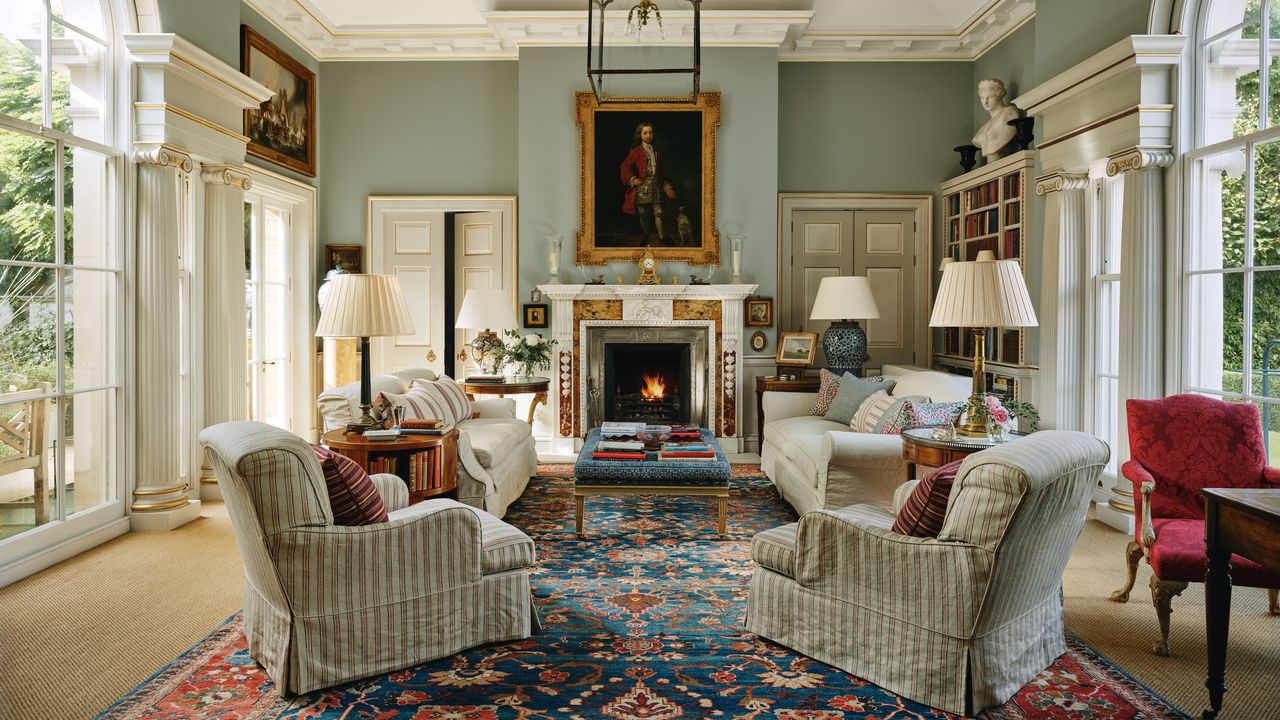
There is something about sitting in the gracious drawing room of this house that transports you to another world. The magnificent Palladian windows look out over a courtyard – a peristyle in the Roman tradition – complete with the very soothing sound of a fountain that would surely make any Roman senator feel at home. Yet this is not Italy, it is south London and a house built no more than a decade ago on the site of what was, 100 years earlier, a market garden.
That this miraculous transformation took place is due to a collaboration between the acclaimed classical architect Craig Hamilton, the equally distinguished designer Guy Goodfellow, and a client with a love of 18th-century interiors. The client was fortunate indeed, since, in order to establish privacy for the house, an impressive 28 party wall agreements had to be negotiated before building works could even begin.
Craig’s design draws from the Palladian style, with small Greek accents in the details. The limitations of space and height, and the need for seclusion, dictated a largely single-storey house built around the aforementioned courtyard, inspired by Chiswick House, W4. It was the client’s primary request that the windows in the main room opened onto it. ‘Luckily, we were able, within the planning restrictions, to gain sufficient height so that the drawing room could achieve the gravitas demanded,’ explains Craig.
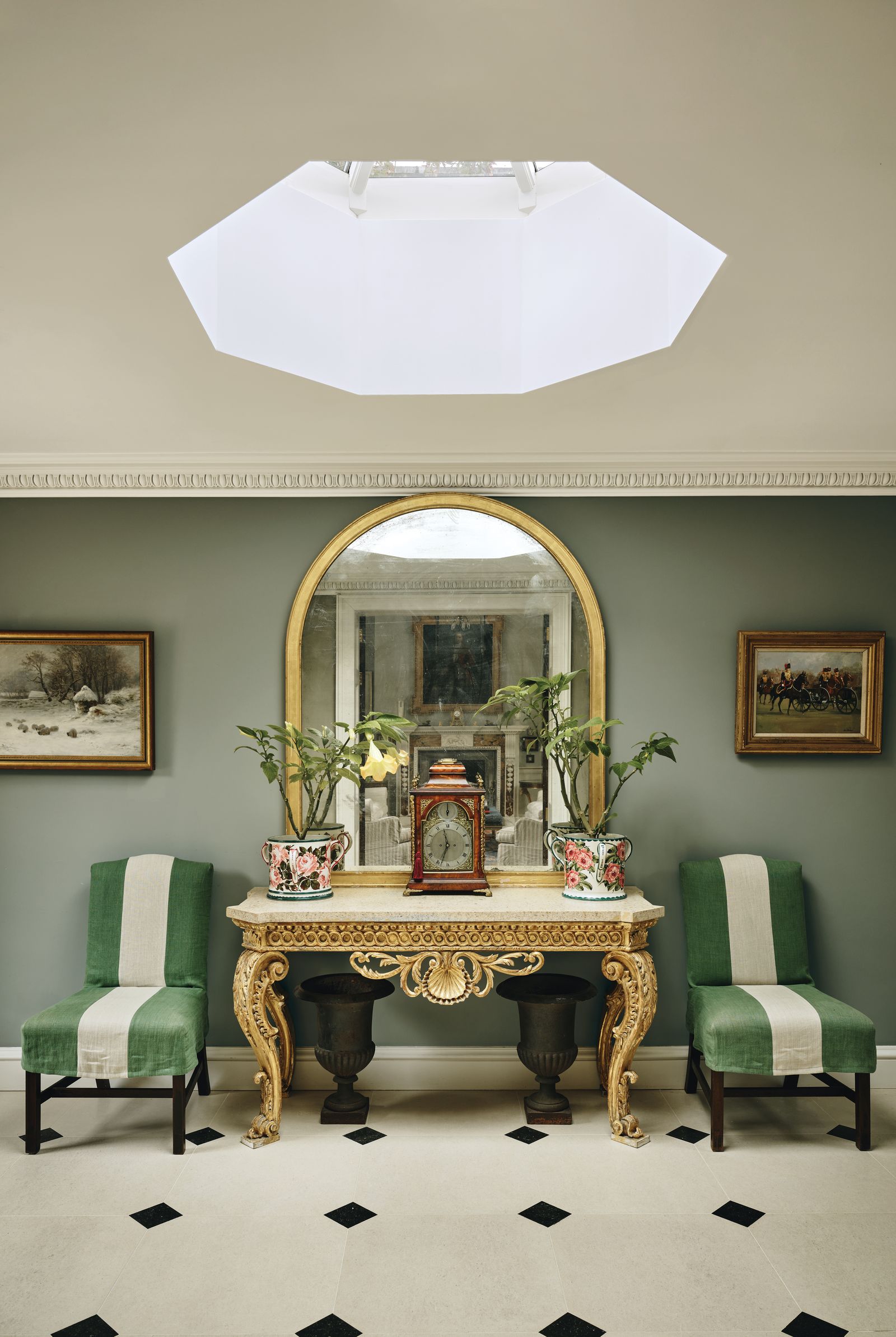
A table from Christopher Hodsoll is flanked by chairs in Pierre Frey’s ‘Cheyenne’ in cactus and sable, and paintings by Joseph Farquharson (left) and Neil Forster.
Christopher Horwood
Balancing the double-height living space is a two-storey bedroom wing; with the upper floor reached by an elegant, cantilevered stone staircase. The basement houses all the practical areas – staff accommodation, utility rooms, offices and storage – alongside an extensive media and party room.
Since both architect and designer are well known for their expertise in architectural detailing, much correspondence went on throughout the process. Craig’s strong vision for the exterior composition, including meticulous Ionic features, was echoed by Guy as he took full responsibility for internal details, ensuring they lived up to the striking building design.