
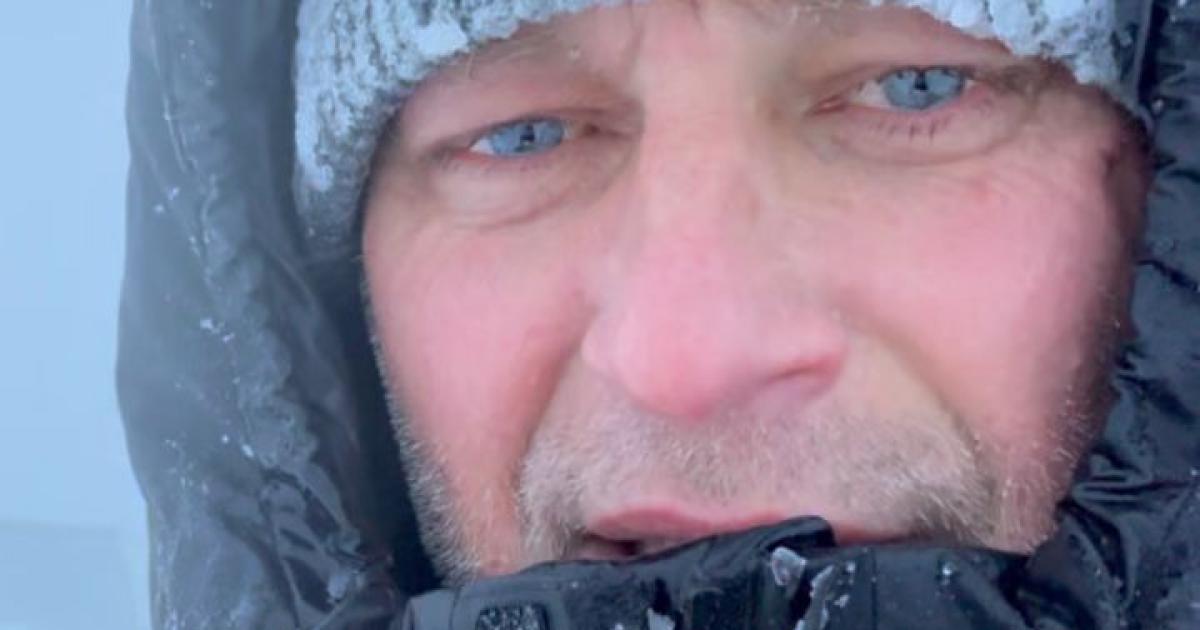
James Grove, from Halesowen, travelled to one of the most remote parts of Iceland earlier this month in search of Arctic foxes – enduring blizzards, isolation and near-miss travel chaos along the way.
The former West Midlands Fire Service worker joined a small group of wildlife photographers heading to Hornstrandir, a protected nature reserve accessible only by boat or a multi-day trek.
After days of cancelled flights due to ice and high winds, the group reached the remote peninsula via a three-and-a-half-hour boat journey.
“It’s probably the most remote place I’ve ever been,” said James.
“You’re completely cut off – no roads, no signal, nothing.”
On arrival, the group had to manually transport equipment across rocks before settling into a basic hut surrounded by several feet of snow.
James described seeing the foxes up close as a privilege and a life-changing experience (Image: James Grove)
With no running water, they were forced to dig through six feet of ice to access a stream.
Conditions quickly deteriorated. Temperatures dropped to -26°C, combined with winds of up to 45mph.
“It was brutal,” he said. “But while we were just about surviving, the foxes were thriving.”
Despite the harsh environment, James managed to capture striking images of Arctic foxes, which are fully protected within the reserve.
He described the experience of seeing them up close as a “privilege”, noting how the animals adapted effortlessly to conditions humans struggled to endure.
“They don’t even start shivering until around minus 50,” he said.
“They just curl up in the snow and carry on.”
However, the trip was not without danger.
He says the severe storm nearly left the group stranded, with discussions around rationing food and even the possibility of emergency supplies being air-dropped.
James said he and the group tackled harsh conditions which included no running water and low temperature (Image: James Grove)
“We weren’t sure if the boat would come back for us,” he added.
“That was probably the most worrying point.”
Eventually, the group made a difficult escape in rough seas before undertaking a seven-hour drive across Iceland to catch their return flights.
James, who turned to photography following a PTSD diagnosis after his fire service career, said the trip had a profound impact.
“It makes you rethink everything,” he said.
“You come back with a completely different perspective on nature, on survival, and on what really matters.”
He now hopes his experience will inspire others to connect with wildlife closer to home, encouraging people in the West Midlands to explore local nature spots.
“Even locally, there’s so much to see,” he said.
“You just have to slow down and look.”