
(Credits: Far Out / Apple Corps LTD / Alamy)
Tue 31 March 2026 18:15, UK
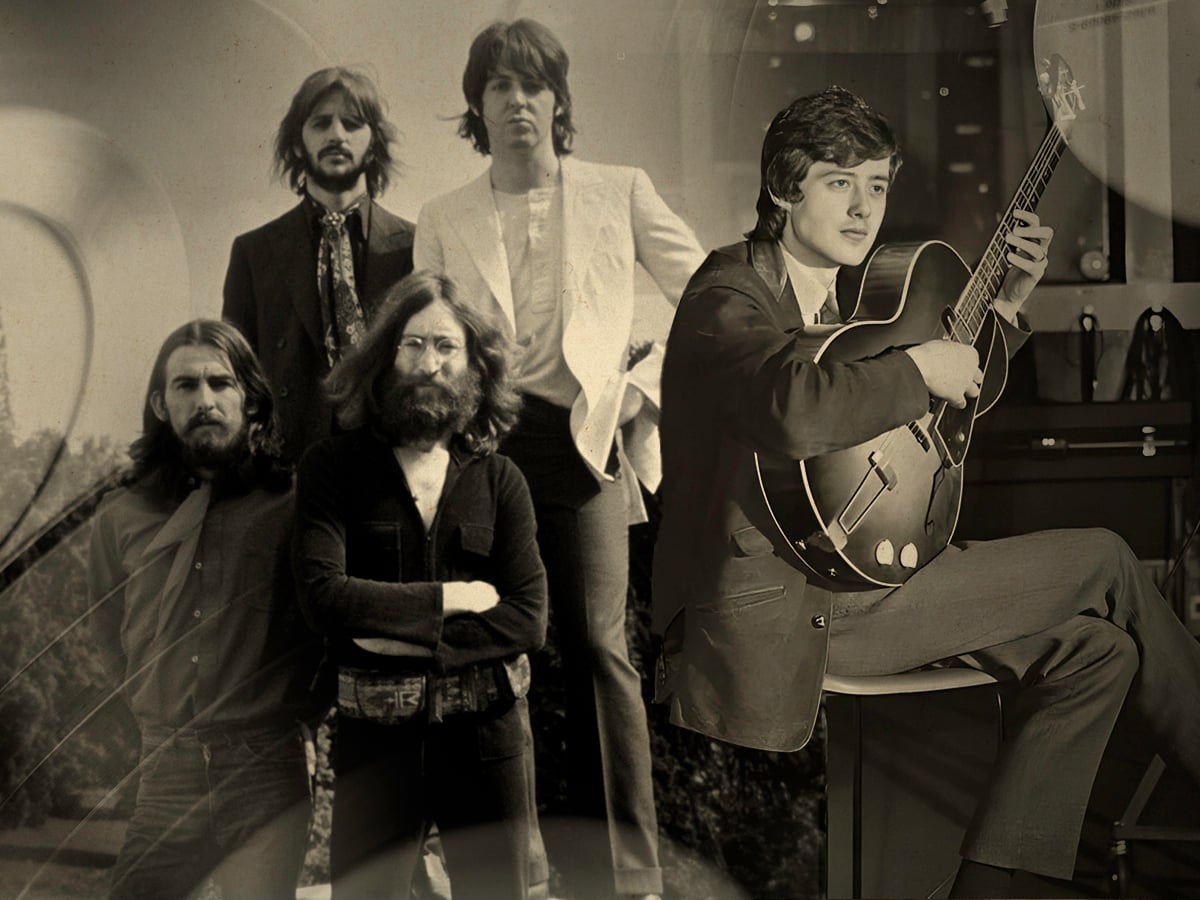
If a musical baton could have been physically handed over from the end of the 1960s, into the beginning of the ‘70s, then it would have two iconic British bands would have done so. The Beatles truly dominated the swinging ‘60s, making way for an era of expansive rock and roll that Led Zeppelin would dominate, come the following decade.
The transition between the two bands was almost seamless, with The Beatles’ iconic swansong, deliberately excluding Let It Be, Abbey Road being released in the very same year as Zeppelin’s self-titled debut album. The London band gladly accepted the role of music pioneers and followed up that record with continued expansion, taking classic rock into the arenas for the masses to enjoy.
But Jimmy Page had been present on the scene long before his band’s emphatic introduction to the world of music. While The Beatles dominated the spotlight in the ‘60s, he was working the burgeoning London blues scene, alongside his fellow guitarists Eric Clapton and Jeff Beck.
While all three of those icons would perform as part of The Yardbirds, Page was more interested in honing his songwriting craft in relative humility. Almost as if there was an acute understanding that his date with his famous destiny wasn’t to reveal itself just yet, and so he crafted his skills as a session musician for various icons.
The Who, The Kinks and The Rolling Stones were all beneficiaries of Page’s talents in that decade, but his most notable experience came under the stewardship of the Fab Four. Way back in the early years of the band, when they were about to set the world alight with Beatlemania, he found himself in the studio with them making incidental music for the film A Hard Day’s Night.
“I turned up and, lo and behold, there was George Martin,” Page recalled, “and I recognised the music and realised what it was”. He laid down some background guitar for ‘Ringo’s Theme’, the instrumental of the song ‘This Boy’ that soundtracks a despondent Ringo Starr as he walks by the River Thames.
Ultimately, it wasn’t as glittering as laying down actual musical parts, like he did for The Who, The Kinks and The Rolling Stones, but it was an insight into the creative process of a commercial and artistic monster.
Thereafter, the Zeppelin axe-man formed a sort of artistic friendship with the band that would eventually platform some of the most important moments for his future band. Houses of the Holy’s standout track, ‘The Rain Song’, was penned after George Harrison told him that Zeppelin didn’t do enough ballads.
So while the baton may have seemed as though it was passed in 1969, really, the groundwork for the transition was laid long before, when Page was honing his craft as a session musician. Biding his time, playing in the shadows of The Beatles, as well as the catalogue of other British invasion bands, he learned from the best, before becoming one of them with his own world-conquering band.
ADD AS A PREFERRED SOURCE ON GOOGLE  The Far Out Beatles Newsletter
All the latest stories about The Beatles from the independent voice of culture.
Straight to your inbox.