
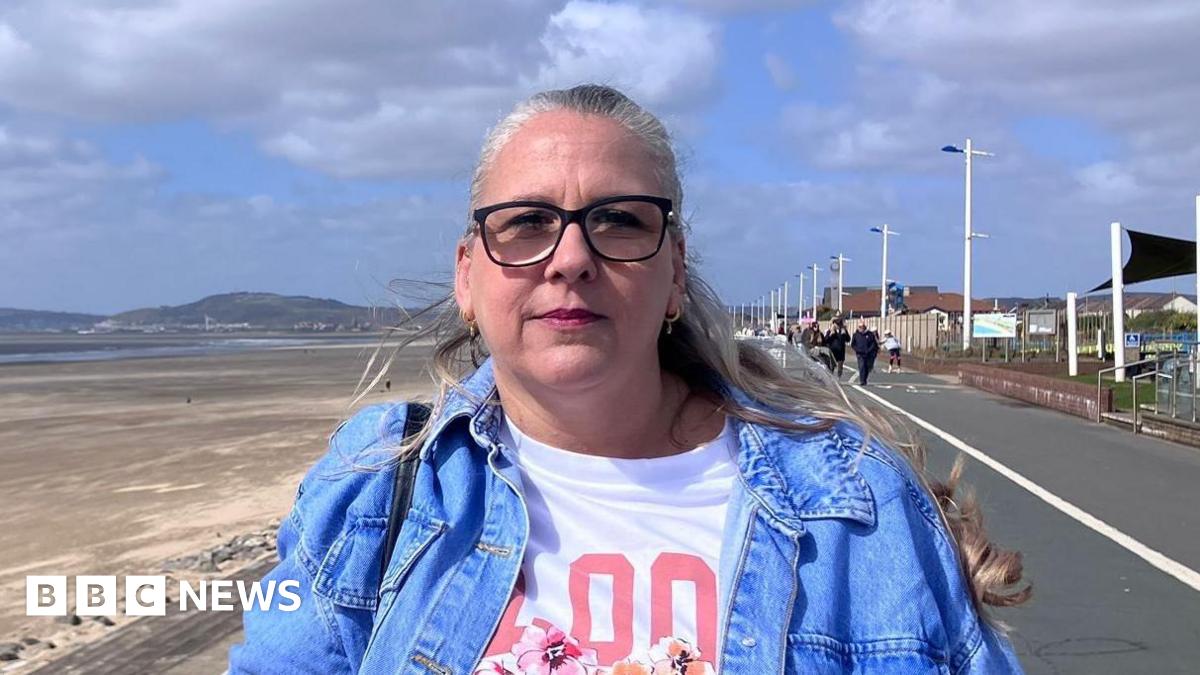
Michelle cares for her 23-year-old daughter Alicia, who has a learning disability and a rare form of epilepsy.
Alicia can have thousands of seizures every day and the condition means she needs constant supervision.
She also cares for her parents who are in their 70s, as well as her sister and her nephew.
“People say they appreciate unpaid carers, but we don’t feel appreciated, we feel used,” said Michelle.
“Our love is used against us, because we love the people we care for, we give them our time.
“I gave up work to care for my daughter but every system I’ve come across, I’ve had to fight for everything she’s entitled to and everything she needs and everything I need to keep her alive and safe in the home.”
Michelle said she spent more than 90 hours a week caring – the carer’s allowance is £83.30 which is available to anyone who provides at least 35 hours of care a week.
“I don’t have breakfast because I can’t afford breakfast. I have one meal a day,” said Michelle.
“With the cost of living, the price of food, petrol, gas and electric. It’s dire. There’s no money left.”
The report said carers’ physical and mental health was deteriorating – some report isolation, burnout, and suicidal thoughts. It found that respite care was “non existent” in parts of Wales.
Michelle said the Welsh government needed to put pressure on the UK government, which makes decisions on the carer’s allowance, to help support people in Wales.
“Don’t say you appreciate – recognise us,” she said.