
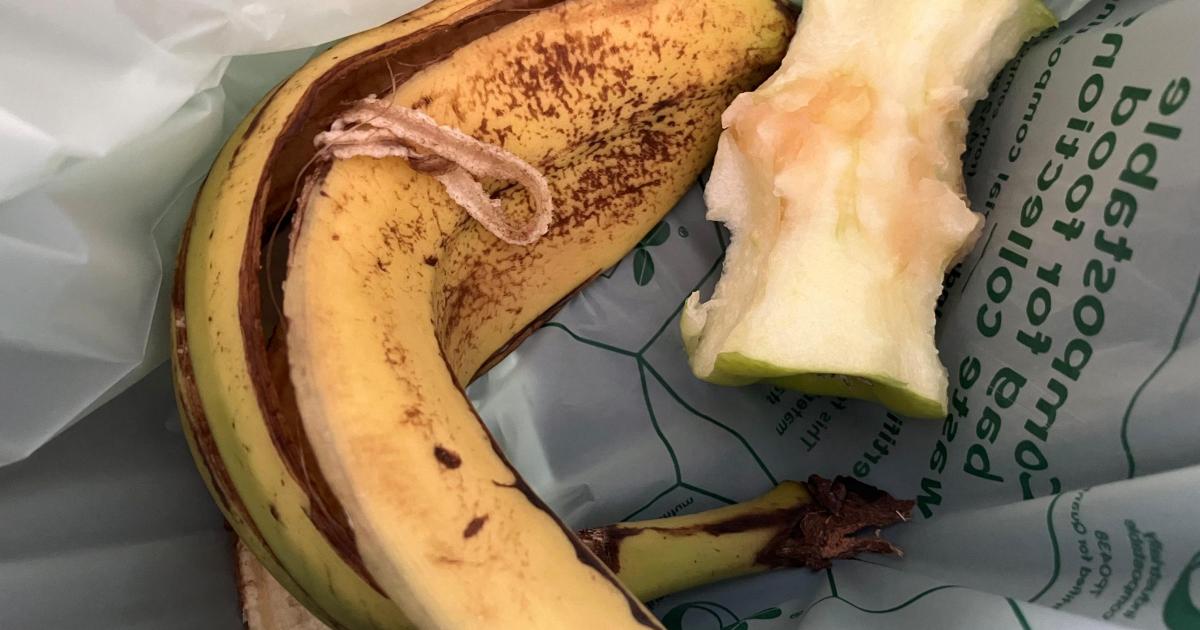
A national shake up of bin and recycling collections that began this week now requires all councils in the UK to offer food waste collections.
But despite a deadline of March 31 to implement these changes, many have acknowledged they will not meet that deadline.
In Bradford, the food waste bin collections are unlikely to be introduced until September.
Bradford set to be fifth for most food waste collected
New figures from waste management company Divert suggest Bradford has the potential have one of the highest amounts of food waste collected nationally.
And it says that if this waste was used to generate energy, it could provide a huge boost for the district.
Using data from council areas that already have food waste collections, Divert claims that around 39,556 tonnes of food waste a year will be collected in Bradford.
This would place it fifth, behind Birmingham, Leeds, North Yorkshire and Sheffield for most food waste collected.
How does food waste generate energy?
Food waste can be used to create energy through anaerobic digestion.
This process produces biogas, which can be captured and used to generate electricity and heat, or upgraded into biomethane for use in the gas grid.
The remaining material, called digestate, can be used as a fertiliser.
If the estimated 39,556 tonnes collected in Bradford were used to generate energy, it would create 1,186,6911 kwh of energy – enough to power 4,395 homes.
However – Bradford Council has estimated that it will collect a much lower tonnage of food waste a year – 9,300 tonnes.
‘Huge energy generation potential’ from food waste’
At a recent meeting of Bradford Council’s Regeneration and Environment Scrutiny Committee, members were told that the authority had been looking at the possibility of setting up sites where food waste could be used to generate energy, but this was still at an early stage.
John Verity, waste management expert at Divert, said: “It is important to educate people on where their food waste goes and the value of separating it correctly.
“Many people are unaware of the huge energy generation potential of food waste through anaerobic digestion, and so it’s time we began approaching the topic as a viable energy source, not just a method to process waste.”
Food waste collections to start in Bradford in September
When food waste collections are rolled out in Bradford, each household will be entitled to receive an internal five-litre caddy for the kitchen and an external 23 litre bin.
Bins will be collected once a week.
The council has received £4.8m from Government to purchase 19 vehicles and tens of thousands of bins for the roll out.
But the collections are not likely to start until September “based on current vehicle delivery times.”
A Bradford Council spokesperson said: “New government regulations require the separation and collection of food waste from all households. From September 2026, residents will have to separate their food waste by placing it in a different bin, which will be emptied each week.
“As part of our planning for this, we are exploring the potential for an Anaerobic Digestor, which will help us comply with the new recycling and waste regulations, and turn this waste into energy for distribution through local networks.
“However, as yet, no decision has been made by the council, nor any commissioning procurement entered into. In the meantime, we are procuring a temporary processing contract to deal with the food waste.
“Industry standard analysis shows the Bradford district should expect to collect approximately 9,300 tonnes of food waste from a 30 per cent initial participation level, with the potential to collect more as additional households get on board and participate.”