
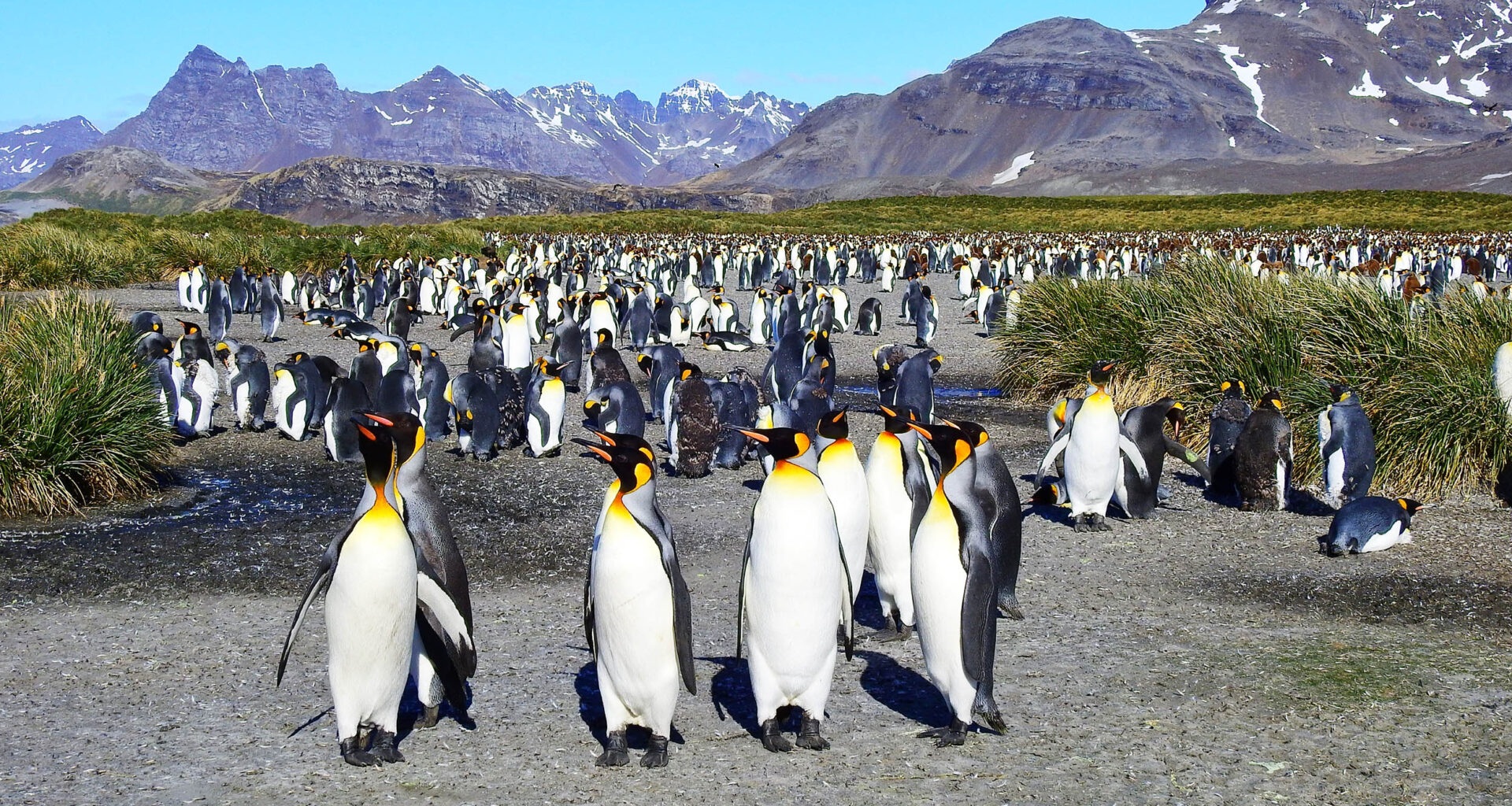
A new study has found that king penguins on one sub-Antarctic island now begin breeding 19 days earlier than they did in 2000, and more chicks survive the winter.
That change has turned a warming ocean into a short-term advantage for a species that could still lose it.
King penguins on Possession Island

On Possession Island, a remote island in the southern Indian Ocean between Antarctica and Madagascar, researchers followed a colony where breeding now starts noticeably earlier than it once did.
Working from a 24-year record of tagged birds, Gael Bardon at the Monaco Scientific Center (CSM) connected that earlier start to a marked rise in chick survival.
By 2023, 62 percent of chicks survived, up from 44 percent in 2000, showing that this shift in timing has carried real biological consequences.
Those gains have not removed the underlying risk, and the advantage holds only as long as the penguins can still reach the food that makes it possible.
Why earlier breeding helps
For king penguins, the timing of life events shapes whether a chick can build enough fat before winter begins.
Each pair raises one chick, and adults must shuttle fish back from sea while the young bird waits on land.
An earlier start lengthens that feeding window, so chicks add reserves before a long winter fast strips energy away.
When the season opens later, many chicks reach the hardest months smaller, and starvation becomes a much more likely ending.
King penguins’ food source
Far south of the colony lies the polar front, where warm and cold waters meet and concentrate food.
There, mixing lifts nutrients toward the surface, feeding plankton that support lanternfish, the penguins’ main prey during breeding.
Warm water can help those fish, yet the same warming also nudges this rich feeding zone farther south.
That distance matters because longer hunting trips burn time and energy parents would rather spend feeding chicks.
Signals from seawater
Near that feeding zone, sea warmth and chlorophyll a, a pigment used to track plankton near the surface, moved with breeding timing.
Lower surface plankton and water close to about 40 degrees Fahrenheit matched earlier breeding, likely because lanternfish were more available.
The link sounds backward at first, but leftover plankton can signal that the grazers and fish below are out of sync.
That makes the ocean look less like a simple warm-water benefit story and more like a chain of delayed reactions.
Benefits arrive later
Breeding success also reflected ocean conditions from one to two years earlier, not just the weather parents faced that season.
That delay makes sense because penguins catch older fish and squid, whose population numbers depend on how well their offspring fared while growing and navigating the changing seas.
Adults may also carry the benefit forward, since a bird that eats well one year can breed stronger next year.
Those lags warn that today’s good food season may still be partly shaped by yesterday’s ocean conditions.
King penguin hunting styles
Even now, king penguins do not all hunt the same way, and that variety may be buying them time.
Some birds head south to the best fronts, while others stay nearer the colony and switch to prey like squid.
Because no breeding islands sit farther south of Crozet, stretching each hunt may be the only option if the front keeps moving.
That flexibility can soften a blow, but it cannot erase a future where the richest waters keep sliding farther away.
Why numbers stalled
More surviving King penguin chicks did not automatically produce a larger crowd on Possession Island, which seems very close already to its practical population limit.
When breeding space and local resources tighten, extra young birds may settle elsewhere instead of squeezing into a full colony.
That possibility fits a species spread across scattered sub-Antarctic islands, where gains in one place can show up elsewhere later.
Population health, in other words, may be harder to judge from a single beach than from the wider archipelago.
A rare bright spot
Against a broad pattern of earlier breeding across penguins, this result stands out because timing does not help every species equally.
Penguin work at Oxford Brookes University helps explain why the finding looked unusual to ecologist Tom Hart.
“This is a rare win,” said Hart, who was not directly involved in the research. Even so, a rare win is not a permanent one when the ocean system underneath it keeps changing.
King penguins in a warming world
Past work already warned that king penguins can stumble when the fishing zone moves too far from breeding islands.
A 2008 study tied warmer seas to lower adult survival, because parents had farther to travel for food.
Bardon’s paper points to the same danger ahead, with the best conditions centered around waters near 40 degrees Fahrenheit.
Push that sweet spot much warmer or much farther south, and the early breeding advantage could disappear fast.
To sum it all up, king penguins have been able to maintain breeding success through timing, diet, and route changes that currently align with the warmer Southern Ocean.
This adaptation is definitely real, but also narrow, and the next few decades will test whether flexibility can outrun a moving food web.
The study is published in Science Advances.
—–
Like what you read? Subscribe to our newsletter for engaging articles, exclusive content, and the latest updates.
Check us out on EarthSnap, a free app brought to you by Eric Ralls and Earth.com.
—–