
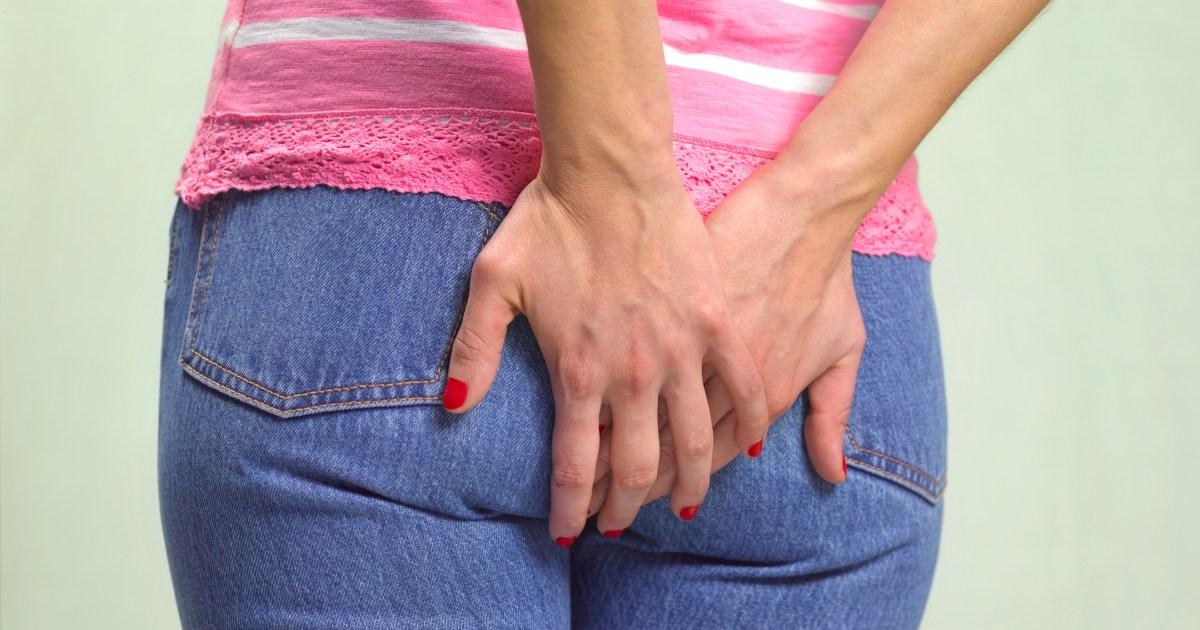
Pilonidal cysts aren’t pleasant for those affected (Picture: Getty Images)
Briefs. G-string. Hipster. Brazilian. There are many types of knickers us women can pull on at the start of the day.
But there’s one specific type of underwear that’s getting the blame online for causing an unpleasant type of cyst that specifically affects your bottom.
‘Butt floss’ or, as you’ll know it, thongs, are being chastised after a TikToker said wearing one caused her to get a pilonidal cyst.
This a painful, infected, pus-filled sac located near the tailbone in the buttock cleft (the indent that separates your cheeks), which can be very sore.
‘I’ve never experienced something as traumatic as being rushed for emergency surgery last week,’ TikToker LaVashti said on the app, as she filmed herself binning all her thongs. ‘I spent six nights in the hospital and two days in a facility for wound care.’
She posted the video to spread awareness for other women after her pilonidal cyst developed into an abscess which had to be surgically removed.
Some commenters were very aware of these cysts saying they were ‘no joke’ and caused ‘the worst pain’, while others had never heard of them.
‘I’ve never heard of this,’ wrote one woman. ‘I’m 55 but wear butt floss.’
Can thongs cause pilonidal cysts?
In short, they can contribute to the problem, but they’re not the sole cause.
‘A pilonidal cyst is a small pocket or tunnel that forms near the tailbone, typically containing hair and skin debris,’ Dr Lawrence Cunningham tells Metro.
‘The body treats trapped hair as a foreign object, triggering inflammation that eventually develops into a cyst.’
So, these cysts can form whether you choose to go commando or not.
‘There’s no strong evidence that thongs directly cause pilonidal cysts,’ sexual health nurse, Sarah Mulindwa, tells Metro. ‘However, in some cases, they could contribute to irritation in the area, which might play a small role for people who are already prone to them.’
Why can thongs add to the problem? Well, Dr Cunningham explains the friction from the so-called ‘floss’ can be a concern.
‘The thin fabric strip creates friction and pressure in the natal cleft area (between the bottom cheeks), which irritates hair follicles and can set the conditions for a cyst to form,’ he explains.
‘Tight fitting thongs worn regularly are the main culprit here. That constant rubbing causes hairs to become ingrown, and once that process starts, a pilonidal cyst can follow.’
But this doesn’t mean that thongs are the villain here, with Dr Cunningham for UK Care Guide, explaining that underwear choice is just one factor among several, like genetics, hair type, and lifestyle choices.
Pilonidal cysts: the quick facts
What is it? A small tunnel that forms near the tailbone, containing hair and skin debris, which gets inflamed and develops into a cyst.
Symptoms: These include pain, swelling, and a visible cyst which leeks pus or blood. Sitting, walking, and sleeping can all become very uncomfortable.
Treatment: Mild cases are managed by keeping the area clean, applying warm compresses, and antibiotics. Surgical intervention becomes necessary for more severe cases. That might mean a simple drainage procedure or, where the cyst is well established, an operation to remove the cyst and surrounding tissue entirely.
Source: Dr Lawrence Cunningham
Who is most likely to get these cysts?
If you need more convincing, the proof is in the pants.
It turns out that guys struggle with these cysts, and most of these men will be wearing boxers.
‘In my experience, young men aged 15 to 35 are the most commonly affected group, particularly those with thick or coarse body hair,’ Dr Cunningham explains. ‘People who sit for extended periods, like truck drivers or office workers for example, are also more susceptible I’d say.’
Nurse Mulindwa, for Lovehoney, adds that people who sweat a lot can also be prone to these cysts, and if you’ve had one before, you’re also more likely to get them again.
Can thongs cause other problems?
Simply put, the majority of women can wear thongs without any problems whatsoever, but that doesn’t mean they can’t cause issues for some.
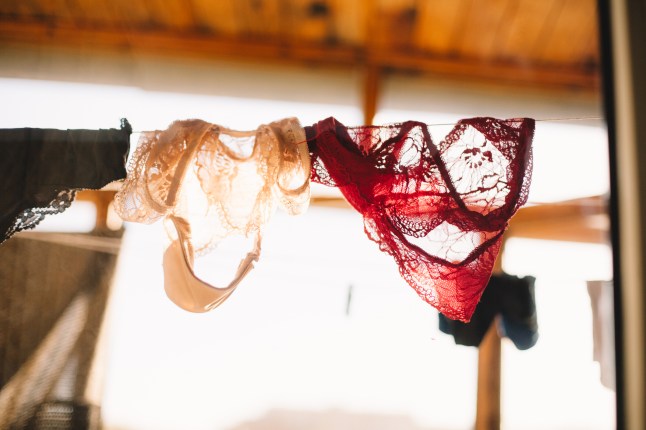
If you love your thong, keep it (Picture: Getty Images)
These include skin irritation or chafing, which Sarah explains can be a result of the fabric being too rough or the fit being too tight, in which case the nurse adds you’ll need to switch to softer fabrics and better sizing.
‘Thongs can potentially transfer bacteria from the back to the front, resulting in UTIs or bacterial vaginosis,’ Sarah adds. ‘Yeast infections can also happen if the thong is made from non-breathable material which traps moisture.’
If you suspect you have any of these, you’ll want to book a doctors appointment to get the appropriate medications and creams prescribed, to stop the problem getting worse.
Your ‘butt floss’ can even cause ingrown hairs or folliculitis from the irritation of the hair follicles near your bottom, and if you suffer from haemorrhoids the fabric can aggravate sensitivity in that area, according to the nurse.
Love your thong?
Then keep wearing it.
‘Don’t ditch it completely, just be mindful that the fit isn’t too tight, the fabric is cotton or breathable blends, and don’t wear them from workouts or very hot days,’ she says.
‘It’s all about balance.’
Do you have a story to share?
Get in touch by emailing MetroLifestyleTeam@Metro.co.uk.
Arrow
MORE: My daughter was 12 when she was first sexually harassed
Arrow
MORE: ‘Levering’ is the sexy side dish that will enhance your sex life
Arrow
MORE: Children scream after Disney Olaf robot ‘collapses’ at Disneyland Paris
Comments
Add Metro as a Preferred Source on Google
Add as preferred source
The Slice
Your free newsletter guide to the best London has on offer, from drinks deals to restaurant reviews.