
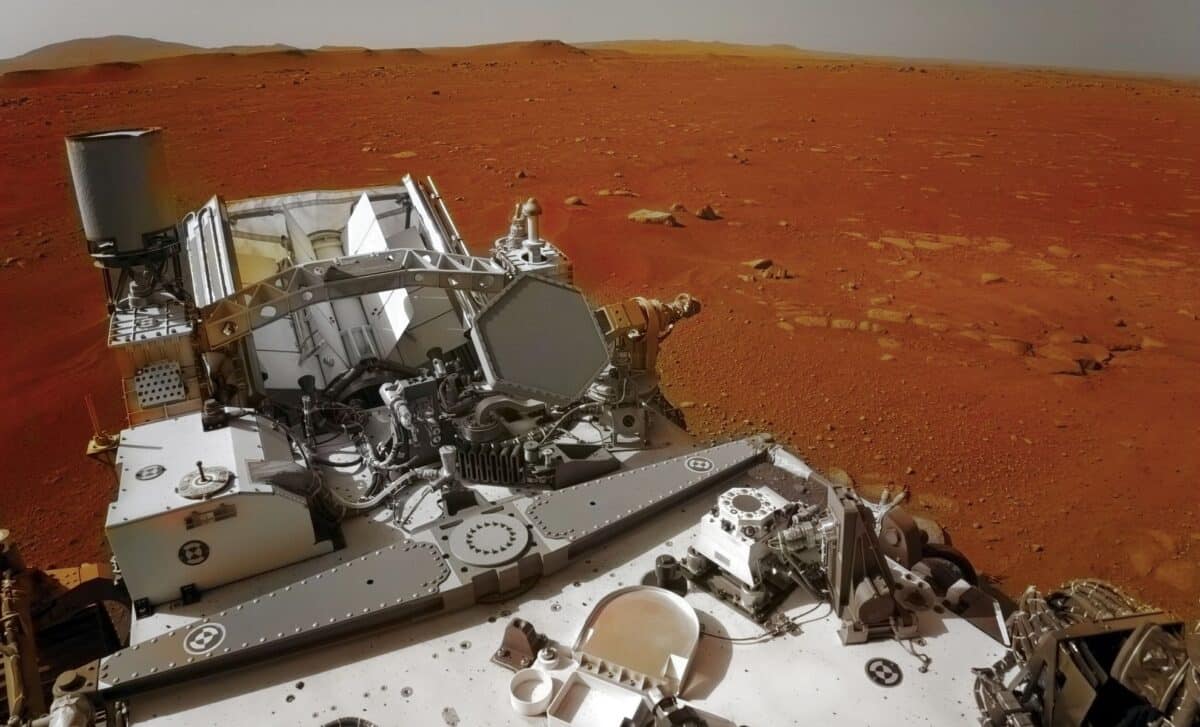
Mars may once have hosted sustained rainfall and stable liquid water, according to new findings based on clay minerals analyzed by NASA’s Perseverance rover. The study suggests that parts of the Red Planet experienced conditions comparable to warm, wet climates on early Earth.
Scientists have long debated the climate of early Mars, especially during the Noachian epoch, which lasted from about 4.1 to 3.7 billion years ago. This period overlaps with the Late Heavy Bombardment, when intense asteroid impacts shaped much of the solar system’s rocky surfaces.
At stake is a fundamental question: were Mars’ water-related features formed by brief melting events in a cold environment, or by a stable, rain-driven climate? The latest data from Jezero crater gives the discussion something more concrete to work with.
These Minerals Suggest Mars Wasn’t Always Cold
The study, published in Communications Earth & Environment, centers on small clay pebbles, kaolinite, found in ancient channels inside Jezero crater. These minerals display a chemical composition depleted in iron and magnesium but enriched in aluminum and titanium.
“The Perseverance rover discovered light-toned, cobble-sized, aluminum-rich “float” rocks (rock fragments), with some exhibiting spectral signatures of kaolinite, an aluminum-rich clay mineral,” wrote the authors.
This signature is not consistent with formation in high-temperature environments such as hydrothermal systems triggered by volcanic activity or meteorite impacts. Instead, it points to chemical weathering under relatively mild conditions. Based on the same source, this kind of alteration is best explained by prolonged interaction with liquid water, indicating rainfall rather than isolated melting events.
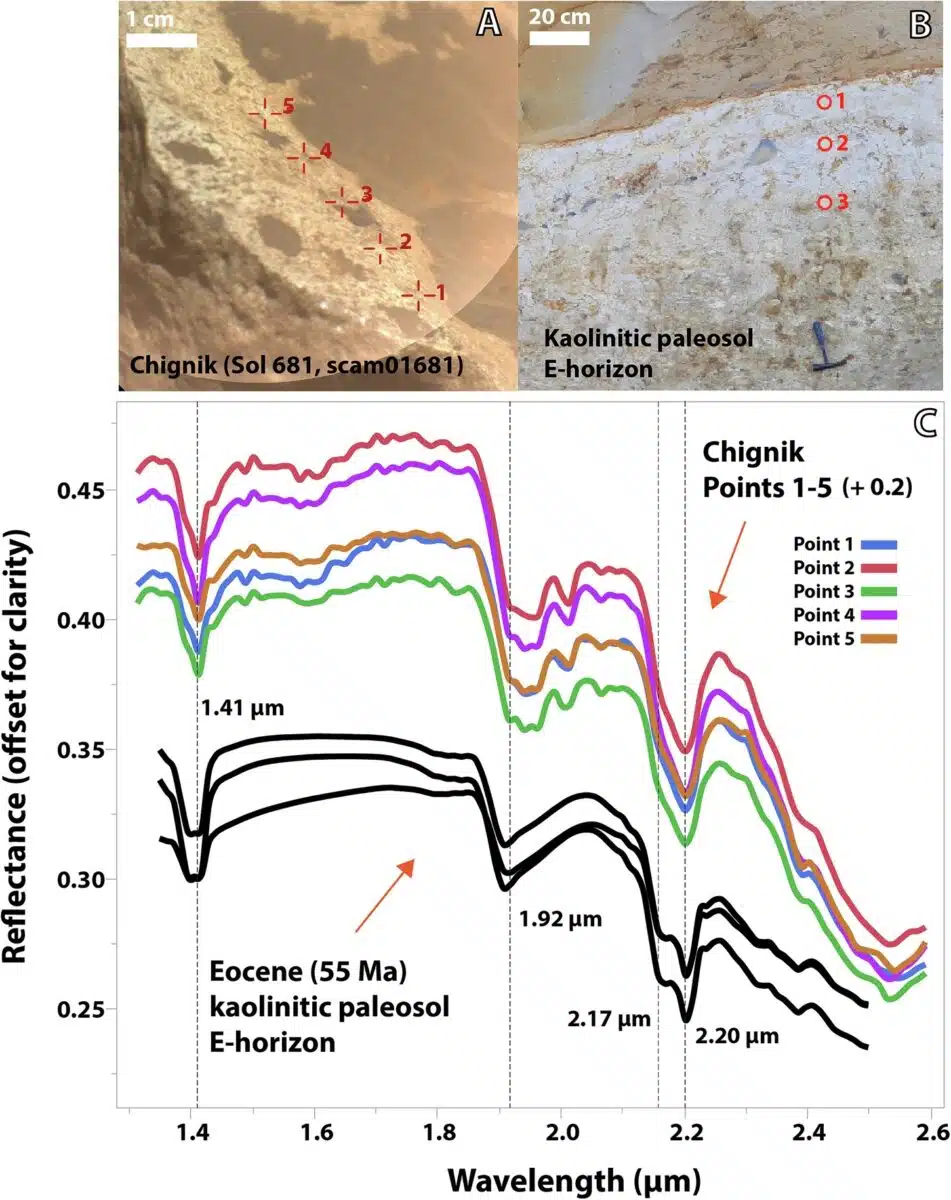 Evidence of water-driven alteration in Martian rocks. Credit: Communications Earth & Environment
A Thicker Atmosphere That Sustained Water Over Time
These findings also point to Mars’ ancient atmosphere. During the Noachian period, the Sun was about 30% dimmer, meaning the Red Planet likely needed a much thicker atmosphere to sustain liquid water. The latest research suggests Mars’ atmosphere was likely rich in CO₂, producing a greenhouse effect strong enough to maintain warmer conditions
“On Earth, these clay minerals can form from hydrothermal alteration or rainfall-driven chemical weathering over thousands to millions of years, but how they formed on Mars remains a mystery,” the researchers noted.
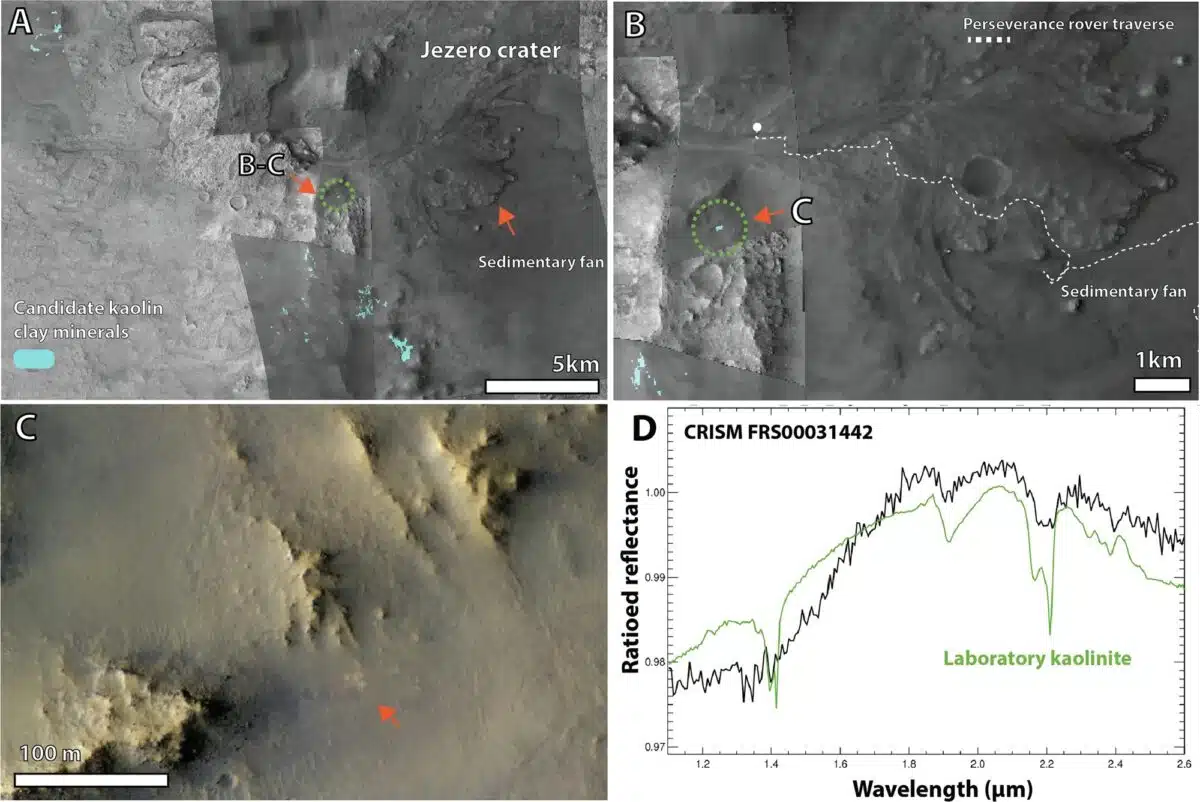 Mapping clay-rich deposits in Mars’ Jezero crater. Credit: Communications Earth & Environment
A More Habitable Mars?
The study concludes that these wet conditions may have lasted from thousands to millions of years. As explained by the researchers, these intervals could represent some of the most habitable phases in Martian history. This finding aligns with other recent results from Perseverance, including the identification of potential biosignatures in samples collected from the same region.
Their future analysis will rely on the Knoll criterion, defined by astrobiologist Andrew Knoll, which requires that any proposed evidence of life cannot be explained by non-biological processes. As noted in the source, confirming this will depend on whether the samples can eventually be studied in terrestrial laboratories.
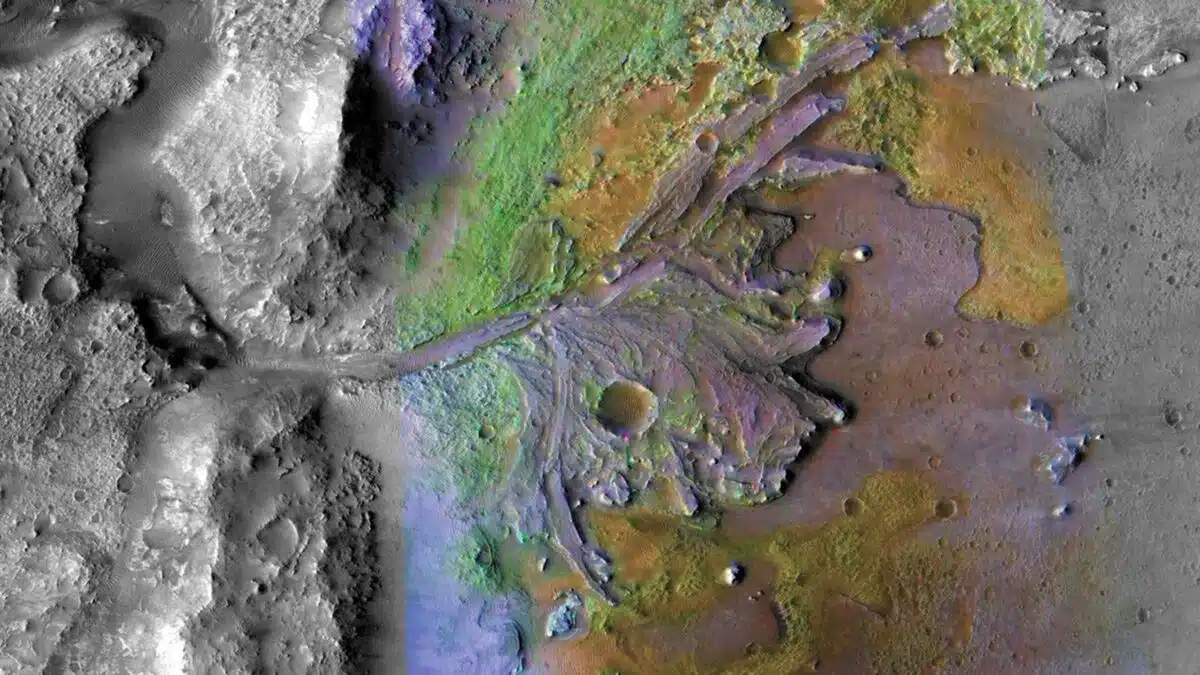 False-color view reveals ancient river delta in jezero crater explored by Perseverance. Credit: NASA