
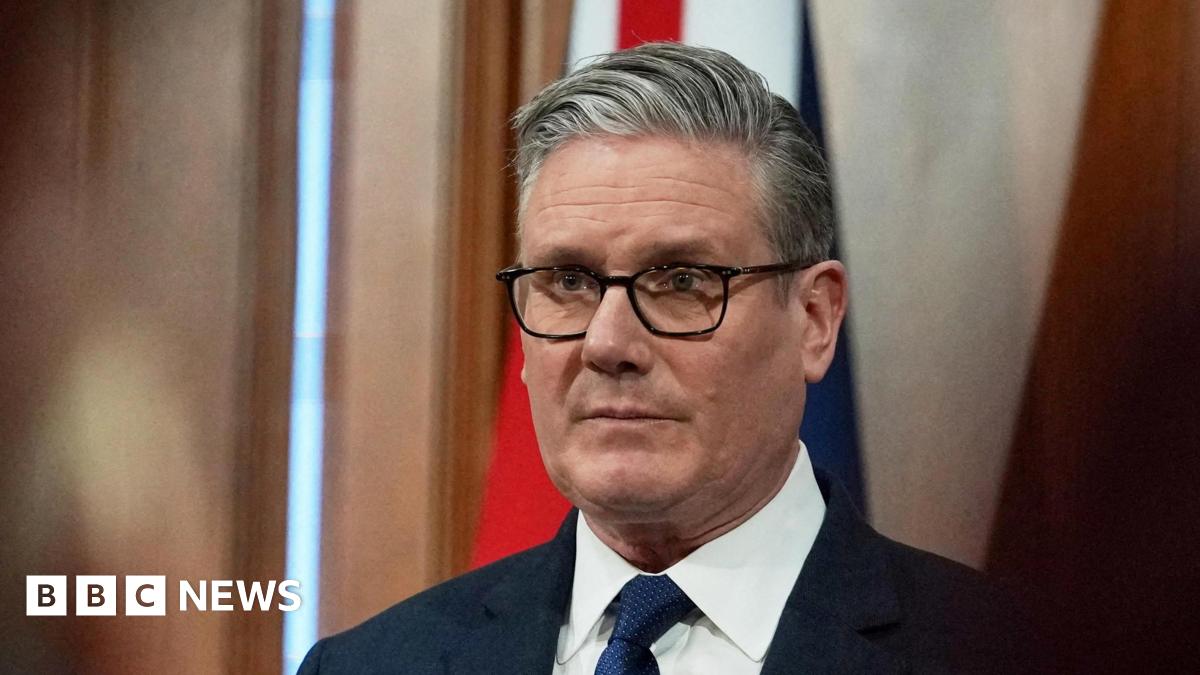
First, while talking up the gravity of the moment, he has decided not to respond with emergency measures.
Other than a package of support for those who use heating oil, the government is warning that any support for household energy bills will not come until the autumn.
The prime minister argues that households are protected, first, by the energy price cap for the next three months, and then by the fact that when the current cap elapses it will be the summer, when energy use is lower.
This is one of the areas where Sir Keir is coming under most criticism from other parties.
To his left, the Greens say he should commit billions to subsidise energy bills from July, while to his right the Conservatives and Reform UK say VAT should be removed from household energy bills now.
The Liberal Democrats want to change how renewable energy projects are funded to reduce bills. Plaid Cymru is calling for more support for households and businesses, while the SNP argues independence would allow Scottish ministers to cut bills by reducing energy costs.
But household bills are just one element of this.
The prime minister has also resisted pressure, including from the Conservatives, Reform, the SNP and the Lib Dems, to introduce emergency measures to reduce fuel prices at the pump.
He insisted again today that the proposed increase in fuel duty in September was under review, but it is hard to find anybody in Westminster who believes this will go ahead. Some Labour MPs privately question why Starmer does not just say so now.
In holding off before taking action, the prime minister is putting himself out of step with some of his allies.
To take just one example, Australia – led by a Labour government from which this government often takes inspiration – has halved its fuel taxes.
On Tuesday, a member of the European Commission urged people to work from home, drive less, drive more slowly and fly less.
The UK government’s messaging, while gloomy about the overall situation, is in starkly different place.