
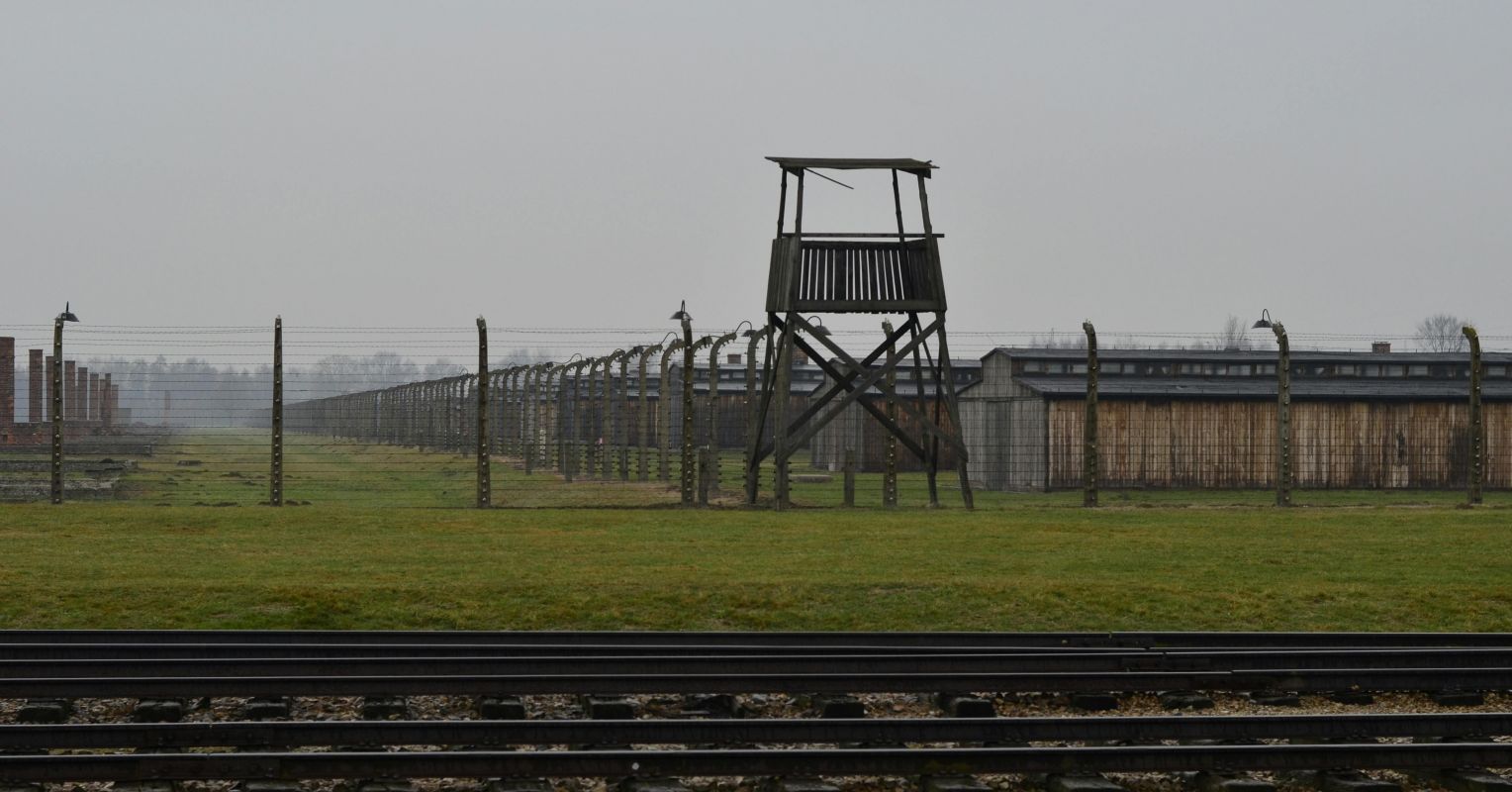
Yom HaShoah, Holocaust Remembrance Day, begins at sundown on Monday, April 13, 2026, and ends at nightfall on Tuesday, April 14. It is observed as a day of commemoration for the approximately 6 million Jews and 5 million other souls who perished in the Holocaust.
With gratitude to Paul and Sharon Citrin Goldstein.
The River and the Shadow: When Music Masks the Unthinkable
Cascading, rippling notes from the flutes echoed in the concert hall that began a silent sanctuary until Smetana’s Vltava (The Moldau) took over. Sitting there, we felt the music do exactly what it was designed to do: transport, teach, and inspire us.
Before the music started, the conductor told the story of the river’s journey. He spoke of two small springs in the Bohemian mountains merging into a singular force, a river that meanders through pristine farmlands and past the joyous rhythms of a peasant wedding, building into a glorious, triumphant entry into Prague. To hear it is to feel the heartbeat of a nation.
As the violins hit that soaring, “glorious” theme, a sadness distracted us. This same river, this landscape of “pristine” beauty, flows through a geography marked by a much darker history. Not far from the pastoral scenes sat Theresienstadt (Terezín), the “model” camp where music was a weaponized tool of deception.
Jarring Paradox
Each year, Yom HaShoah brings a jumble of memories and emotions. Sitting in that concert hall, something different stirred. Instead of being able to just sit back and enjoy Vltava, our minds wandered to the map. It’s a gut punch to realize how thin the line is between the “glorious” strains of a national anthem and the soil that held the echoes of the camps.
In Treblinka and Auschwitz, music wasn’t an aesthetic choice; it was a complex instrument used to deceive, to control, and, for the prisoners, to desperately survive.
In camps like Auschwitz and Treblinka, music accompanied daily life—not as art, but as function.
Prisoner orchestras played as labor groups marched in and out of the camps. Rhythm regulated movement, and tempo controlled pace. What we understand today as auditory-motor entrainment, the brain’s natural tendency to synchronize with rhythm, was exploited with precision. Music reduced resistance, organized bodies, and created order where brutality reigned.
At Treblinka, orchestras were sometimes forced to play as trains arrived. For people stepping off cattle cars after days of transport, the sound of music could create a fleeting sense of normalcy. That moment of confusion, the false feeling of perceived safety due to the music, was part of the design.
Music did not soothe; music obscured.
Music Played On
In Treblinka and Auschwitz, music accompanied deportations, roll calls, forced labor, and at times the moments before death. Attempting to understand why this happened is difficult, almost beyond comprehension. We cry at the reality of the cruelty, the loss of humanity, and the way the beauty of music was coupled with evil. In Treblinka, a group of skilled prisoners was forced to play upbeat tunes as transports arrived.
The idea that the music played on is a documented reality designed to create a “normal” atmosphere that prevented panic, the ultimate psychological gaslighting.
Our focus on Auschwitz and Treblinka evolves from personal stories.
Auschwitz operated from 1940 to 1945, and Treblinka from 1942 to 1943, years in which industrial murder reached its most systematic form. More than 1.1 million people were murdered at Auschwitz, and approximately 870,000 people at Treblinka, most within hours of arrival (Gilbert, 1985; United States Holocaust Memorial Museum). Music continued even as transports arrived and the machinery of death operated. The idea that the music played on is a documented reality.
Deception Essential Reads
Music also insulated perpetrators. Familiar tunes activate dopamine pathways and reduce stress responses even when the context is immoral (Salimpoor et al., 2011). SS officers could listen to cheerful marches or Strauss waltzes while engaging in cruelty. Arendt’s account of bureaucratic evil helps explain this contradiction: When morality collapses, culture can be twisted into a tool of aestheticized violence (Arendt, 1963).
“Court Jews” of Treblinka
Survivor testimony describes a group of skilled prisoners the SS referred to as “Court Jews” (Hofjuden). The term was cruel and ironic, echoing European stereotypes about Jews who once served royal courts. In Treblinka, this label was applied to engineers, doctors, tailors, painters, and musicians. Paul Goldstein’s father, Samuel, as a court Jew, stood beside them every day at Treblinka.
These roles granted marginal privileges: slightly more food, indoor work, and temporary exemption from the most deadly tasks (Bauer, 2001). Trauma psychologists describe such conditions as coerced survival under total unpredictability, producing severe stress imprints that last long after liberation (Herman, 1992).
The musicians of Treblinka—violinists, clarinetists, accordionists, cellists—were often conservatory-trained professionals whose skills delayed their death only briefly. Some later participated in the Treblinka uprising of 1943; many others died once their “usefulness” ended.
Lives Behind the Sound
Alma Rosé, the niece of Gustav Mahler, directed the women’s orchestra until her death in 1944 at Auschwitz. Survivors later described how she insisted on musical precision, not for the guards, but for the musicians themselves. In a place designed to erase individuality, maintaining artistic integrity became an act of resistance.
Her orchestra included:
Fania Fénelon: French singer and pianist; memoir Playing for Time
Anita Lasker-Wallfisch: German cellist; cofounded the English Chamber Orchestra and testified at Germany’s Parliament
Szymon Laks: Polish composer; became conductor of the Auschwitz men’s orchestra and wrote Music of Another World
Henry Meyer: teenage violinist; cofounded the LaSalle Quartet
Music Played
Repertoire was dictated entirely by the SS: German military marches, Strauss waltzes, Bavarian folk songs, popular German tunes of the 1930s, and light opera overtures.
Camp musicians recalled rehearsing with broken bows, cracked violin strings, and mismatched instruments stolen from deportees’ luggage. Errors were dangerous. Rehearsals, when allowed, occurred under threat.
In Treblinka, the prisoners wore their own clothes or clothes they confiscated from piles of victims’ clothing. At other camps, musicians wore the same striped uniforms as everyone else. Many had shaved heads and wooden shoes. Their instruments came from luggage or plundered cultural centers.
Their contradictory harsh sensory world was the scrape of a bow across a damaged string, the chill of a violin against hands numbed by cold, the rumble of arriving trains, shouted orders from guards, the forced brightness of a waltz in a place without joy.
One survivor said simply, “We played music while the world ended.”
Resonant Minds: A Reflection
As we reflect on these jarring paradoxes, we look at the foundations of trauma and recovery. How does the mind process a waltz while witnessing industrial murder? The neuroscience of music tells us it triggers deep dopamine releases and emotional peaks, but in the camps, that biological response was hijacked.
We often talk about music as a tool for focus, emotional awareness, and connection. We see children regulate through rhythm, express themselves through sound, and build relationships through shared musical experiences.
The same principles are at play: attention, synchronization, and emotional resonance.
History reminds us that these are powerful tools.
What matters is how—and why—we use them.
The river Smetana wrote about in 1874 is still beautiful. For those of us listening today, the music carries an extra layer of resonance.
Culture and “civilization” are not shields against depravity. Music, for all its power, reflects the intentions of those who use it. To listen closely—to history, to context, to one another—is one way we honor those who had no choice but to play.