
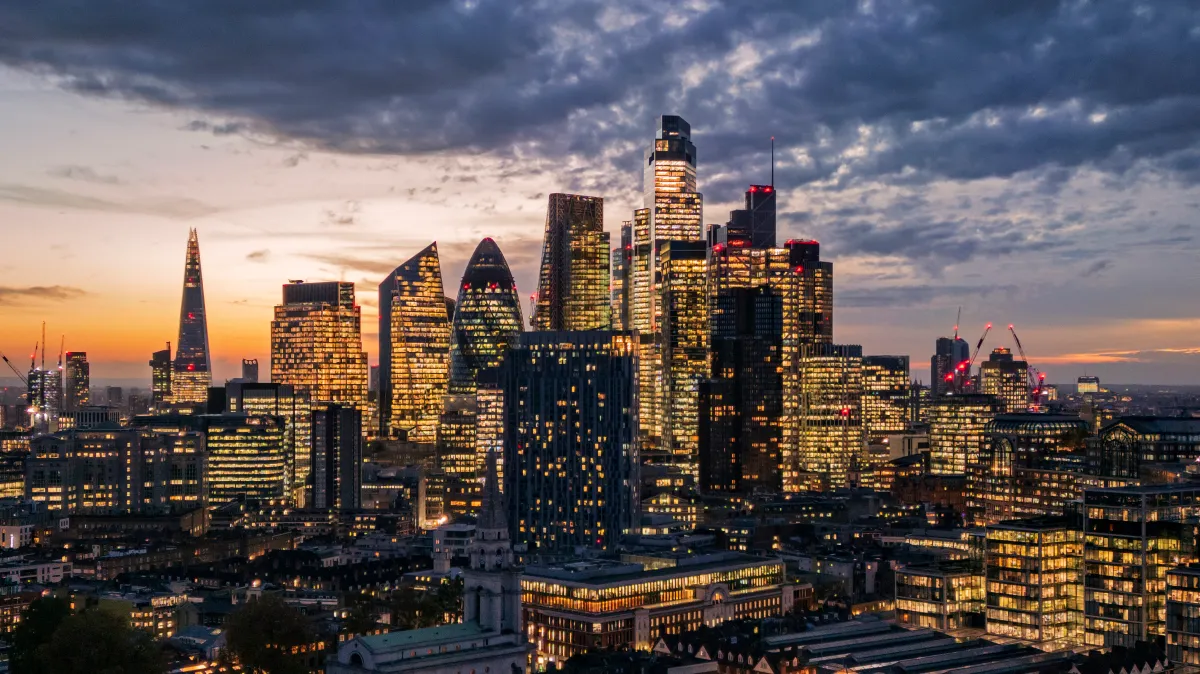
The early Noughties were a tough time for the London office market, with the bursting of the dotcom bubble triggering a wave of corporate collapses and thousands of job losses.
Within a year or two, millions of square feet of office space had been vacated. Even for the better buildings in the City and the West End, office rents fell about 30 per cent from their late-2000 highs and valuations dropped by about 25 per cent.
Mike Prew, a real estate industry analyst at Jefferies, ruffled a few feathers recently when he published a research note warning that artificial intelligence could bring about a repeat of that office market horror show.
He estimated that if 50,000 jobs in London were lost to AI — about what was shed after the dotcom crash — that would be “equivalent to a dozen Gherkin buildings emptying out”. If that were to happen, he argued that office rents and valuations would once again come under serious pressure, as would the big landlords’ share prices.
A couple of weeks later, analysts at Deutsche Bank agreed that second-order effects of AI, including on tenant demand, were “becoming a critical focus” for investors and building owners.
“AI’s ability to automate certain white-collar tasks, particularly in entry-level and back-office roles, undeniably poses a risk of job displacement,” the analysts said. However, even if AI did upend the job market, they thought it would be “more gradual than an immediate overhaul”.
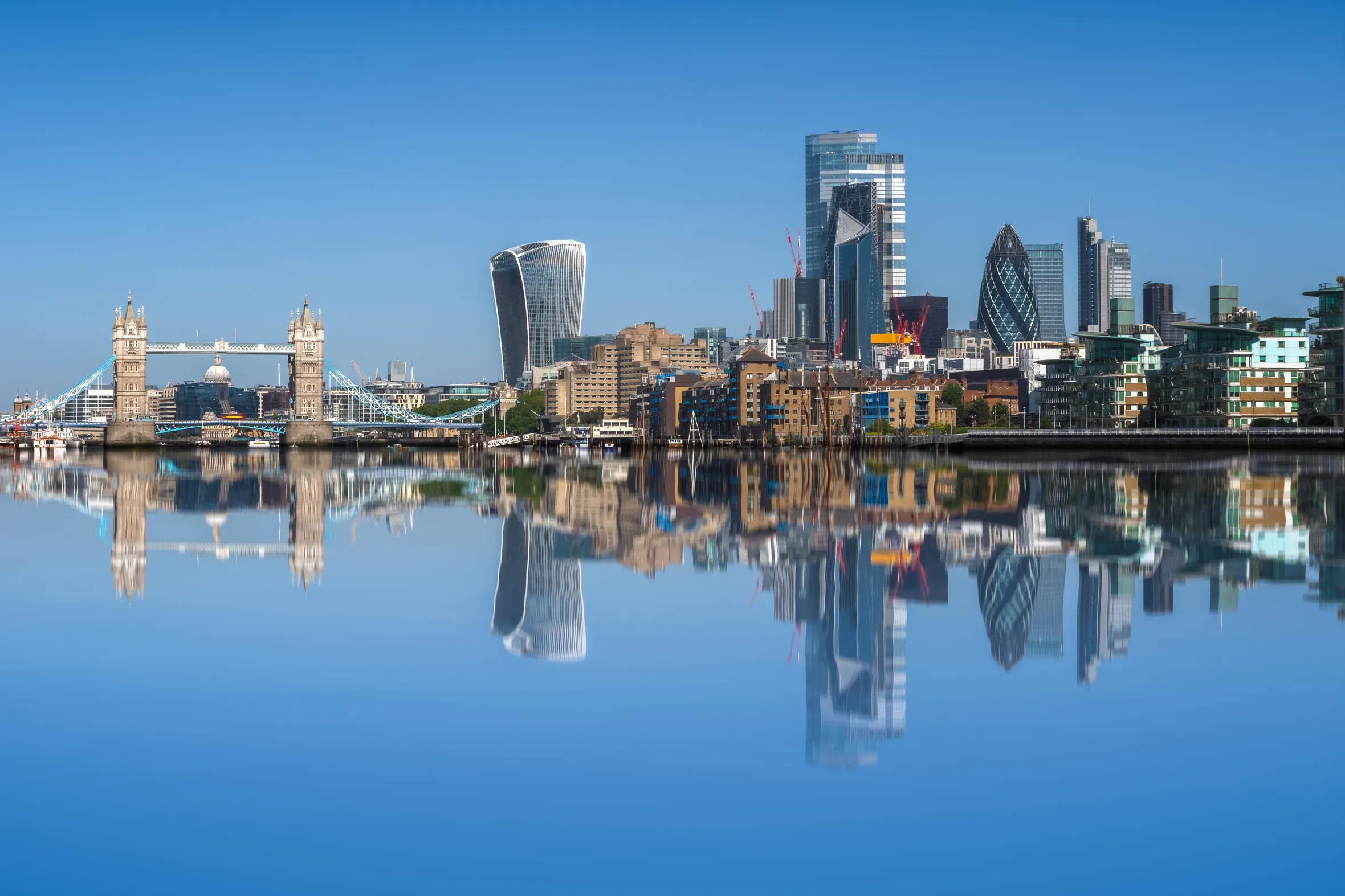 VictorHuang/Getty images
Perhaps unsurprisingly, landlords are taking a more optimistic view of what AI means for jobs and, by extension, demand for their offices.
“Technological advances like this previously have not killed white-collar jobs,” Nick Montgomery, head of UK real estate investment at Schroders, said. “In past experience, the doomsdayers haven’t got it right and actually economies have adapted and it’s led to higher productivity and job growth.”
It is a view shared by many in the property industry. “Often with these innovations, whatever that innovation is, it spurs something else,” Bradley Baker, chief executive of the office developer CO-RE, said. “When computers happened, people were saying, ‘Oh my god, we’re going to lose our jobs because these computers are going to do everything.’ I don’t stress about [AI] too much because I’m pretty confident that something will spin out of it.”
As Stephen Down, chairman of the central London investment team at Savills, put it: “The cake will get bigger as a result of AI.”
The broad consensus is that even if jobs are lost in some sectors, they will be more than offset by the creation of new roles from businesses that might not yet exist, doing things we cannot currently imagine.
“I’m not putting my head in the sand,” Down insisted. “Silicon Valley didn’t really exist 30 years ago and how big is it now?”
Office leasing agents are already starting to see new players, many spawned from this AI revolution, coming into the market and demanding space. OpenAI, Anthropic and Sierra AI are among those that have either signed leases in London recently or are on the hunt for a base in Britain.
“At the moment, where we stand is that we’re overwhelmed with new demand from AI-related businesses growing in London,” Mike Wiseman, head of campuses at British Land, the FTSE 100 landlord, said.
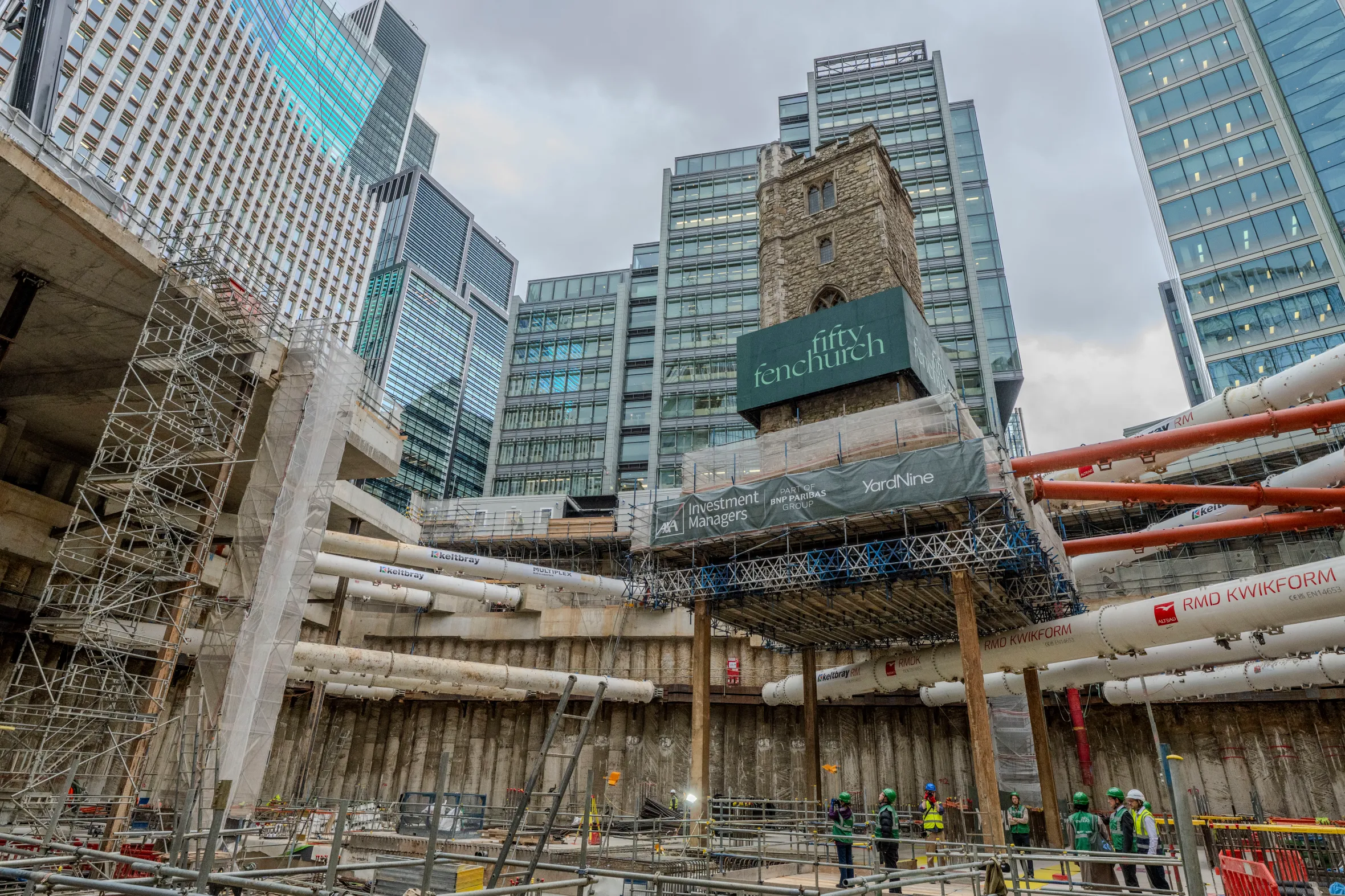 Building skyscrapers such as the 50 Fenchurch Street development is expensive and time consuming — some companies opt for cheaper offices that are older or further awayLucy Young for The Times
Chris Vydra, executive director at CBRE, said: “We are seeing a growing number of AI companies coming to London and exponentially increasing headcounts because they are so well-funded — it’s billions more than we saw in the dotcom boom.
“[AI companies] are now coming to Europe for the first time and where are they coming to first? London. Not Berlin or Paris, they come to London.”
Last year was the best he could remember in 30 years of leasing offices and uptake this year was predicted to be just as strong.
The AI crowd is adding to the swell of demand for offices in the capital that has ramped up over the past few years, particularly for the fanciest buildings in the best locations, which companies are increasingly demanding.
In both the City and the West End, the vacancy rate for these “prime” offices is below 1 per cent, versus a long-term average of closer to 7 or 8 per cent, according to data from Knight Frank.
Planning delays and higher financing costs mean few towers are being built and that dearth of top-quality space is reflected in rents. Knight Frank estimated that prime rents in the City had risen 46 per cent since 2020, while rental growth in the West End totalled 68 per cent over the past six years.
“Customers are far less price sensitive at the moment; they are willing to pay for the right space,” Jo McNamara, head of Europe at Oxford Properties, said. “We are busier than we’ve been for a long time in terms of viewings and space that people are taking. We’re definitely getting higher rents everywhere.”
 Jo McNamara
While the top end of the office market has arguably never been as healthy, the market for so-called “secondary” offices — typically slightly older blocks not as close to travel hubs — is much tougher.
“It’s a little bit like a crème brûlée,” Montgomery said. “The hard surface is prime [offices], but it’s very soggy beneath that.” McNamara added that, for those lesser buildings, “it almost doesn’t matter how cheap you go”.
Many expect that AI will serve only to accelerate that flight to quality. Assuming AI replaces mundane, repetitive tasks such as data collection and analysis, employees will instead be tasked with coming up with ways to monetise that information.
“The reality is that data and information is going to be done by AI, but how creative you are with that is what’s going to make the next businesses,” McNamara said. “So those offices that can help generate creativity, that’s where people are going to want to be. I think the best buildings will do well.”
Isabelle Scemama, global head of alternative investments at BNP Paribas Asset Management, is among those looking to take advantage of the dislocation between the best offices and the rest.
Her team has overseen a number of skyscrapers in the City, including 22 Bishopsgate, and it is under way on another, 50 Fenchurch Street. Rather than build anew, she thinks there is money to be made refurbishing older offices.
“For me, it’s the right time to retrofit buildings because in London or Paris it’s very difficult to build from scratch, so it will be more about conversion of existing [buildings],” she said. “What I like with the office market in Europe is this shortage of well-located, prime office buildings.”
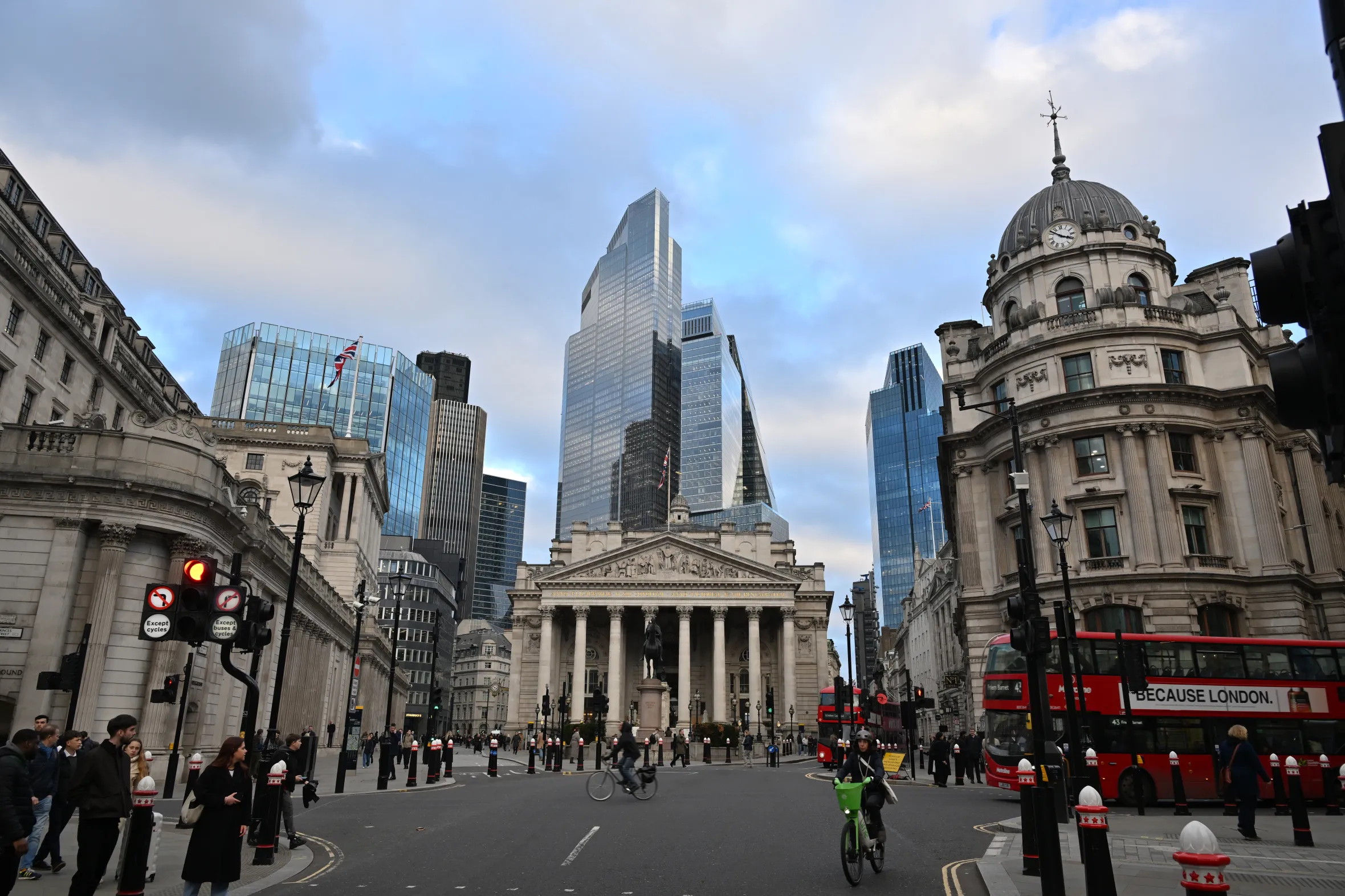 22 Bishopsgate, also known as Horizon 22, is the second-tallest building in the countryJohn Keeble/Getty Images
The consensus is that offices in London will remain a key part of the way we work, regardless of if or how AI really takes off. While their customers are thinking about how AI might affect their business models further down the line, companies are not yet basing decisions on it.
“I haven’t had a conversation in the last 12 months where people feel that AI is going to threaten or impact the office sector,” Down said. Nor had Wiseman, in his chats with British Land’s 200 or so office tenants, come across any business wanting to reduce the size of their office because they were convinced AI meant they could slash their workforce.
“There are times when what I read in the news and what I’m actually seeing are massively opposed,” he said. “After the Brexit referendum, all those banks that were being talked about in the media as fleeing to Frankfurt were saying [to us] that they were staying here. And post-Covid, offices were supposedly dead, but pretty much everyone I spoke to wanted their people back in the office. This feels like one of those moments.”