
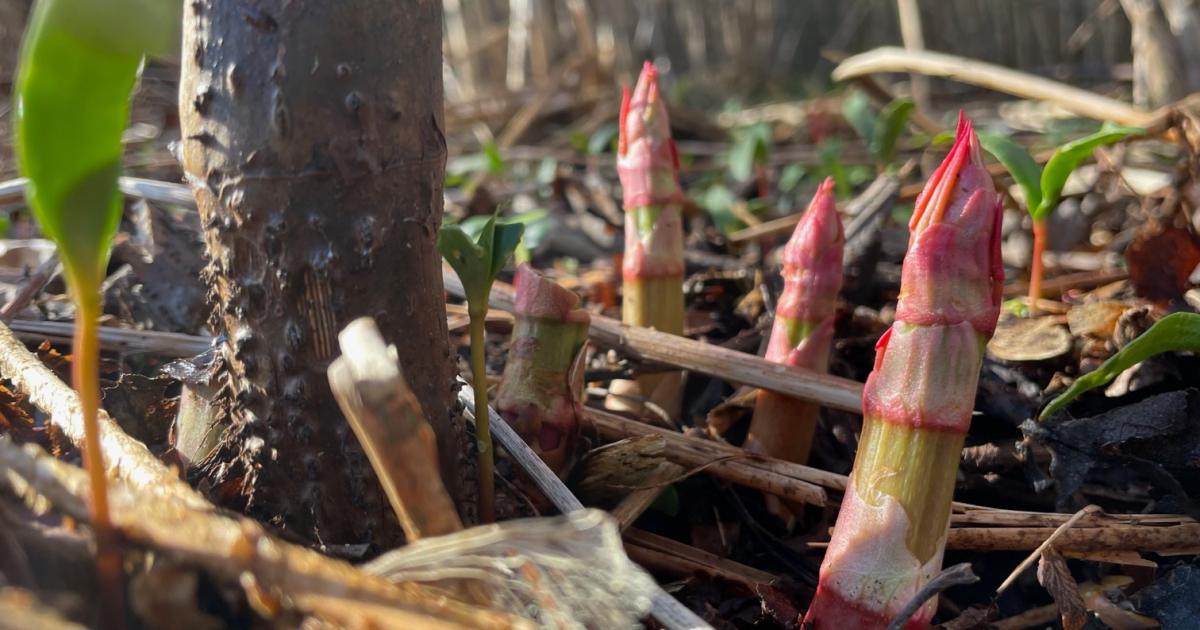
The invasive plant species is native to East Asia and was introduced to the UK in the 1800s, where it has since spread out of control.
It can grow up to four inches a day and forms dense thickets which can kill native plant species, making it particularly harmful to the Oxfordshire countryside.
There are a total of 394 verified knotweed sightings in Oxfordshire, including 85 alone in Oxford, according to research by Environet.
READ MORE: The 20 best Cotswolds pubs in Oxfordshire including Jeremy Clarkson’s
The heatmap of Japanese knotweed across Oxfordshire. (Image: Environet)
The invasive plant specialist reports 27 instances in Banbury, 26 in Henley, and 25 in Bicester.
Chipping Norton had 23 reports, while Wallingford and Kidlington had 17 and 16, respectively.
There were 13 instances in Abingdon, while 11 were reported in both Witney and Woodstock.
Knotweed begins to emerge in early spring, quickly growing into lush green shrubs with pink-flecked stems, heart-shaped leaves and bamboo-like canes.
It can pose serious problems for homeowners, with underground rhizomes that can grow up to three metres deep and spread up to seven metres horizontally, emerging through cracks in concrete, tarmac driveways, pathways, drains and cavity walls.
READ MORE: Classic Bentleys among cars at Blenheim Palace’s Salon Privé this month
Japanese knotweed is located across Oxfordshire. (Image: PA MEDIA)
While serious damage to property is rare, since mortgage lenders require knotweed to be dealt with when a property is sold, it can cause legal disputes between neighbours and reduce a property’s value by approximately five per cent.
A 2023 Department for Environment, Food and Rural Affairs report put the cost of tackling knotweed to the UK economy at nearly £250 million a year.
Environet director Emily Grant said: “By mapping verified sightings, we’re helping people understand the level of risk in their local area and encouraging early identification and treatment.
“Vigilance is the best way to protect your property from Japanese knotweed, making sure you tackle it as early as possible before it becomes well established.
READ MORE: ‘Mouldy freezers and contamination risk’ at takeaway
Stay informed for less this summer. Save big on your subscription now for just £6 for six months 👇🗞️https://t.co/GpS59lK1Ay
— Oxford Mail (@TheOxfordMail) July 26, 2025
“At this time of year, knotweed is in full growth mode and easy to spot with its bright green heart-shaped leaves, which grow in a zigzag pattern up the stems.
“Mature plants flower around August, when they produce clusters of tiny white blooms.
“If you do suspect you have knotweed on or near your property, you can email a photo to us at expert@environetuk.com and we’ll identify it for free.
“If it is knotweed, a survey will determine the extent of the infestation and the best way to treat it, whether that’s digging it out of the ground, herbicide treating it or a combination of both.
“Public engagement is key in the fight against knotweed, and by reporting new sightings, homeowners can play an important role in controlling this invasive plant and protecting property values.”