
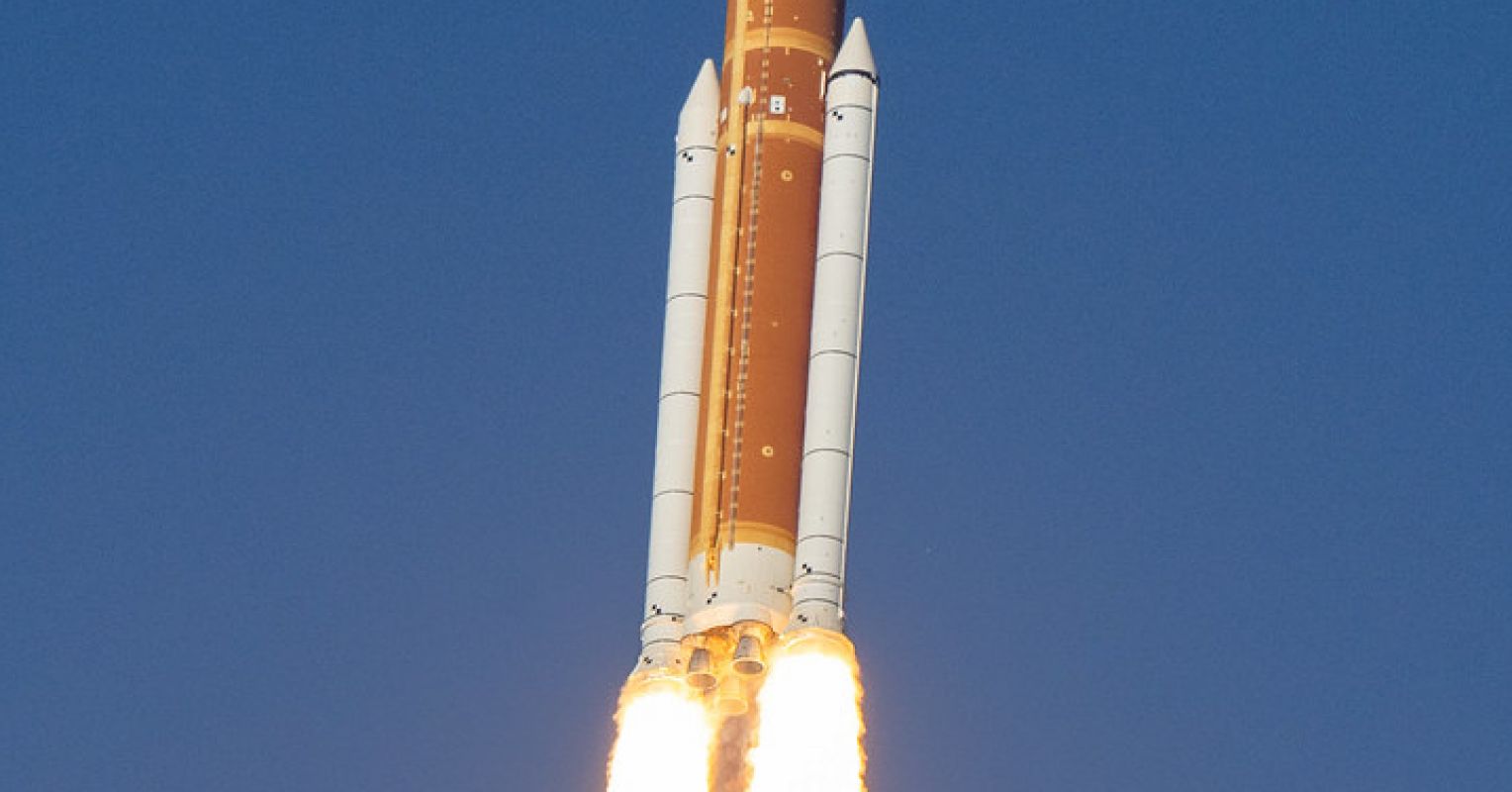
The Artemis II mission is an extremely unusual event; it’s the first time since 1972 that humans have traveled outside of the Earth’s orbit.
The launch was witnessed by millions across the globe, who will also view unique pictures of the fragile blue Earth amid a sea of blackness from space as the spacecraft takes a looping path, transporting the crew around the far side of the Moon and back again.
Psychological research into the experience of astronauts uncovers the possibility of a profound emotional and mental personal shift, arising from visualizing our planet from the unique perspective of outer space.
The Overview Effect
The “overview effect” is a term that was coined to capture the intense emotional reactions to viewing the Earth from space, which transform the way astronauts see the planet and humanity’s place in the universe.
Findings from a recent study involving astronauts and cosmonauts recruited from the Association of Space Explorers and the NASA astronaut corps at the Johnson Space Center confirm the overview effect, suggesting that seeing the Earth from space inspires a transformation in worldview, highlighting the planet’s fragility and the unity of humankind.
For example, as quoted in Frank White’s book on the overview effect, Gemini 10 and Apollo 11 astronaut Michael Collins has said of his experience: “I really believe that if the political leaders of the world could see their planet from a distance of… 100,000 miles, their outlook would be fundamentally changed. That all-important border would be invisible, that noisy argument suddenly silenced. The tiny globe would continue to turn, serenely ignoring its subdivisions, presenting a united facade that would cry out for unified treatment” (pp. 182–183).
But a Negative Psychological Impact Can Also Happen
However, alternative research suggests that viewing the planet within the vastness of space can have a more negative psychological impact. A glimpse at the scale of the universe can be an unsettling reminder of the frailty of our perceived self-importance, which can evoke distress, including a sense of insignificance, hopelessness, powerlessness, and dread over the futility of existence.
Psychologist Arthur Braaten investigated this effect in a research thesis entitled “When Facing a Cosmic Perspective: How and Why People React Differently to the Vastness of the Universe,” submitted to the University of Ottawa in partial fulfillment of the requirements for the degree of Doctor of Philosophy in Clinical Psychology.
His thesis starts with the observation that the universe is approximately 14 billion years old, there are at least 100 billion galaxies, and each galaxy contains, on average, 100 billion stars. Thus, there are at least 10 sextillion stars in the observable universe. To put this in perspective, the number of stars in the observable universe is at least comparable, and perhaps more, than the total number of grains of sand on planet Earth.
When considering these facts, Arthur Braaten asks: How does it make you feel?
One reaction is to feel insignificant when faced with the vastness of the universe, and some might feel so small that they then consider themselves, or humanity, to be no longer worth paying attention to.
His research examined why some people have profound positive reactions, feeling awe, inspiration, and connection to the bigger picture, while others instead experience profoundly negative responses, such as feeling insignificant and undermined.
Perhaps you may be unconsciously driven to focus on different aspects of the imagery provided by Artemis II.
Cosmic Vastness or the Earth
Arthur Braaten argues that viewing Earth from space is different from cosmic vastness. Focusing on the Earth as a whole represents not only vastness, but a sense of totality. The Earth becomes a symbol of everything that is important to human beings.
This study also points out that the juxtaposition of negative with positive emotions may promote intensity.
Experiences of awe and the sublime can be accompanied by fear, terror, a sense of danger, and a feeling of being overwhelmed.
According to the Oxford English Dictionary, awe can be traced to the Old English word ege, the Old Germanic word eye, and the early Scandinavian word agi, which all predominantly mean terror, dread, and horror.
It was not until approximately the 16th century that experiences of reverence and veneration entered the understanding of awe. Then awe and fear became distinguished from one another.
Perhaps your own particular reaction hinges on how you go about accommodating or processing these profound experiences. Maybe if people are unable to accommodate vastness, this generates confusion, bewilderment, fear, terror, and powerlessness.
How Small You Feel in the Face of the Vast Universe
The study found that a powerful predictor of how you reacted to demonstrations of the limitlessness of the universe was self-esteem.
Those with high levels of self-esteem may appear more likely to see the cosmic vastness as an opportunity for self-transcendence and to even embrace feelings of self-diminishment.
In contrast, those suffering from low self-esteem possibly saw cosmic vastness as a threat to the self, so they resist feelings of self-diminishment, and subsequently experience more negative emotions.
Shock and Awe
William Shatner, the famous actor who played Captain Kirk in the TV series Star Trek and some of its movie spin-offs, briefly traveled into space aboard a private commercial rocket.
He is quoted as commenting:
“That beauty [of Earth], that magnificence of the evolutionary process, struck me so hard in that moment because when I looked in the opposite direction, into space, there was no mystery, no majestic awe to behold… all I saw was death. I saw a cold, dark, black emptiness. It was unlike any blackness you can see or feel on Earth. It was deep, enveloping, all-encompassing. I turned back toward the light of home. I could see the curvature of Earth, the beige of the desert, the white of the clouds and the blue of the sky. It was life. I discovered that the beauty isn’t out there, it’s down here, with all of us. Leaving that behind made my connection to our tiny planet even more profound.”
It was the contrast of the vastness and deadness of the universe, the juxtaposition of that dread and distress with the sense of color and life on Earth, which apparently rendered William Shatner profoundly glad to be alive.
As the whole planet watches the Artemis II mission unfold, it could be that spaceflight and leaving our Earth’s orbit, paradoxically, offers an opportunity, through psychology, to, at last, unite our world.