
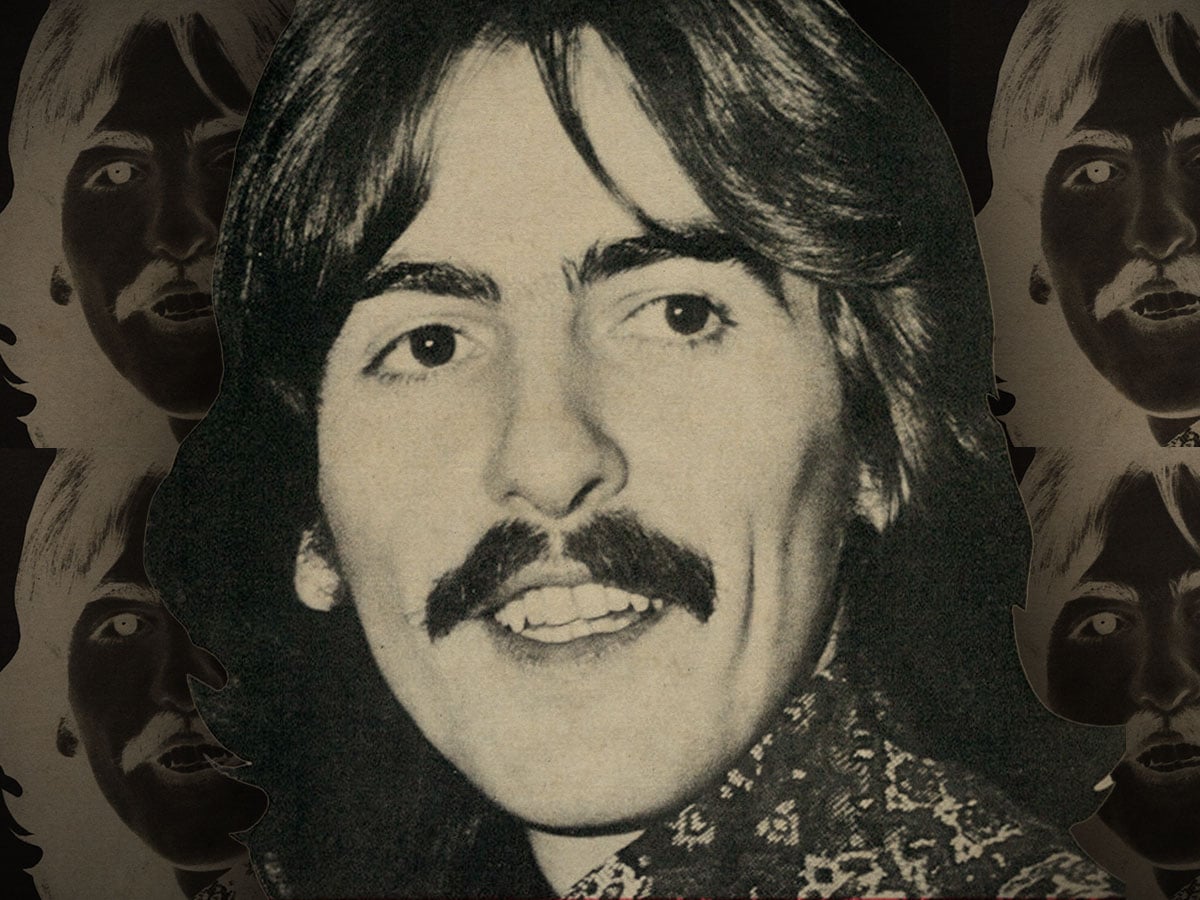
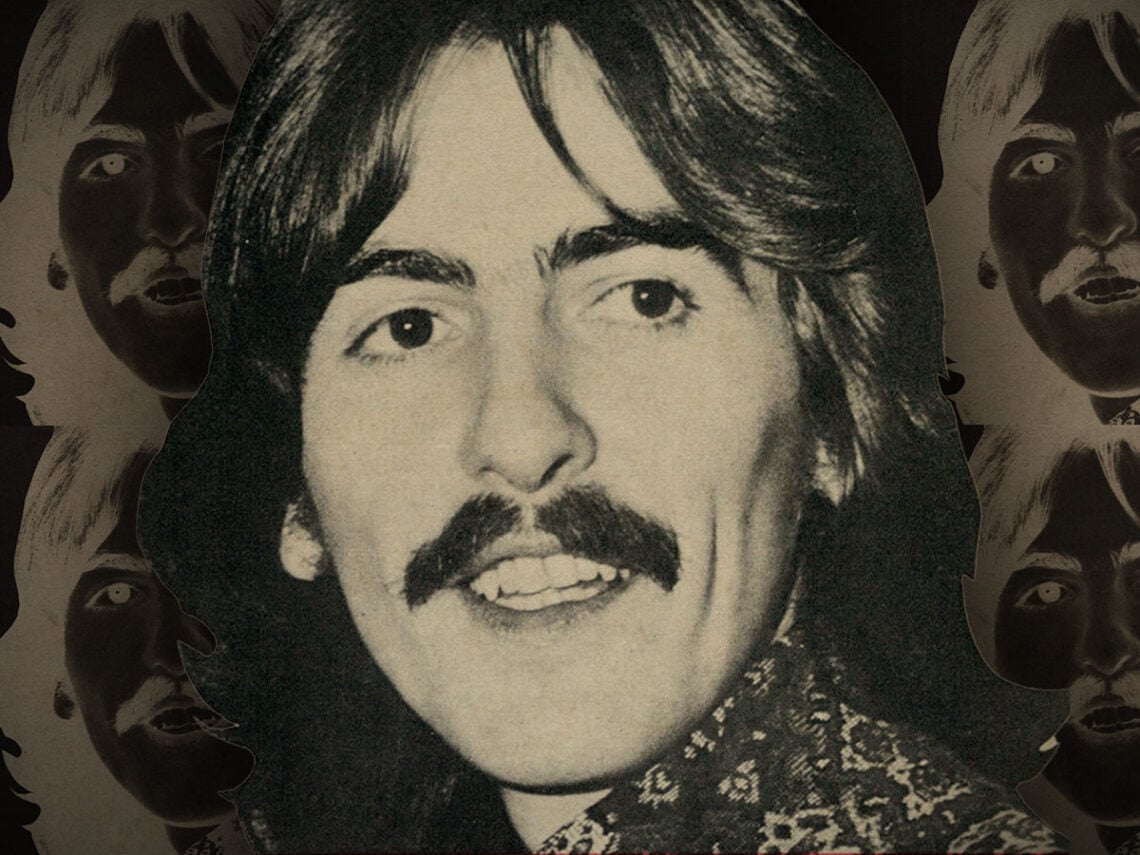
(Credits: Far Out / Bradford Timeline)
Sat 4 April 2026 7:02, UK
George Harrison’s discontent with the music industry did not begin in the 1970s, when he unexpectedly found himself being sued for subconscious plagiarism, a lawsuit that temporarily pushed him to step back from the business.
He may have had the label of the ‘Quiet Beatle’, but Harrison was opinionated when he wanted to be. However, rather than go on an angry rant or engage in a slanging match with his bandmates, Harrison often used humour to say how he truly felt.
A prime example of this occurred during the making of Sgt Pepper’s Lonely Hearts Club Band, Harrison began to feel frustrated with his limited role within The Beatles’ dynamic. Typically, considering he went on to remortgage his house to finance Monty Python’s Life of Brian, Harrison opted for a tongue-in-cheek approach.
Amid the swirling tensions, creative differences, and excessive drug use within the band, Harrison had become disenfranchised with his diminished role. If his bandmates didn’t pick up on this before, they certainly did after hearing ‘Only A Northern Song’.
In the track, Harrison expresses his discontent with the business side of the music industry, particularly the lack of creative control and financial reward he felt as a songwriter. The title is a play on words, referring to the fact that Northern Songs published the song, but also suggesting that it was “only” a song produced for contractual obligations rather than artistic expression.
It wasn’t just his position in the band which had caused Harrison to lash out; the broader politics of the music industry had become too tiresome for him. The guitarist felt disillusioned and unmotivated to write songs because, as part of the deal, he was essentially a junior songwriter in the eyes of The Beatles’ publishing house, meaning he wouldn’t see his fair share of royalties.
John Lennon and Paul McCartney both had a 15% stake in Northern Songs, whereas Ringo Starr and Harrison only owned 0.8% of the company, which created an uneasy dynamic in their camp. As a result, Harrison set up his own company in 1964 and would eventually start releasing his material through Harrisongs after his contract with Northern expired in 1968.
As part of the Beatles Anthology, he opened up about the track and the circumstances which inspired the lazy effort. “‘Only A Northern Song’ was a joke relating to Liverpool, the Holy City in the North of England. In addition, the song was copyrighted Northern Songs Ltd, which I don’t own, so: ‘It doesn’t really matter what chords I play… as it’s only a Northern Song’,” he explained.
The industry’s business side had swallowed up Harrison, and he’d lost his appetite for creativity. This issue clouded his mind, and the guitarist was overcome with anger at parasites leeching off the back of his hard work.
Years later, Harrison discussed the incident with Billboard, stating: “I realised Dick James had conned me out of the copyrights for my own songs by offering to become my publisher. As an 18 or 19-year-old kid, I thought, ‘Great, somebody’s gonna publish my songs!’ But he never said, ‘And incidentally, when you sign this document here, you’re assigning me the ownership of the songs,’ which is what it is”.
He added, “It was just a blatant theft. By the time I realised what had happened, when they were going public and making all this money out of this catalogue, I wrote ‘Only A Northern Song’ as what we call a ‘piss-take,’ just to have a joke about it.”
In the end, The Beatles would decide against placing ‘Only A Northern Song’ on Sgt. Pepper’s, but it did later find a home on Yellow Submarine. Everything about it is lacklustre, whether this be the lazy lyrics or low-energy vibe, but that’s precisely how Harrison felt when he wrote it.
It’s far from Harrison’s best moment as a songwriter, but it does act as a snapshot into his mind at a crucial moment in Beatles history. It also foreshadows the growing frustration surrounding the political side of the music industry, which would eventually see him reach breaking point.
Once he was sued over ‘My Sweet Lord’, by a publishing company rather than another artist, ironically, Harrison’s resolve had been tested too far. As much as he loved writing and recording songs, which is why his hiatus was short-lived, Harrison needed to escape men in suits who had transformed his passion into a job.
ADD AS A PREFERRED SOURCE ON GOOGLE  The Far Out Beatles Newsletter
All the latest stories about The Beatles from the independent voice of culture.
Straight to your inbox.