
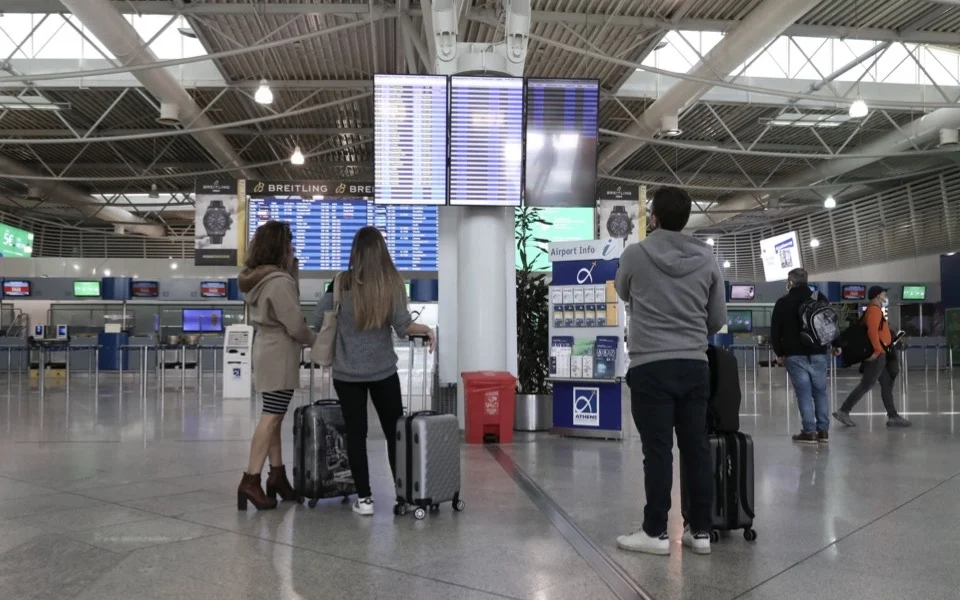
Just over a month since the outbreak of war in the Middle East, Athens International Airport is among the region’s airports to have suffered a significant setback due to the closing of airspace in the conflict zone.
In general, the impact on the European network has been significant. Traffic to and from the Middle East has been reduced and is now 59% below pre-crisis levels, at around 800 daily flights (in both directions), a reduction of around 1,200 flights, according to new Eurocontrol data.
Many flights have been rerouted to avoid the conflict zone, while airspace restrictions have affected several European countries, airports and airlines. Among them is Greece, and in particular the country’s largest airport, officially called Eleftherios Venizelos.
According to Eurocontrol’s latest report, Greece is on the list of the 10 markets in Europe that show the largest drop in routes to and from the Middle East: It occupies seventh place, with its 26 daily departures up until February 27, falling to 16 in March, a decrease of 38%. Athens International accounts for the main volume of flights from Greece to this specific region, so it suffers the most severe pressure. Its daily departures decreased from 23 to 14, a drop of 41%.
The country that has suffered the biggest blow is Turkey, since it had by a large margin the strongest flows to and from the Middle East. Its drop reaches 54%, with departures decreasing from 179 to 82 per day. At the top of the list is Istanbul, with its main Ataturk airport seeing Middle East flights decrease from 98 to 46 (down 53%), and its secondary Sabiha Gokcen airport falling even more sharply, from 43 to 15 flights ( down 65%).
Turkey was followed by the United Kingdom (from 89 to 41, down 54%), Germany (from 78 to 45, down 42%), Italy (from 54 to 23, down 59%) and France (from 46 to 22, down 52%).
Cyprus placed eighth place, dropping from 24 to 14 flights, or 43%. Larnaca airport recorded a 35% decrease, from 18 to 12 departures per day.