
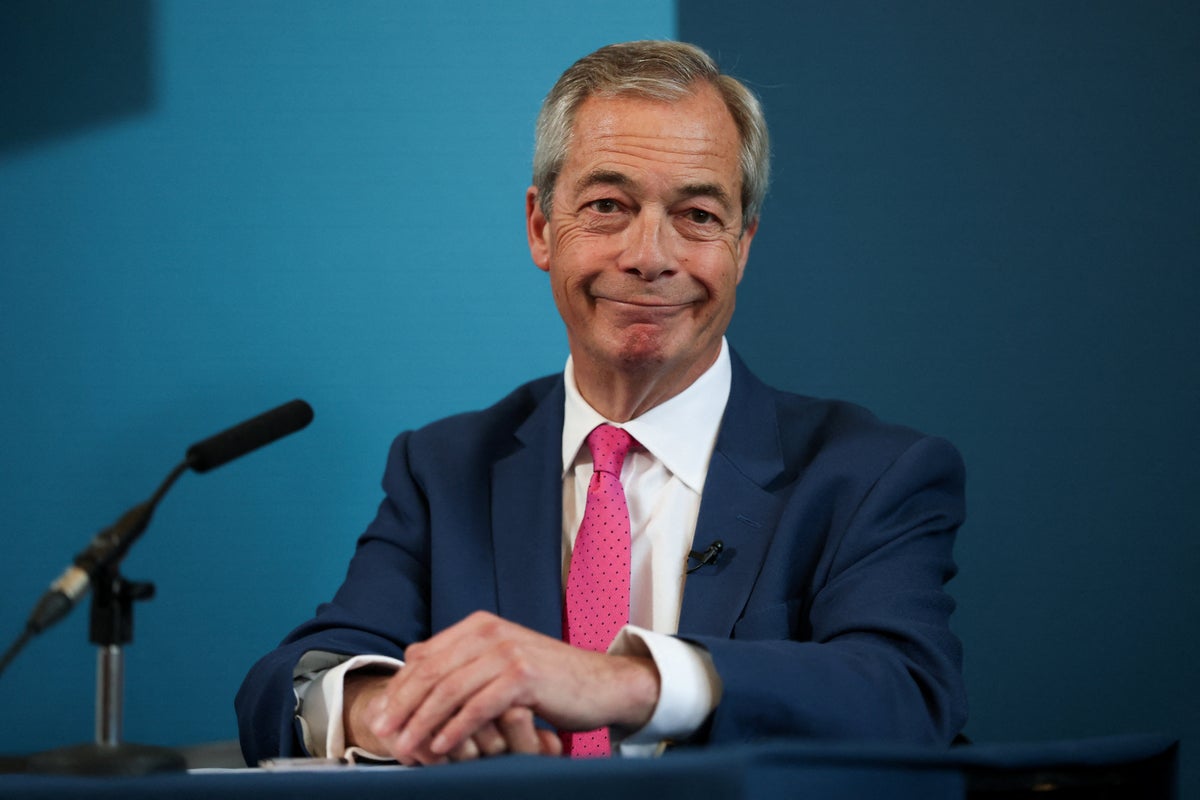
Nigel Farage, political darling of Britain’s over-65s, has executed a rather unsurprising U-turn. Perpetually hovering between his mean-spirited Thatcherite anti-welfare instincts on the one hand and fiscally reckless populism on the other, the Reform UK leader has firmly sided with his most reliable voters. The “triple lock” that protects the state retirement pension will be maintained if he comes to power, he now says. It seems to have become the most taboo of political subjects, but things may be changing.
What is the triple lock and why does it exist?
It’s a guarantee that the state retirement pension will rise by whichever is the greater of the increase in average wages, prices (CPI) or 2.5 per cent. It was a Liberal Democrat idea implemented by the Coalition government in 2011. It was aimed at redressing the gradual rise in pensioner poverty since Thatcher dropped the link to earnings in 1980, so that the pension kept up with prices but not the general increase in wages and living standards.
The triple lock has been maintained for 15 years, with the single exception of 2022 when post-Brexit and post-pandemic distortions meant wages were up by 8 per cent. The Institute for Fiscal Studies (IFS) says the triple lock has pushed up spending on the state pension by £12bn a year compared to what it would have been if it had been uprated in line with average earnings since 2011. Arguably, this is actually a surprisingly small amount in the very big scheme of things. But simple demographics mean the cost of the pension will increase substantially over many decades to come.
Is the state pension enough to live on?
Possibly, depending on whether someone can claim other benefits. At the moment someone with full entitlement (35 years of national insurance contributions) to the new state pension will receive £241.30 per week. The basic state pension (for pre-2016 retirees) is £184.90. Both are up 4.8 per cent, in line with wages. About one in five older people (say 1.2 million) rely solely on the state pension.
What has Farage said?
Like most politicians, when pressed hard on the future of the triple lock, he’s been a bit all over the place. Last year he was asked if he shared concerns that the pensions triple lock was “increasingly unaffordable” and replied: “I share the concern with pensions being unaffordable on a national level.” Now, perhaps with an eye to next month’s elections, he declares: “We have discussed it, and we have debated it, and we’ve decided it’s going to stay.” It will be paid for by “the most radical proposals to cutting welfare ever seen in this country”.
He said the move would mean the party could afford the triple lock “many, many times over”. More radically, he might restrict the pension to “British nationals”, which would be highly unfair and discriminatory to those who’ve worked in the UK and “paid in” for decades.
For all the parties, there are other obvious ways to trim the cost of the state retirement pension, which is about £155bn a year – more than half of all welfare spending. The age for eligibility could be raised yet again for future pensioners – it will increase from 66 to 67 between April 2026 and April 2028, with further increases to age 68 planned between 2044 and 2046. Many think it will hit 70 or more.
Other options are also available: taxing the state pension above a certain threshold (as is now the case for pensioners with other forms of income); means-testing it or the triple lock element; cutting travel and prescription concessions; or making pensioners pay national insurance.
What do the other parties want to do about the triple lock?
It’s not clear. For the Tories, Kemi Badenoch has said she will “stand by it” but has talked in the past about “looking at” the triple lock mechanism and means-testing. Labour isn’t saying much but seems to be minded to push the state pension age up; Liz Kendall ordered a review last year. The Liberal Democrats, who invented it, have been unequivocally clear and consistent about their policy overall, but less so on means testing or age eligibility. The Greens are the only ones with a clear commitment to reform: changing the triple lock to a double lock to ensure pensions rise by the higher of inflation or earnings.
Are there any other options?
The IFS suggests that, if the aim of state pension policy is to avoid pensioner poverty and help achieve fair shares all round, a target should be set for state pensions to reach a proportion of typical (“median”) full-time average earnings or incomes by a certain date in the future, adjusting the annual increases accordingly. (There could also be a ratchet, so that even if wages or prices fall, the pension would be protected anyway.)
What will happen?
Pensioners will probably get a better deal than most from the political parties simply because they are growing in number and they are more likely to turn out to vote. More than 70 per cent of the over-65s cast a ballot at the last election, compared to 37 per cent for the 18-to-24-year-old cohort (source: Ipsos). Votes for 16- and 17-year-olds won’t change this dynamic much. Farage knows what he’s doing.