
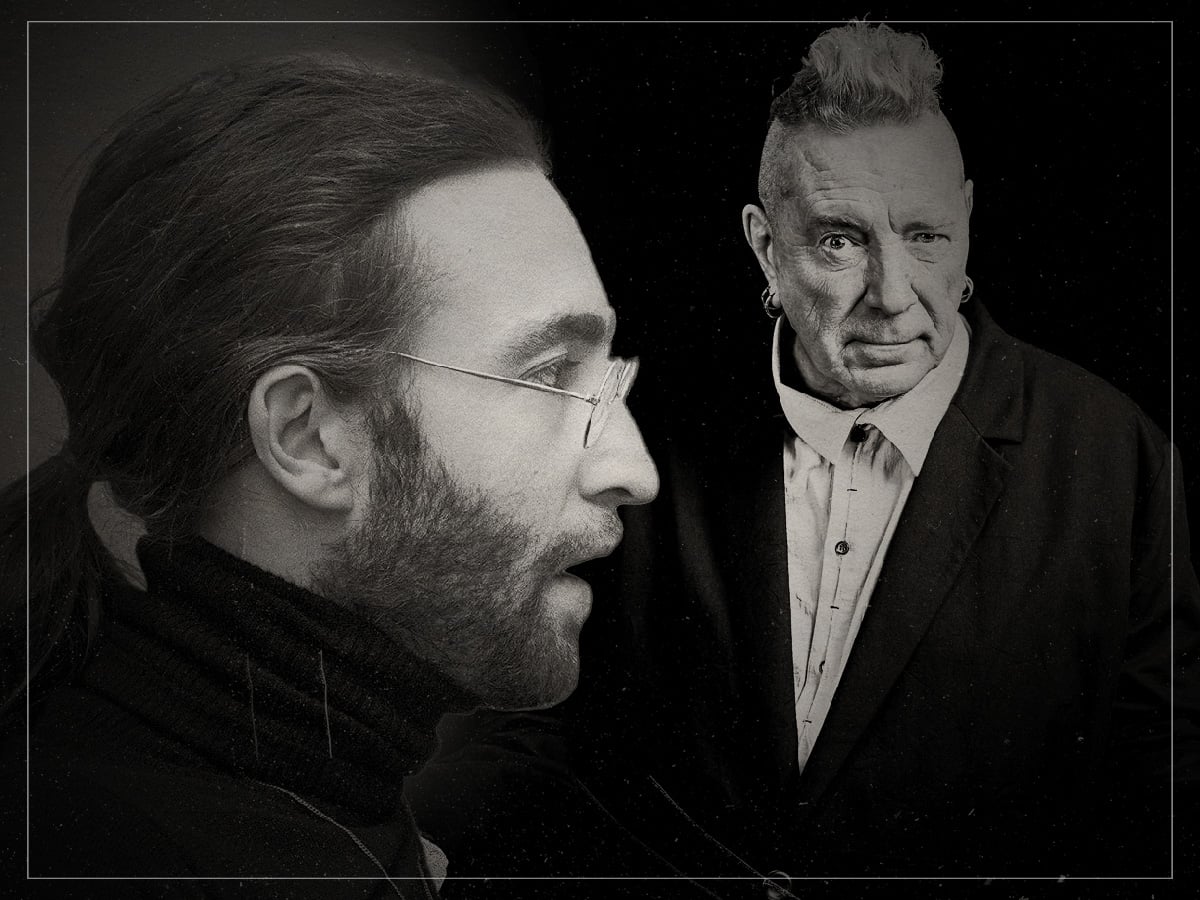
(Credits: Far Out / Universal Music Group / John Lydon)
Sat 4 April 2026 12:00, UK
The Sex Pistols proved just how far music had changed in the decade after The Beatles split, which felt akin to the Big Bang of music creation.
While the initial response was one of mourning, worrying that the exit of history’s greatest band would take innovation with it, time brought it with it healing, understanding and excitement of what was to come. Because after they had spent a decade widening the goalposts, a generation of innovative artists was ready to walk through them. Rock split into a catalogue of sub genres, from prog and psychedelic to heavy metal and punk, spearheaded by the likes of Pink Floyd, Black Sabbath and the Sex Pistols.
The latter were a shining example of the new school that ultimately built off the back of The Beatles. A spirit had awoken in the kids of the 1960s and come ‘77, and the year of the Sex Pistols’ debut album, the emerging generation had the tools to articulate their sense of social resistance and liberation.
Putting the pieces of this sonic tapestry together, many critics began to highlight the connection between John Lennon and John Lydon. The underlying punk spirit of Lennon, suppressed with the world’s expectancy for him to be a pop star, was vicariously liberated by Lydon, who, unbound by commercial expectation, unleashed a true punk sermon onto the world.
Lennon was never too far out of his view, helping him to mould his outlook on the world, but in a true artistic capacity, with two of his works in particular serving as something of a creative blueprint. Speaking of Lennon, Lydon once explained, “‘Working Class Hero’ and the album Imagine are highlights of my musical collection”.
Of ‘Working Class Hero’ he added, “The anger and the bitterness seemed utterly genuine, the words came out with such passion and violence. That was part of the building block for me of songwriting in the Pistols. That you could shift into these larger aspects, class hatred, anger, resentment, and get it right.”
But the pedestal upon which Lennon was placed meant that Lydon was resistant to any such comparisons. When Oasis marched onto the scene in the 1990s, many regarded Liam Gallagher’s voice as a blend between the two, and so the cultural legacies of both artists ran rife, something Lydon was relatively keen to suppress.
He once said, “I don’t know the comparison of Lennon and me, that’s something Oasis brought up years ago. I think we’re all very different from each other, and long may we reign. I seem to be the only one left alive! But in my memory, there’s always a great place for John Lennon. Always.”
Lydon and Gallagher may be individual artists in their own right, but ultimately their comparisons prove that pretty much everything in the modern era traces back to The Beatles and Lennon. He was a pioneer of music innovation and a true guardian of working-class culture, platforming generations of punk music thereafter.
ADD AS A PREFERRED SOURCE ON GOOGLE  The Far Out Beatles Newsletter
All the latest stories about The Beatles from the independent voice of culture.
Straight to your inbox.