
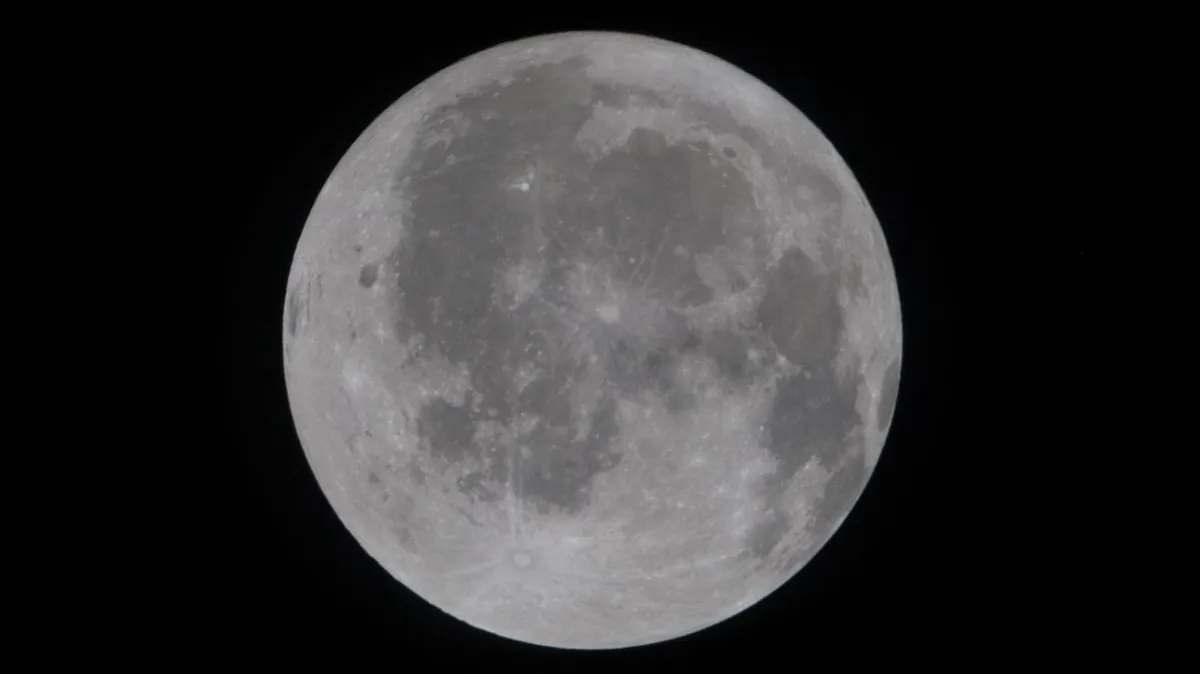
The first time the world truly saw itself was December 1968. Three astronauts on board the Apollo 8 lunar mission brought home dozens of photos of our planet swathed in swirling clouds, vibrant in blues, greens and browns. One of the most famous images from that mission, the first to take humans to the moon and back, captured the illuminated Earth appearing above the cold silvery lunar surface: the first Earthrise.
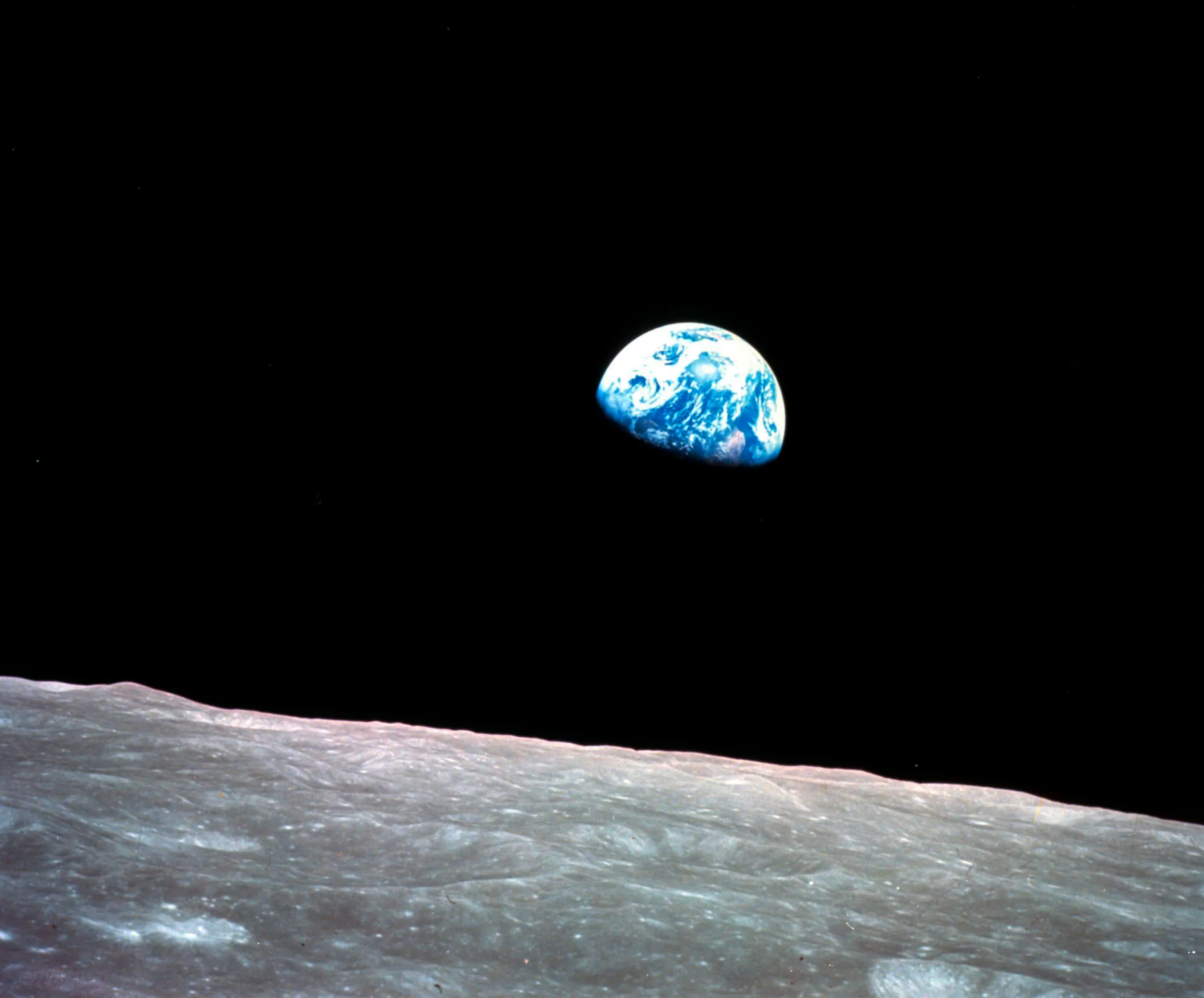 The iconic Earthrise shot taken on Christmas Eve 1968 and, below, Earth photographed by Artemis II commander Reid Wiseman from the Orion spacecraft on ThursdayWilliam Anders/NASA/AP
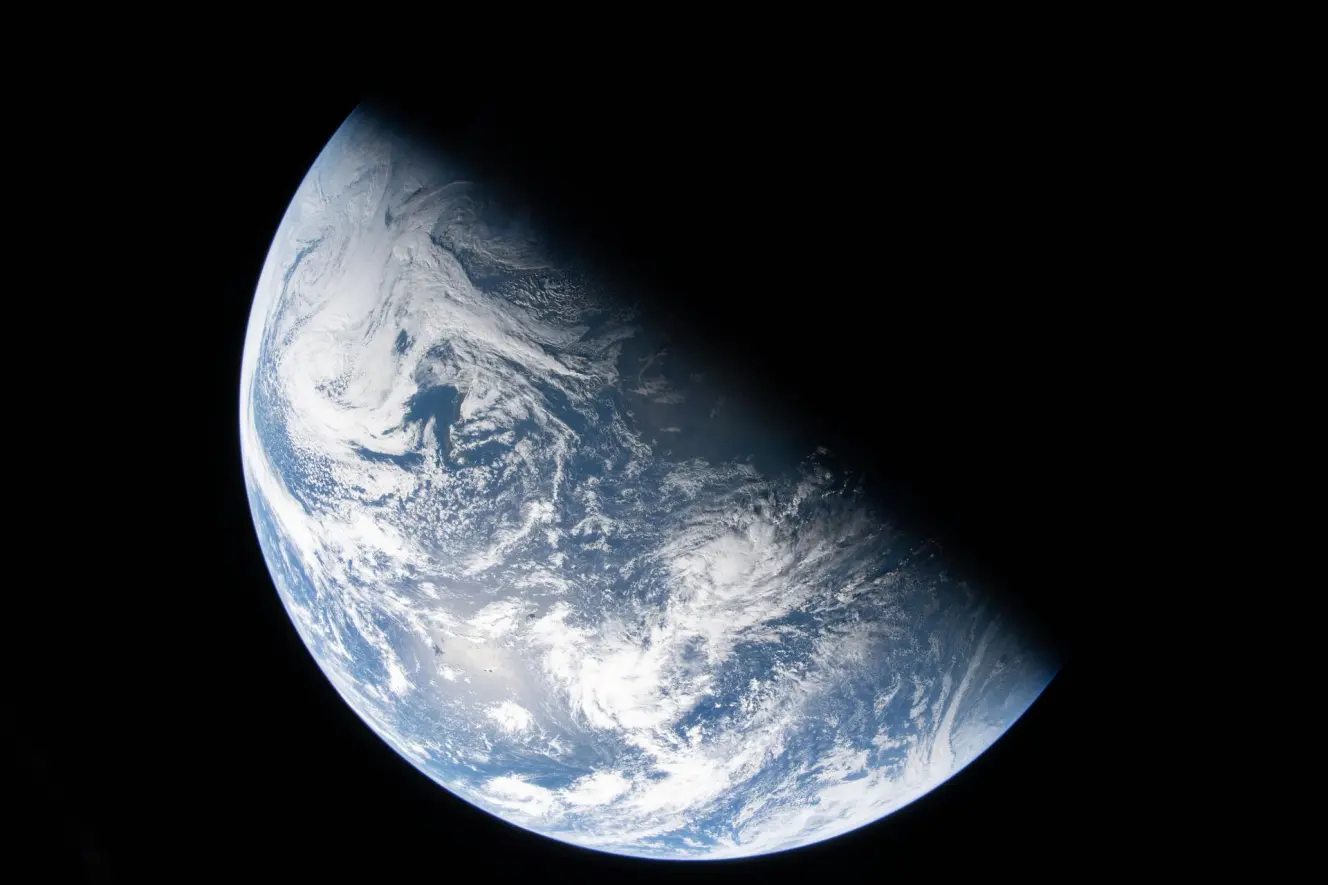 NASA
NASA
This weekend, almost 60 years later, the four astronauts of the Artemis II mission have taken the opportunity once again to look back at the planet we call home. The “spectacular” images, taken by Reid Wiseman, the mission’s commander, show Earth in high resolution as never seen before. Wiseman, alongside his crewmates Victor Glover, Christina Koch and Jeremy Hansen, join an elite group of homo sapiens to have seen this view first hand. Just 24 humans have ever been to the moon.
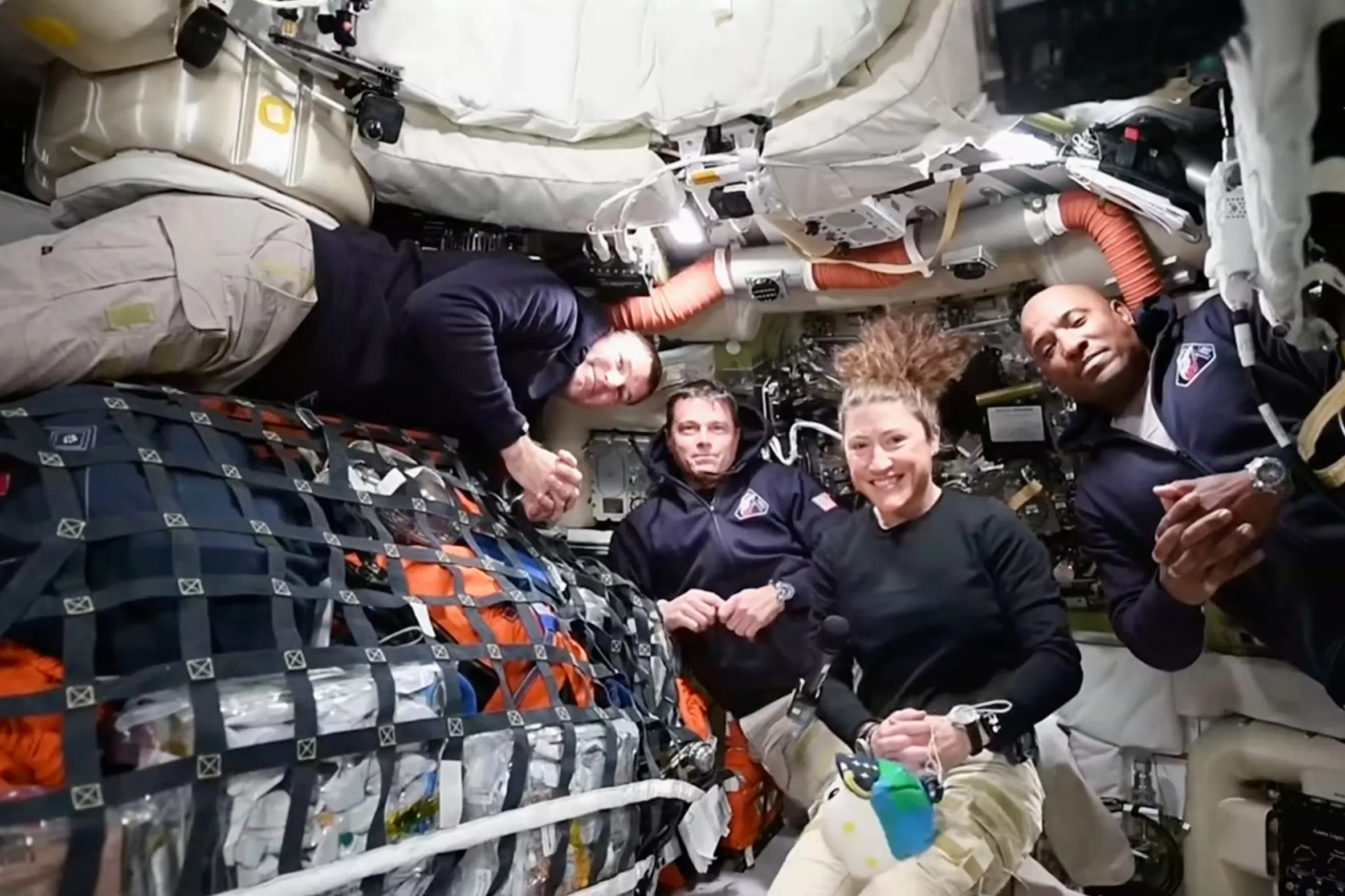 The crew, from left, Canadian astronaut and mission specialist Jeremy Hansen, Wiseman, mission specialist Christina Koch and pilot Victor Glover on ThursdayNASA via AP
In one image, the blue marble has been bisected, peeking through the window on the Orion capsule in which the crew will orbit the moon. Wisps of milky nimbus wreathe the planet. In another, Earth is shrouded in darkness: pinpricks of city light pierce the veil, while the thinnest crescent of light illuminates a sliver of the globe.
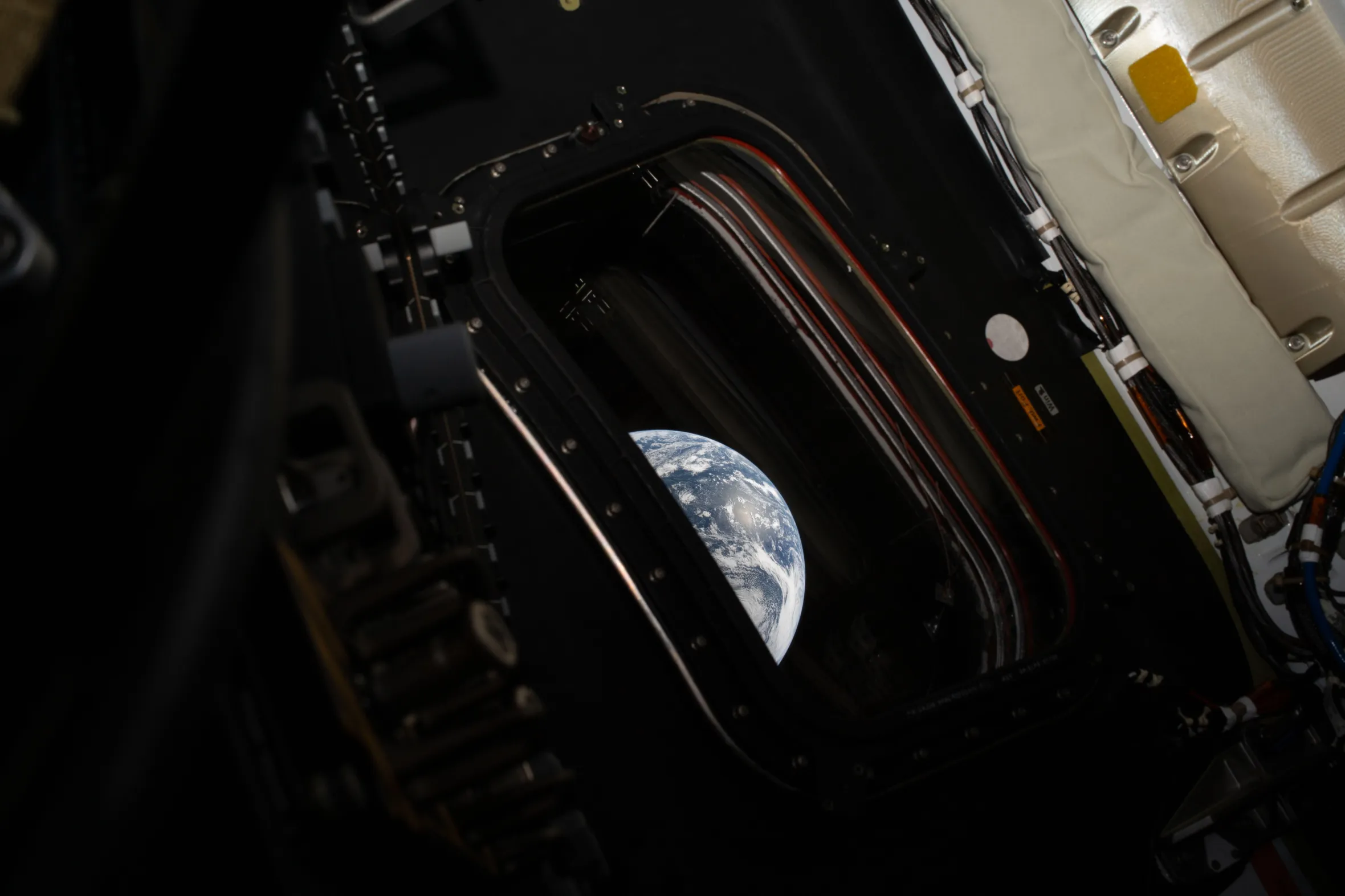 Earth seen through a window of the Orion spacecraftReid Wiseman/NASA
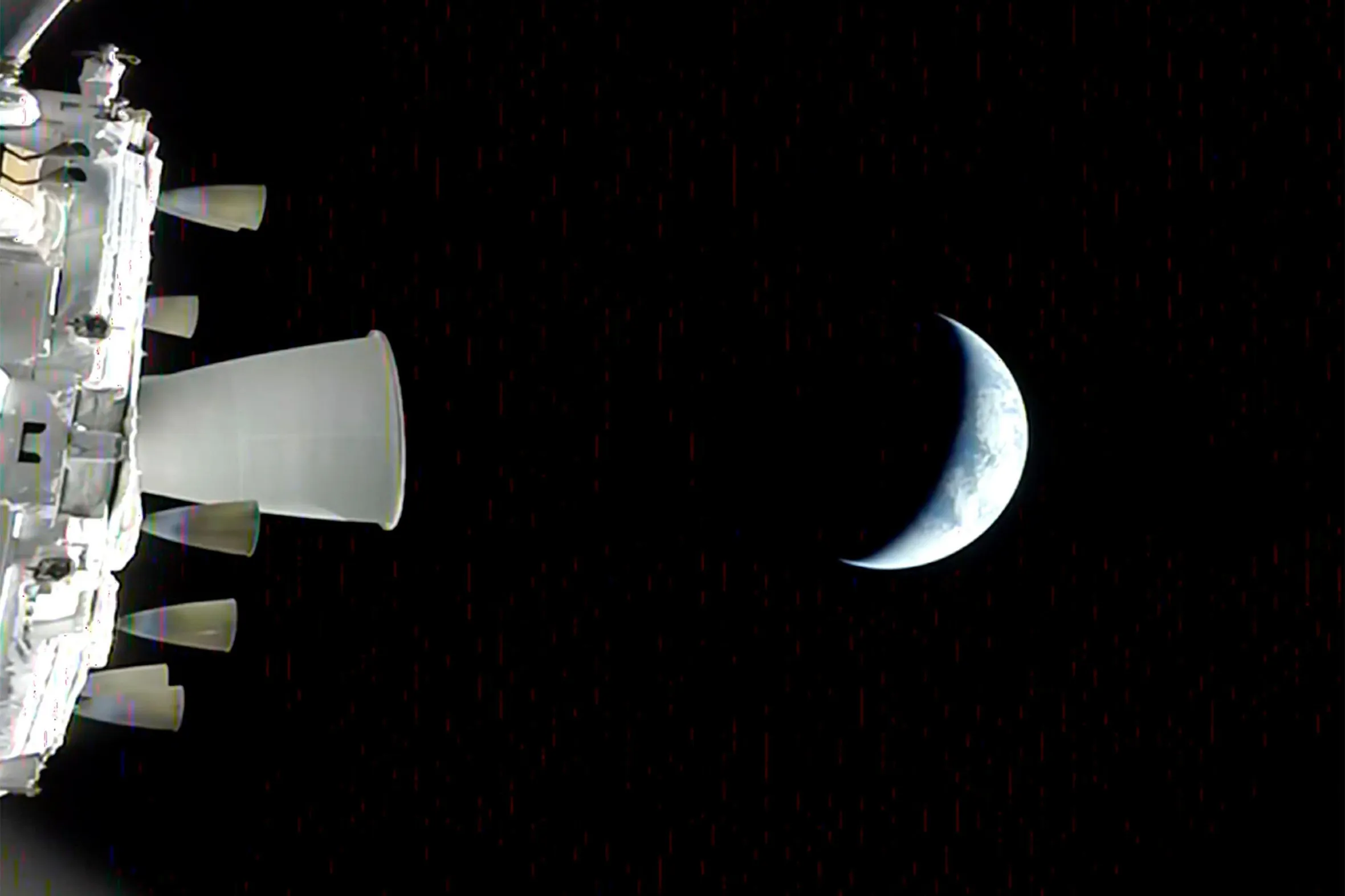 A crescent of the Earth seen with Orion in the foreground and, below, a mere sliverAlamy
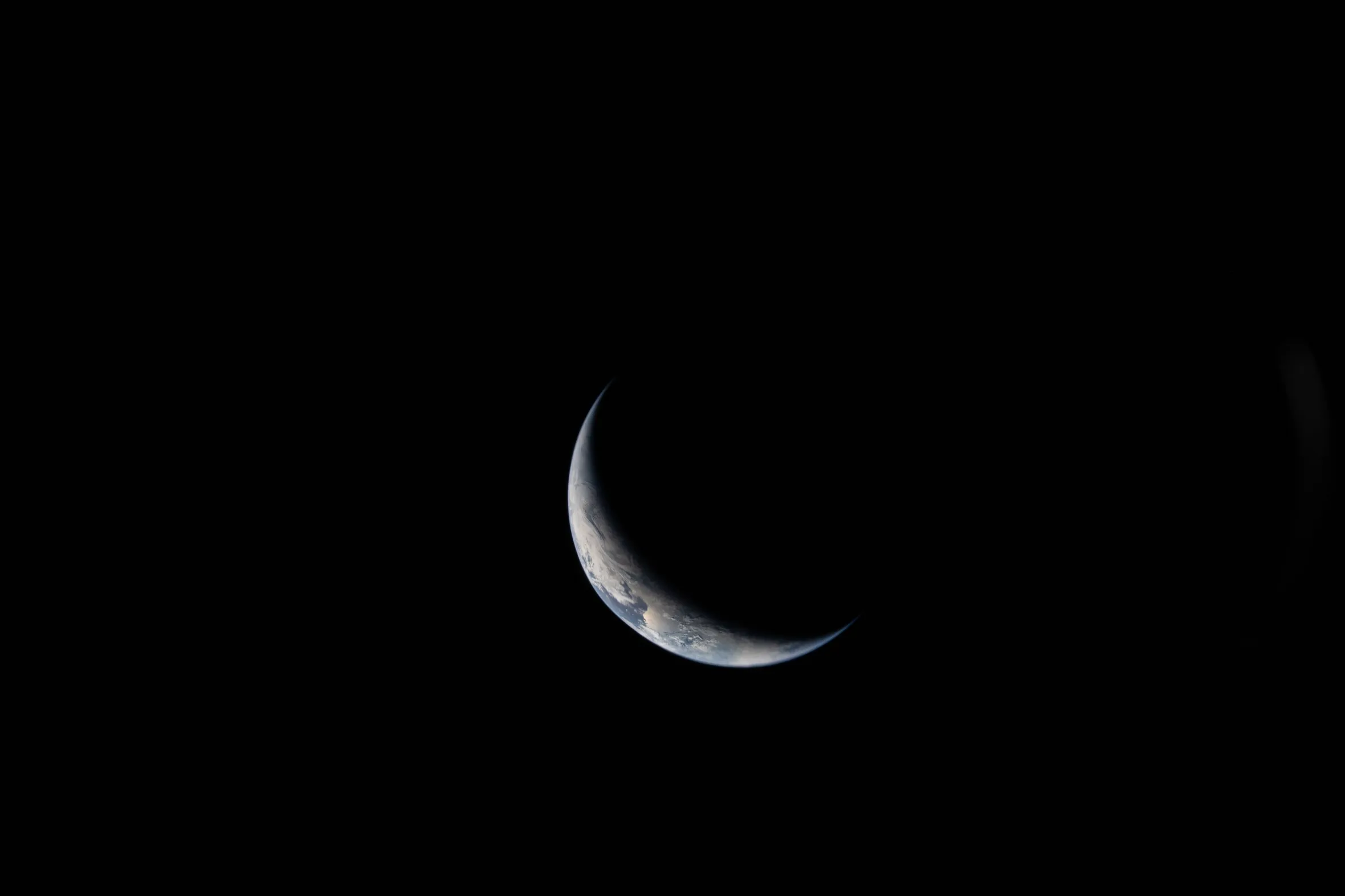 NASA
NASA
The first image, posted by Nasa online and on social media, is called Hello, World. The auroras can be seen at both poles, a spray of green hovering above the horizon. In the bottom-right-hand corner of the image, the space agency identified a shining bright speck as the planet Venus.
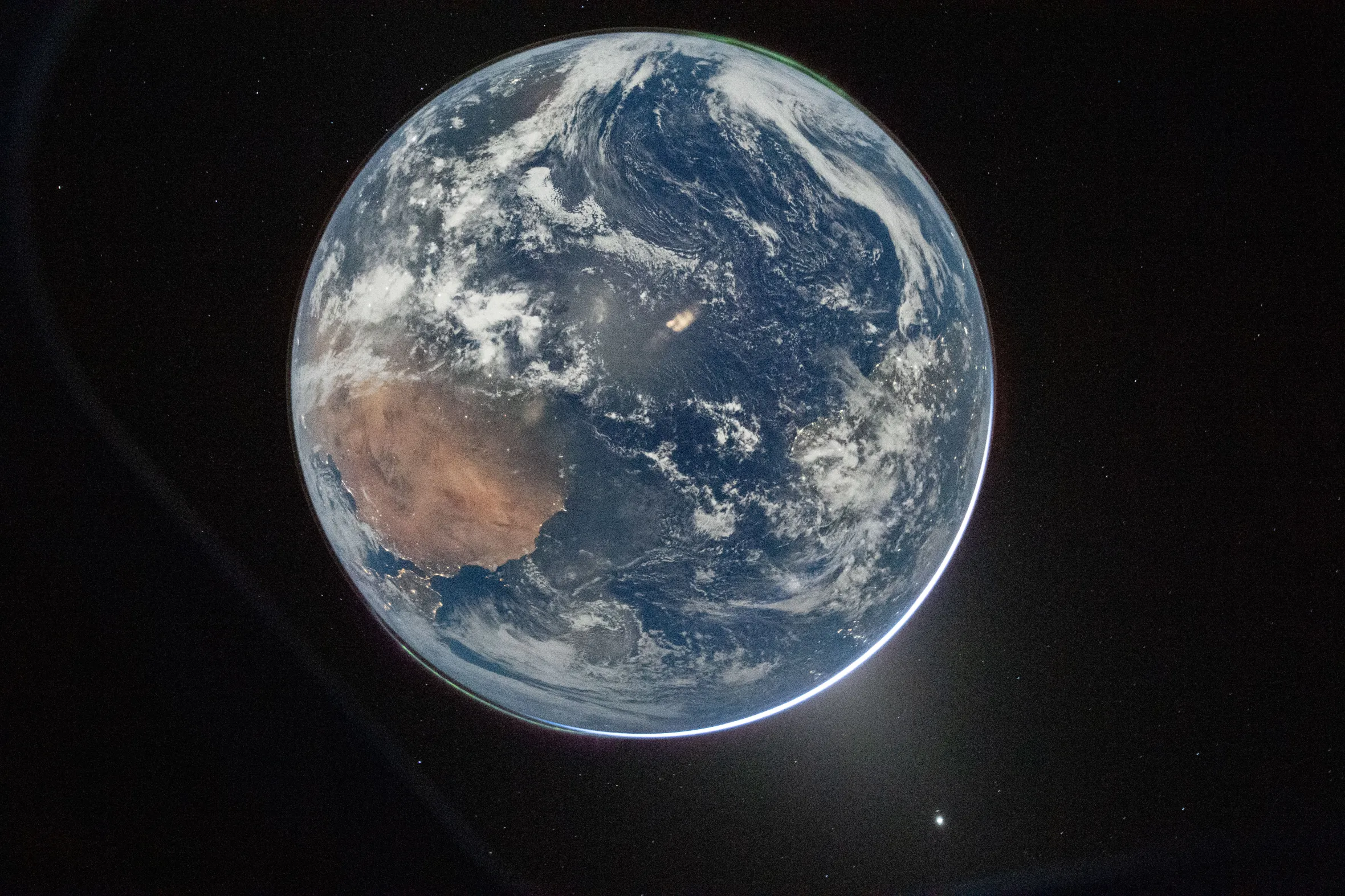 The shot titled “Hello, World” taken on Friday from Orion as it eclipsed the sunReid Wiseman/NASA
On Saturday morning, Nasa’s online dashboard said the Artemis II mission was some 142,000 miles from Earth and about 132,000 miles from the moon. On Thursday, after testing out the Orion spacecraft in Earth’s orbit, Nasa committed the crew to the trip around the moon by initiating the final major engine burn.
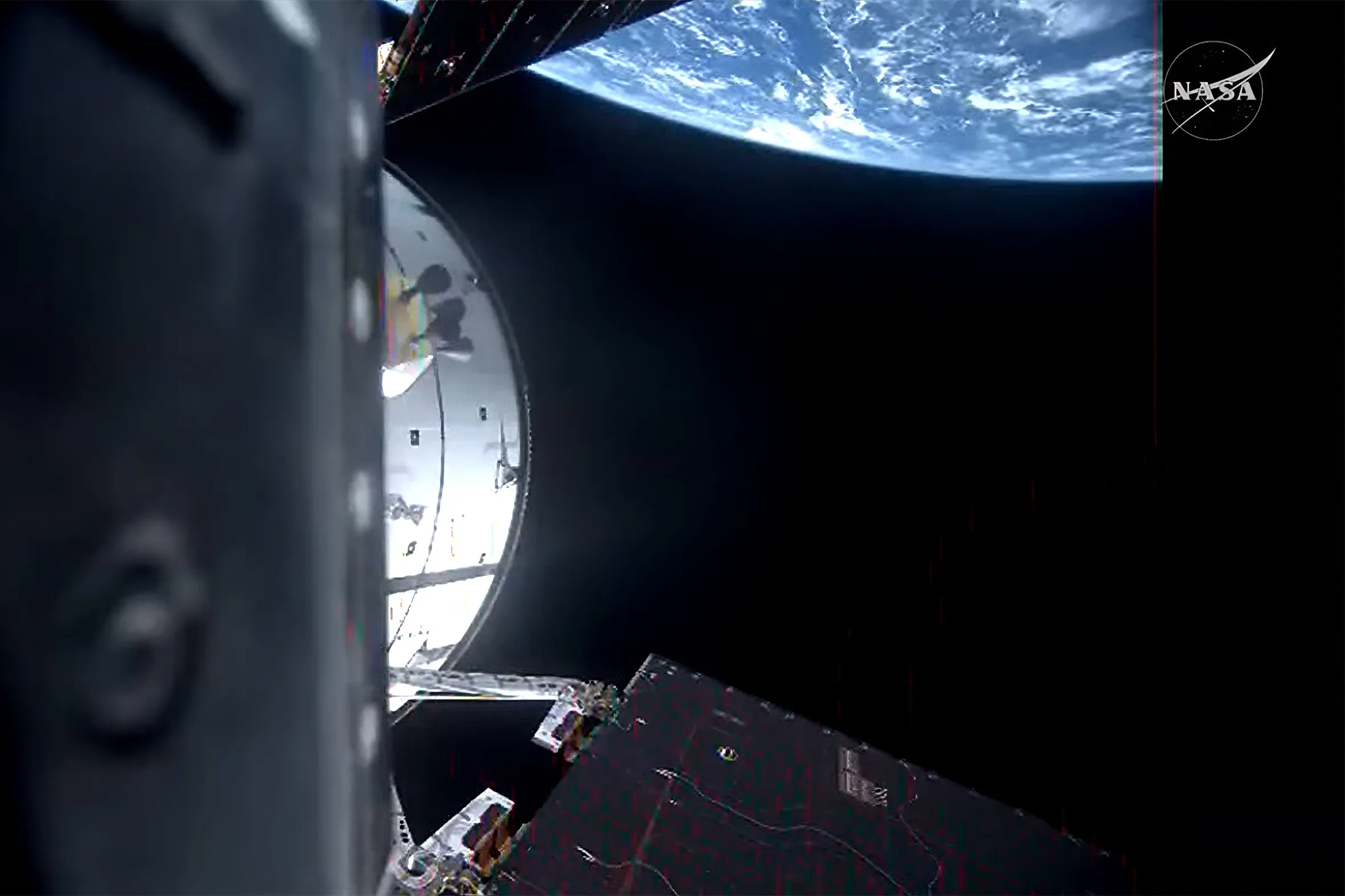 A partial view of the Earth as Orion orbits the planet before it continued around the moon Shutterstock Editorial
“With this burn to the moon, we do not leave Earth,” said Koch, the first woman to journey around the moon. “We choose it.” Hansen, the crew’s mission specialist, said the four of them were “glued to the windows” taking the pictures we see now after the final burn was complete.
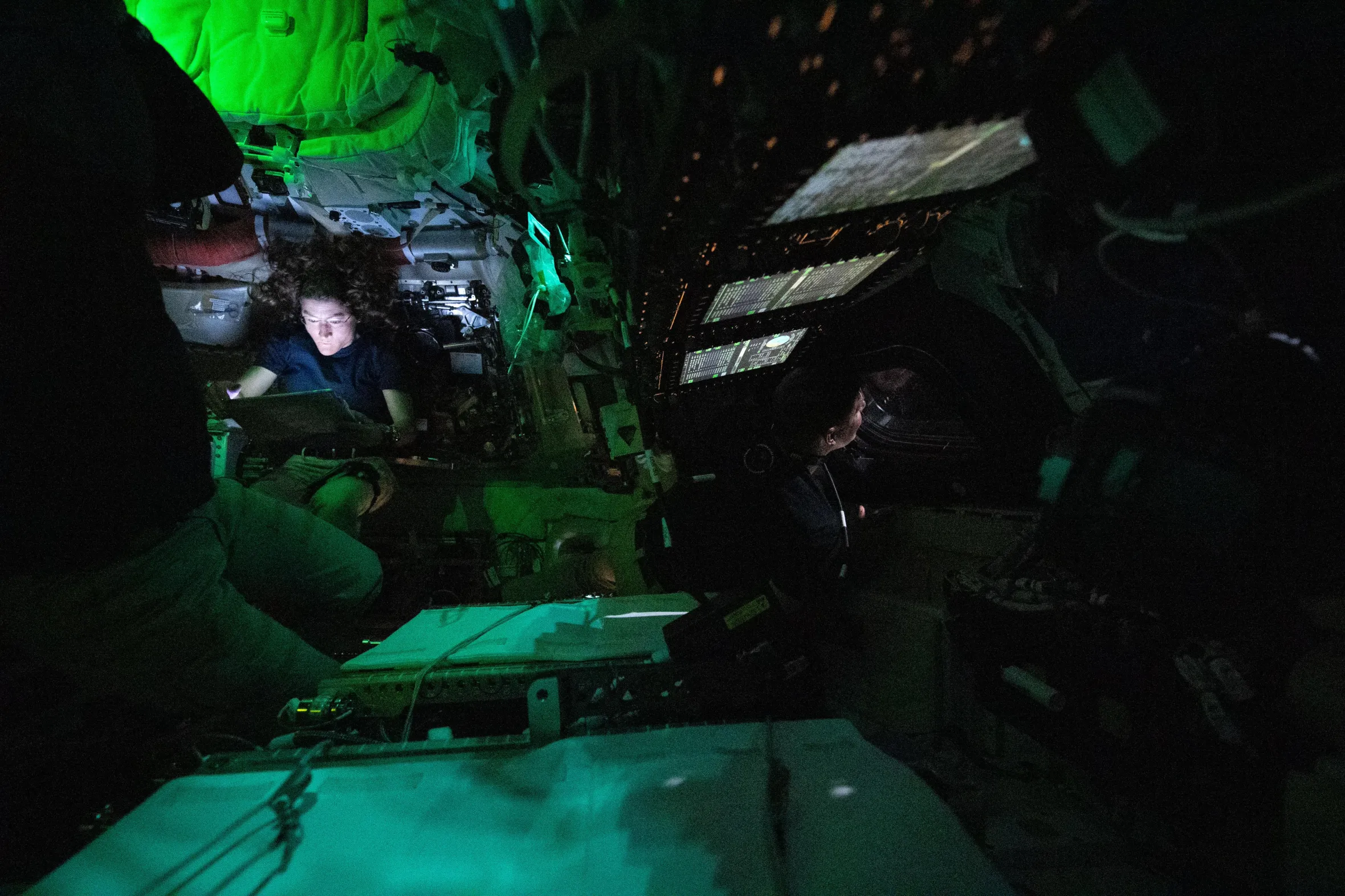 Darkness inside the cockpitNASA
“We are getting a beautiful view of the dark side of the Earth, lit by the moon,” Hansen added. Wiseman was later forced to ask mission control in Houston how to clean the windows of the Orion capsule, as the combined press of the four astronauts taking photos had left them dirty.
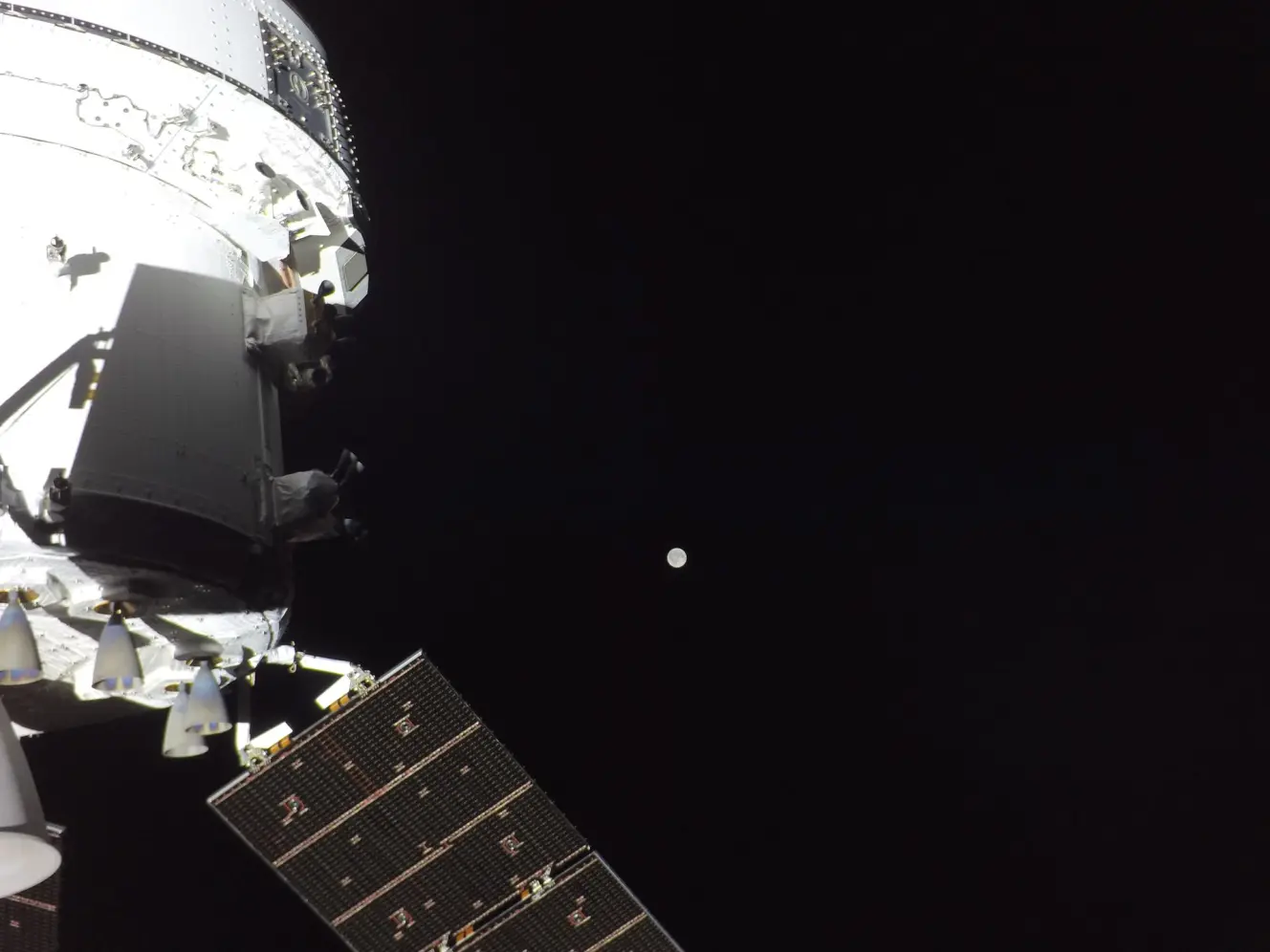 The Orion spacecraft with the moon in the distanceNASA
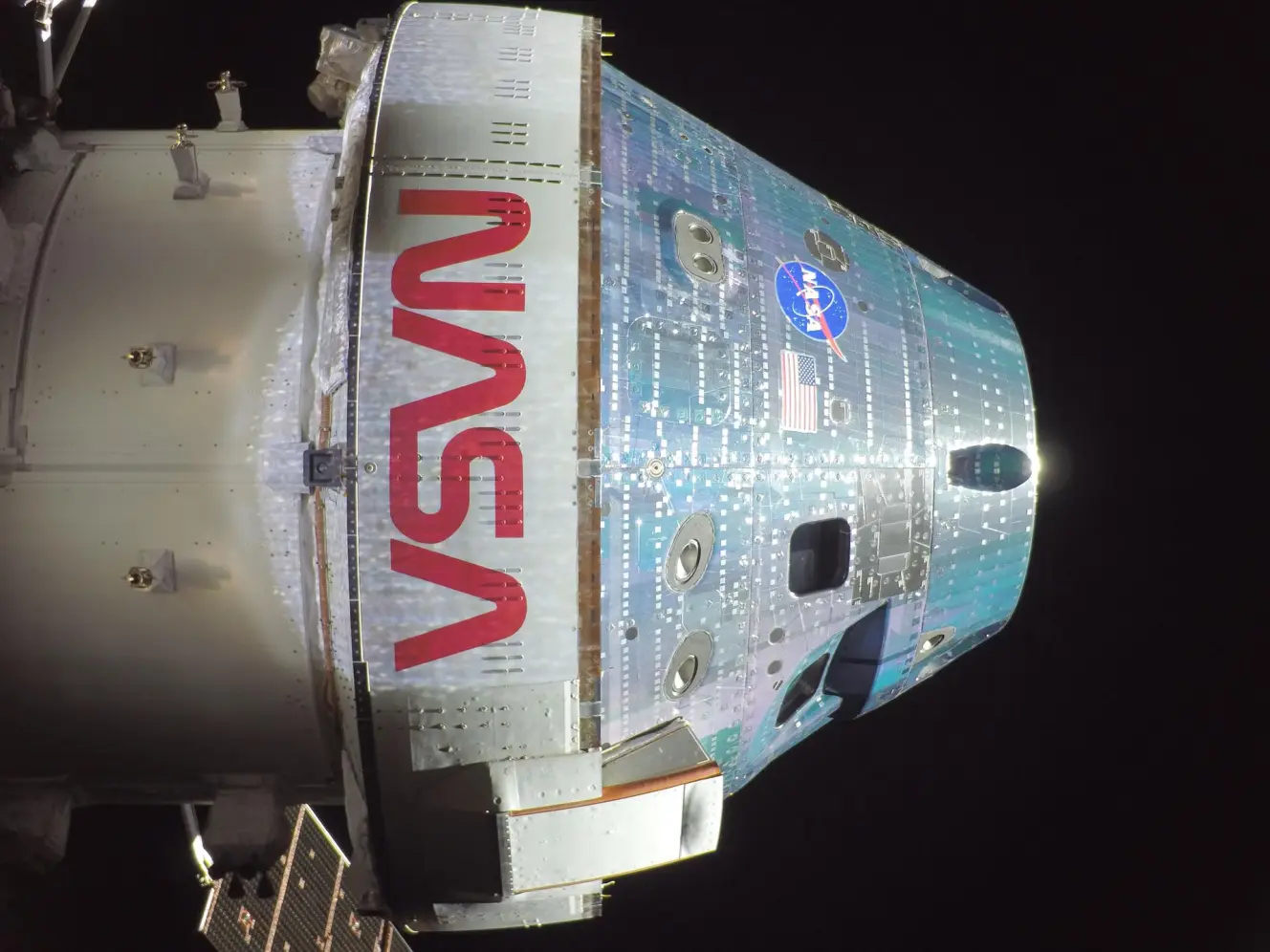 Orion photographed during an external inspection of the spacecraftNASA
In 1994, Carl Sagan, the renowned American astronomer, wrote Pale Blue Dot: A Vision of the Human Future in Space. An excerpt of the book has become famous as a powerful leveller in the shadow of the enormity of space. “Look at that dot. That’s here. That’s home. That’s us,” he wrote. “On it everyone you love, everyone you know, everyone you ever heard of, every human being who ever was, lived out their lives.”
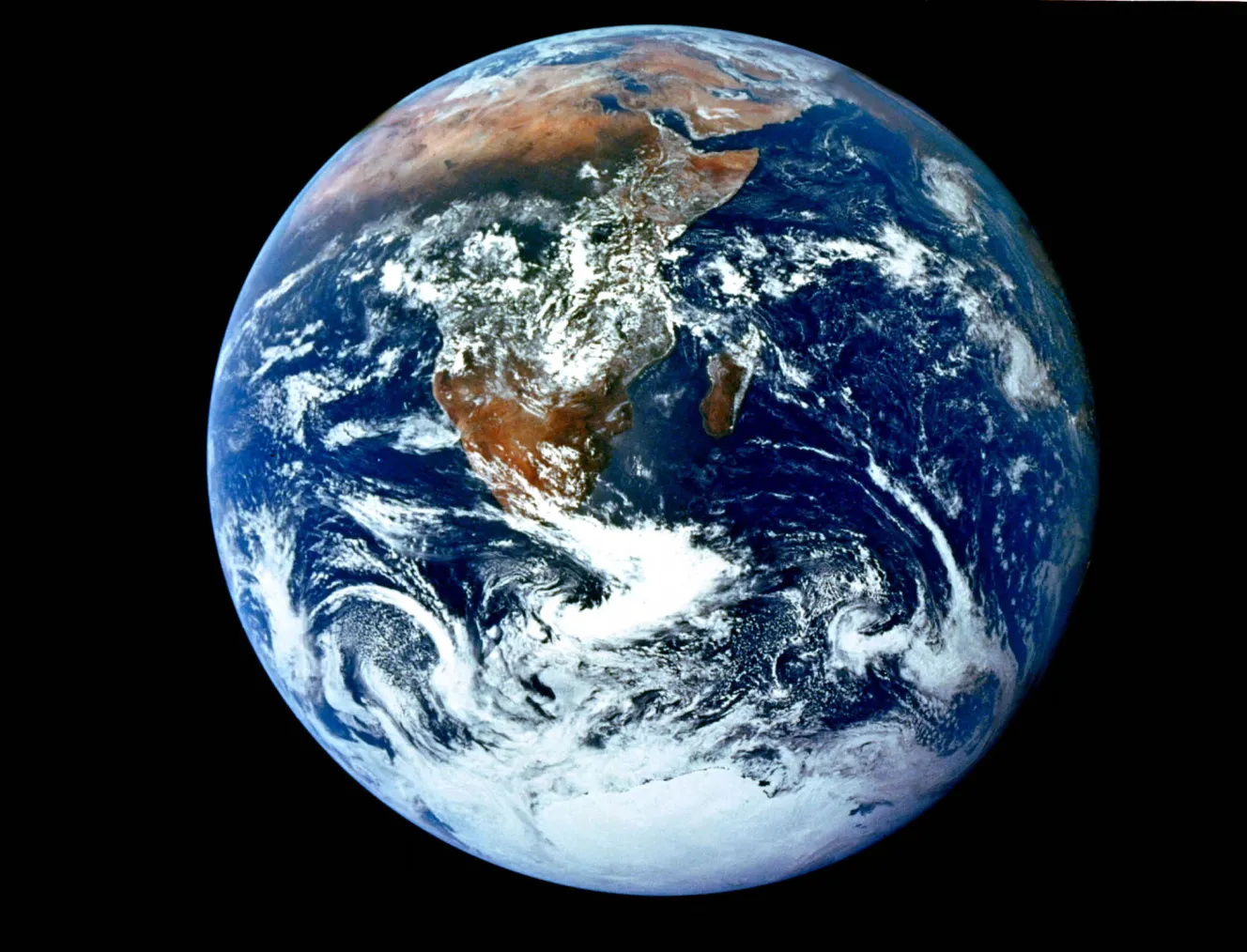 A view of Earth taken in December 1972 during the Apollo 17 crew as they headed to the moon, the last time humans landed on the lunar surfaceNASA/AFP/Getty Images
On Friday afternoon at a news conference at Johnson Space Centre in Houston, Texas, Lakiesha Hawkins, an acting deputy associate administrator at Nasa, repeated the sentiment. She said: “With the exception of our four friends, all of us are represented in this image.”