
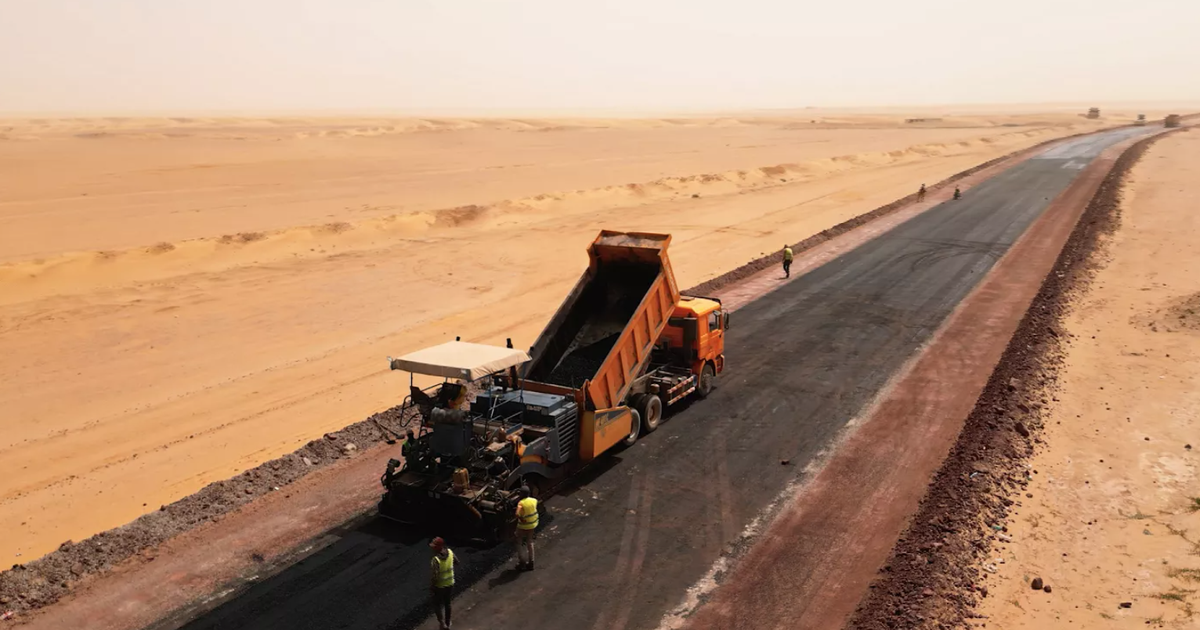
The project, announced by Tunisian Minister of Trade Samir Abid, will connect the Ras Jedir border crossing with Libya to inland routes stretching toward Niger, Mali, Burkina Faso, Chad, and the Central African Republic.
Speaking at the Tunisia-Niger Business Forum alongside Niger’s Trade Minister Abdoulaye Saidou, Abid said the corridor would “reduce the cost and time of export operations, ease logistics and transport challenges, and strengthen African economic integration.”
Trade push under AfCFTA
The project comes as Tunisia deepens its economic engagement with sub-Saharan Africa under the African Continental Free Trade Area.
Abid noted that Tunisia has already recorded nearly 400 export operations to African markets under the AfCFTA’s Guided Trade Initiative, spanning sectors such as mechanical and electrical components, textiles, and agri-food products.
![The Sahel region presents a significant growth opportunity, particularly as they seek alternative trade routes amid shifting regional alliances. [Photo by -/AFP via Getty Images]](data:image/svg+xml;charset=utf8,%3Csvg%20xmlns%3D'http%3A%2F%2Fwww.w3.org%2F2000%2Fsvg'%20width%3D'790'%20height%3D'528'%20data-ring-placeholder%3D'1'%3E%3C%2Fsvg%3E "The Sahel region presents a significant growth opportunity, particularly as they seek alternative trade routes amid shifting regional alliances. [Photo by -/AFP via Getty Images]")
Despite this progress, trade with Niger remains limited. Officials from both countries acknowledged that bilateral trade volumes are modest, underscoring untapped potential given Niger’s market demand and Tunisia’s industrial capacity.
Both sides agreed on the need to structure trade flows, diversify exports, promote industrial partnerships, and facilitate investment.
Strategic ambition amid challenges
Tunisia’s corridor aligns with broader regional shifts, including the rise of the Alliance of Sahel States and efforts by Sahelian countries to diversify trade partners.
By offering a shorter overland route to the Mediterranean, the corridor could reduce reliance on coastal West African ports and cut delivery times that currently stretch to two to three weeks.
However, the project faces challenges. Security concerns across southern Libya and parts of the Sahel, along with infrastructure gaps, could require significant investment—potentially running into billions of dollars—to upgrade roads, logistics systems, and border facilities.
If successfully implemented, the corridor could lower transport costs, boost intra-African trade which currently accounts for just about 15% of total African trade, and position Tunisia as a key node in Africa’s evolving trade network.