
Support CleanTechnica’s work through a Substack subscription or on Stripe.
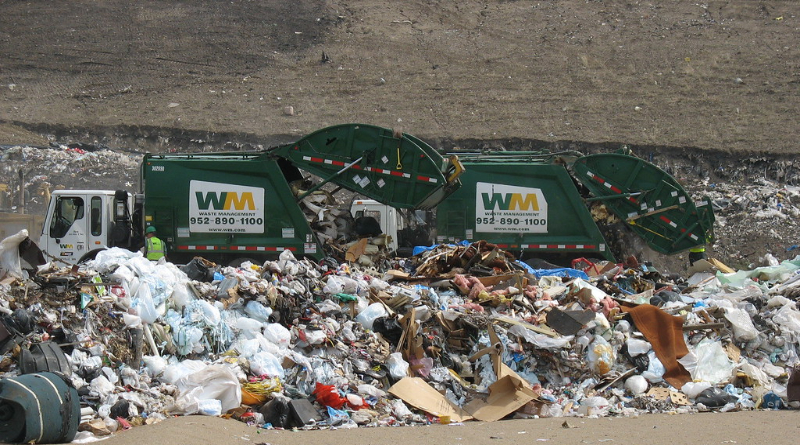
Landfills are not designed for food waste, which is organic and can decompose naturally. While it’s easy to throw out dinner scraps with the garbage, it’s not the most environmentally-sound method to discard unwanted food. In fact, the US Environmental Protection Agency admits that, while total emissions from municipal solid waste landfills are decreasing, methane emissions from landfilled food waste are increasing.
It’s time to rethink how we dispose of food waste, and it might not be that difficult to make the switch to a more emissions-efficient method.
In 2024, over a quarter of the food an average US consumer purchased went to waste. Food loss and waste occur at each stage of the supply chain, with the majority happening at grocery stores, restaurants, other businesses that sell and serve food, and homes. Food waste data from ReFed shows that 80% of surplus food comes from delicious perishables, which include fruits and vegetables, meats, prepared fresh deli items, seafood, milk and dairy, and some grain products such as bread and bakery items.
Typically, uneaten food and inedible parts, such as stems, pits, and peels, ends up in one of eight destinations: composting, anaerobic digestion, combustion, sewers, dumping, spread onto land, not harvested, or landfills.
Of the whole, a very small percentage of this food waste is donated to feed economically disadvantaged households. But most food waste is dumped in landfills. Once underground, that organic material breaks down without oxygen and releases methane, a short-lived yet powerful greenhouse gas. The average landfills are only able to capture 58% of the methane emitted — the rest escapes into the atmosphere.
Instead of turning food waste into energy or nutrients, food waste tossed into landfills contributes to global warming. Could that food waste could be turned into something productive? That’s what a team of researchers wondered.
Why Wastewater Treatment Plants are the Right Fit for Food Waste Disposal
Over time, many plants have evolved from simple sanitation systems into resource-recovery facilities that generate power, reclaim materials, and reduce environmental pollution. How do wastewater treatment plants work?
All of them process sewage using microbial communities that naturally break down organic matter.
Many also capture methane produced during treatment and convert it into usable energy.
Others recover nutrients such as phosphorus that can be turned into agricultural fertilizer.
Some facilities are designed to handle organic matter.
Ahmed I. Yunus and a team of researchers from Georgia Institute of Technology analyzed the benefits of diverting landfilled food water to wastewater resource recovery facilities (WRRFs) for valorization. (“Valorization” is the industrial processing activity that aims to reuse, recycle, or compost waste materials so that they are transformed into useful products or sources of energy.) They used real data from a full-scale plant that handles food waste along with sewage.
A conventional wastewater treatment plant captures over 95% of methane of food waster, nearly twice the amount as at landfills, saving the atmosphere from additional greenhouse gases. The plants capture biogas to generate renewable electricity, reducing the need to purchase power from the grid.
For the numbers crunchers in the audience, here are some results from conventional and advanced plants food waste processing.
Landfills produced the highest global warming potential (58.2 kg CO₂-eq/ton food waste (FW)), whereas wastewater resource recovery facilities (WRRFs) FW valorization pathways achieved net-negative emissions.
Treating food waste at either type of plant prevents the 58.2 kilograms of carbon dioxide equivalent per ton that would otherwise escape from landfills.
Because of food waste’s lower density compared to wastewater, this added only 0.43% to the plant’s daily capacity.
Economic analysis indicated that WRRF valorization remained feasible even when tipping fees were 25% below landfill rates, with net lifecycle profits of $2.45/ton FW (CAS) and $2.33/ton FW anaerobic membrane bioreactor (AnMBR).
Resource recovery, although modest, included 0.19 kg/day of struvite and 129 kWh/day for CAS, and 6.1 kg/day of struvite and 116.8 kWh/day for AnMBR.
Energy return on investment (EROI) reached 18.8 % for CAS and 16.7 % for AnMBR, while phosphorus recovery was substantially higher in AnMBR (70.4 %) compared to CAS (7.9 %).
Enough nutrients are recovered to fertilize about 23 acres of farmland annually, reducing the need for synthetic fertilizers, which require energy-intensive mining and processing.
Many larger, well-funded plants already have the infrastructure to process food waste, the researchers note, though not every plant is ready to do so today.
How do Wastewater Plants Process Food Waste?
It starts by getting the food waste to a wastewater plant. Some people place their food scraps into their home in-sink disposal. The researchers found, though, that most successful programs offer curbside pickup, which is already commonplace in many communities to recycle or remove yard debris. In this case, the food waste gets transported by truck to treatment plants. (Note: The researcher did not calculate truck emissions, as trucks move nearly all human food waste, regardless of method of disposal.)
Trucks deliver food waste to a receiving station, where it’s processed to remove plastics, metals, and other nonorganic materials. Then it’s blended into a slurry with the sewage solids. Next, the mixture is added to anaerobic digesters, which are sealed tanks where microorganisms break down organic material. Adding food waste does not overload the plant or cause problems in operation, and the plant consistently meets and occasionally surpasses effluent water regulatory standards.
That treatment efficiency improvement is a result of the additional organic material, which supports the system’s biological processes.
So, you ask, what’s a project like this going to cost? The researchers thought about this consideration, too. Wastewater treatment is already expensive. Many communities’ existing plants may be nearing capacity.
Economic results from the study suggest that handling food waste in wastewater treatment plants can be financially viable. Towns already pay landfills and incinerators what are called “tipping fees,” based on the weight of the waste delivered. Wastewater treatment plants can also charge these fees. Additional revenue can translate into profits, even if municipalities charge lower tipping fees than landfills. The researchers add that communities can also sell the methane that is produced or use it in their own local applications, such as generating electricity and heat. The remaining solid material is rich in nutrients and can be also used to produce useful material, such as fertilizer.
The bottom line is that cities already handle organic material every day, and they operate complex biological treatment systems for municipal disposal. Rerouting food waste from landfills to wastewater treatment facilities can be environmentally beneficial and economically resourceful.
Resources
“How big is the food waste problem in the US — and what are its causes and impacts?” ReFed. November 2025.
“How sewage treatment plants could handle food waste, sparing landfills and the climate.” Ahmed Ibrahim Yunus. Seattle PI. March 13, 2026.
“Leveraging wastewater resource recovery to reduce landfill organic loading: Process modeling, environmental, and economic impact assessment.”Ahmed I. Yunus, et al. Results in Engineering. March 2026.
“Quantifying methane emissions from landfilled food waste.” EPA. March 4, 2026.
Sign up for CleanTechnica’s Weekly Substack for Zach and Scott’s in-depth analyses and high level summaries, sign up for our daily newsletter, and follow us on Google News!
Advertisement
Have a tip for CleanTechnica? Want to advertise? Want to suggest a guest for our CleanTech Talk podcast? Contact us here.
Sign up for our daily newsletter for 15 new cleantech stories a day. Or sign up for our weekly one on top stories of the week if daily is too frequent.
CleanTechnica uses affiliate links. See our policy here.