
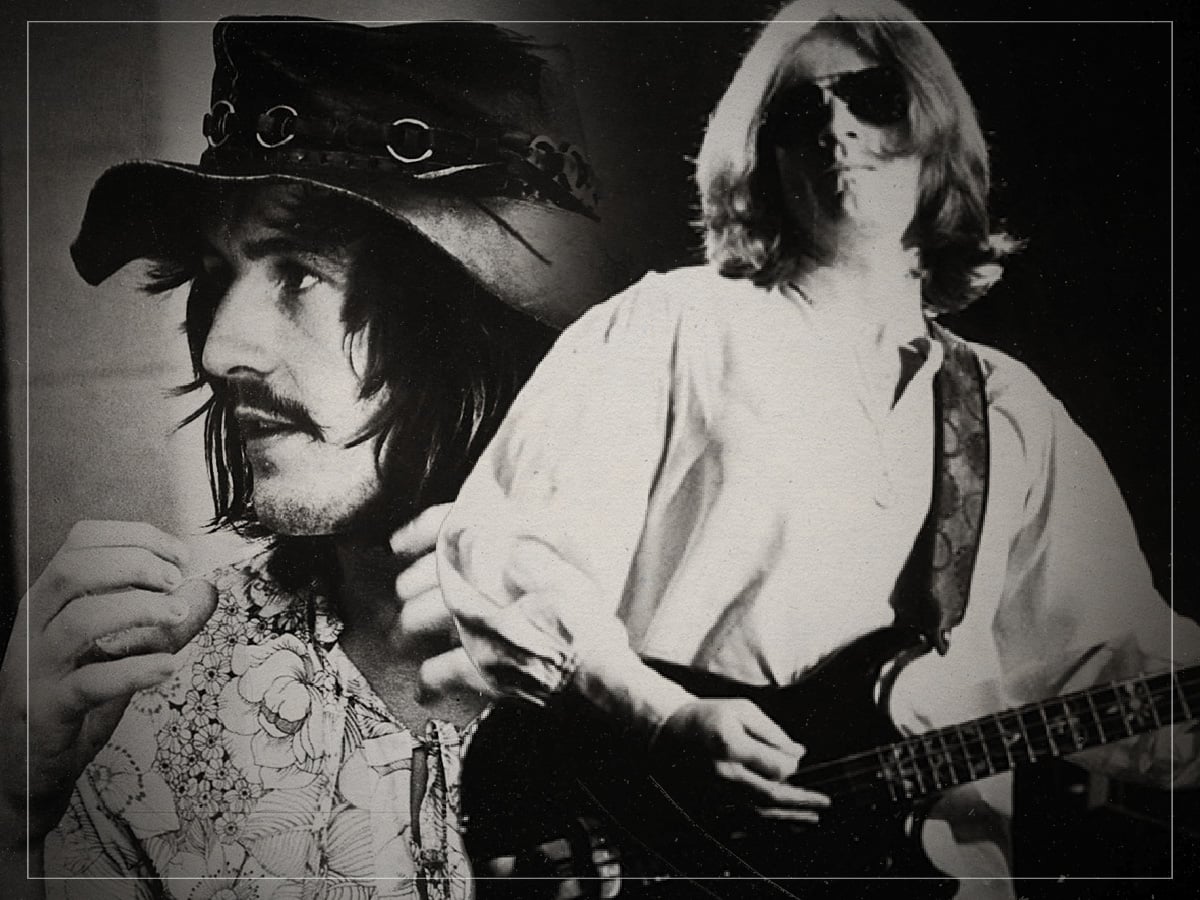
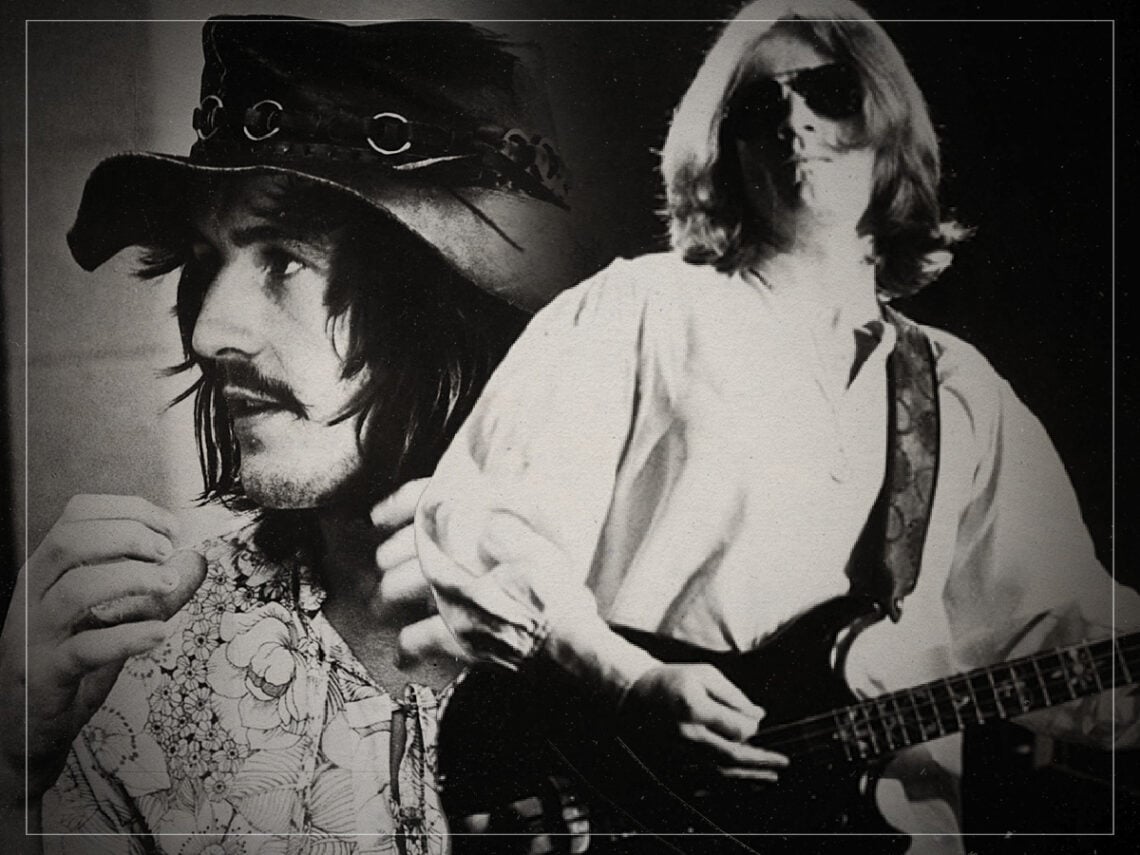
(Credits: Far Out / Led Zeppelin)
Sat 4 April 2026 19:30, UK
Of all the members of Led Zeppelin, John Paul Jones almost seemed slightly carefree every single time they played together.
Anyone would have been proud to be in one of the greatest rock and roll bands in the world, but if he didn’t seem to like where everything was going, it would have made sense if he spent the rest of his days spending time leading a choir instead of performing rock and roll. But if there was one instrument that he was never going to take for granted, it was being able to lead one of the most badass rhythm sections in the history of recorded music.
Then again, nailing down Zeppelin’s rhythm section is a bit odd when you look at all the moving parts. Jonesy was always the one straight up the middle chugging out as many riffs as possible whenever they performed, but since Jimmy Page was always slightly ahead of the beat and John Bonham was behind the beat, there was a loose fluidity to the way that they played that no one else could capture if they tried playing the same riffs the same way.
Just look at a song like ‘Black Dog’. On paper, everything about this song shouldn’t work compared to everything else going on in the mix, and yet even when they seem a little bit lost, it only takes a little while for them to lock themselves back into a groove when they change keys and get right back into the central riff of the song. And a lot of that comes down to the way that Bonzo played the drums.
No one had seen someone with that much power with every single strike they hit, but even if you look past ‘Moby Dick’ and all of the other major performances that he gave, Jones was more interested in seeing how well they gelled when they had a jam session together. There’s usually an unspoken connection between drummers and bassists, but Jones didn’t need to worry as soon as Bonham started playing.
He was in the hands of one of the heaviest drummers, and even if there was a lot of power behind his delivery, Jones could still hear the intense practice that he put into making the beat sound powerful, saying, “When I first played with Bonzo, I automatically knew. I mean, there’s a lot of great guitar players and singers, but there are less drummers and less bass players and there aren’t that many drummers that are really good. When we recognised each other, we both knew what we were doing and immediately clicked. It was like a marriage.”
But for all of the talk about drummers and bass players behind the heartbeat of the band, Bonham seemed to have more of an infatuation with what Jimmy Page was doing. Page was always going to be the leader of the group, but if you listen closely to Bonzo’s kick drum, a lot of the times he’s following what Page is playing half the time, always making sure that he’s hitting on every single accent so that tracks like ‘Good Times Bad Times’ or ‘Immigrant Song’ hit you like a smack in the face.
If you wanted to look beyond being a great powerhouse, though, Bonham was also looking to expand on what he was hearing from a lot of his favourite drummers. Bernard Purdie was providing some of the greatest swing rhythms in Steely Dan’s best records, and you could hear Bonham still pushing himself to be the best musician that he could possibly be when looking at what he was doing on some of the band’s later records.
So while Jonesy would have had his work cut out for him, needing to hold down the rhythm section in a one-guitar band, Bonham was the reason why he never had to worry about sounding off. There was a lot more bottom end to work with underneath Page’s guitar, and from that first jam session, they were about to show the whole world what they were capable of when their debut dropped.
ADD AS A PREFERRED SOURCE ON GOOGLE  The Far Out Led Zeppelin Newsletter
All the latest stories about Led Zeppelin from the independent voice of culture.
Straight to your inbox.