
Months after floods killed more than a thousand people across Sumatra, residents are still digging their way out of the wreckage.
While survivors are eager to rebuild, many just can’t shake the fear that the next catastrophe is waiting around the corner.
Salmawati still remembers the sounds of the water.
She had been asleep in her home in Lokh Pungki in North Aceh’s Sawang district when she woke in shock before dawn.
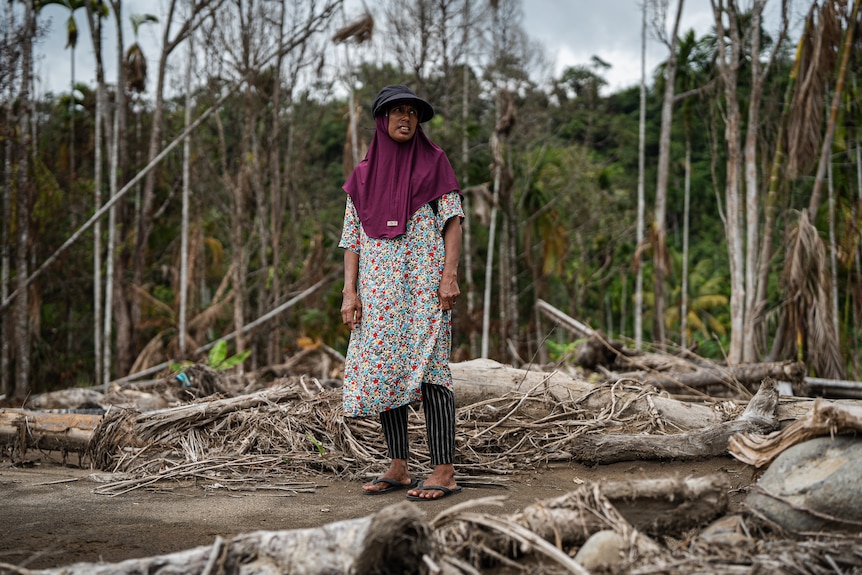 Salmawati standing amid the wreckage near her home in North Aceh’s Sawang district.
Outside, the river was already full. The water was black and rising fast.
She grabbed her two young sons and ran for higher ground.
From the hillside, Salmawati watched as her home of 30 years vanished.
“The children said, ‘Mum, the house is gone.’ I was so heartbroken.”Loading…
What stood here before is now difficult to picture.
Loading…
The villages of Sawang were once tranquil places, where families raised children, worked the land, and lived with the rhythm of their rivers.
Loading…
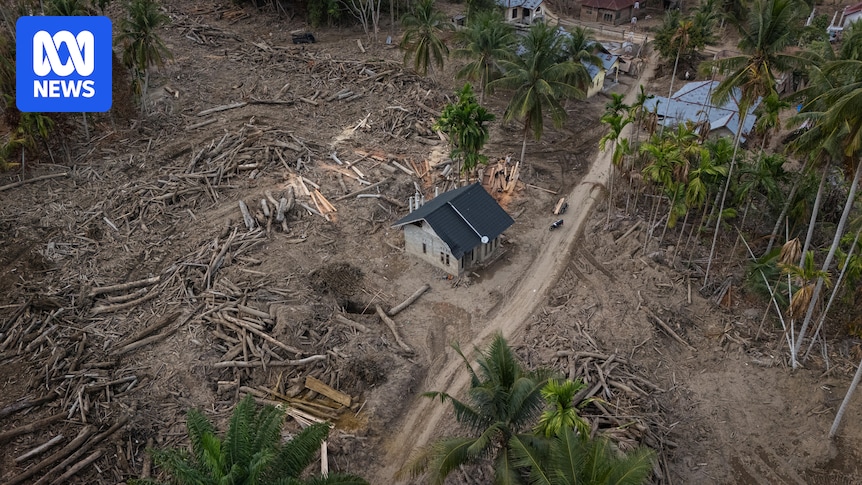
Now much of it is gone, smashed, buried, or swept away.
‘Rare’ cyclone thrashes South-East Asia
In November 2025, a rare cyclone formed in the Malacca Strait, causing torrential rain to fall across large tracts of the Indonesian island of Sumatra.
The deluge triggered floods and landslides that tore through communities in Aceh, North Sumatra and West Sumatra.
More than 1,200 people were killed in a matter of days. Hundreds of thousands were displaced.
In North Aceh, entire villages were engulfed from upstream to downstream.
But for residents here, the disaster wasn’t just an onslaught of water — it was a river of timber.
Loading…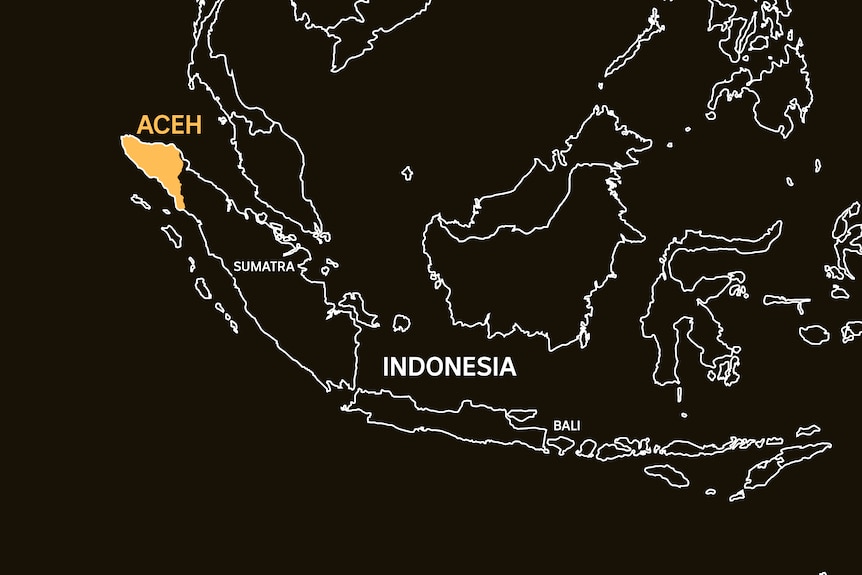 Aceh province — where Sawang district sits — is located at the top of Indonesia’s Sumatra island.(ABC Graphic: Cordelia Brown)
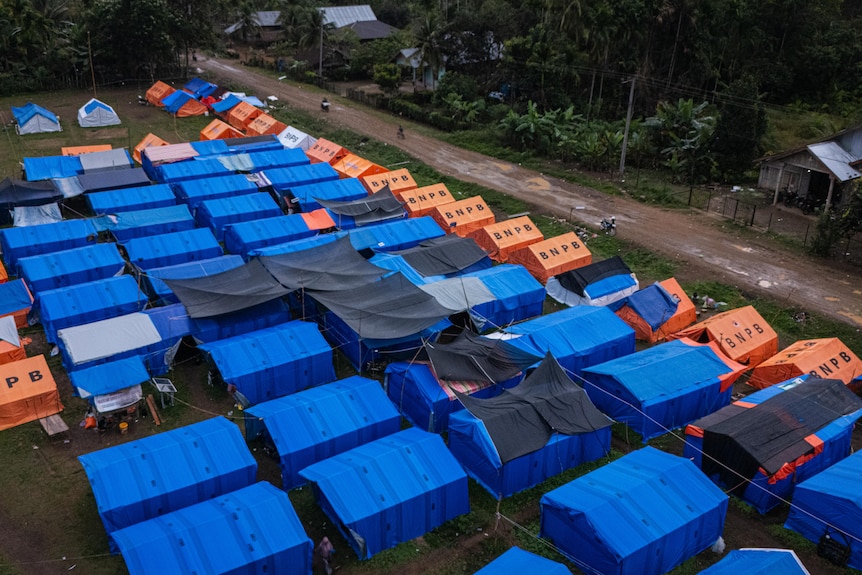 Victims and survivors were moved into tents after the disaster left them homeless.
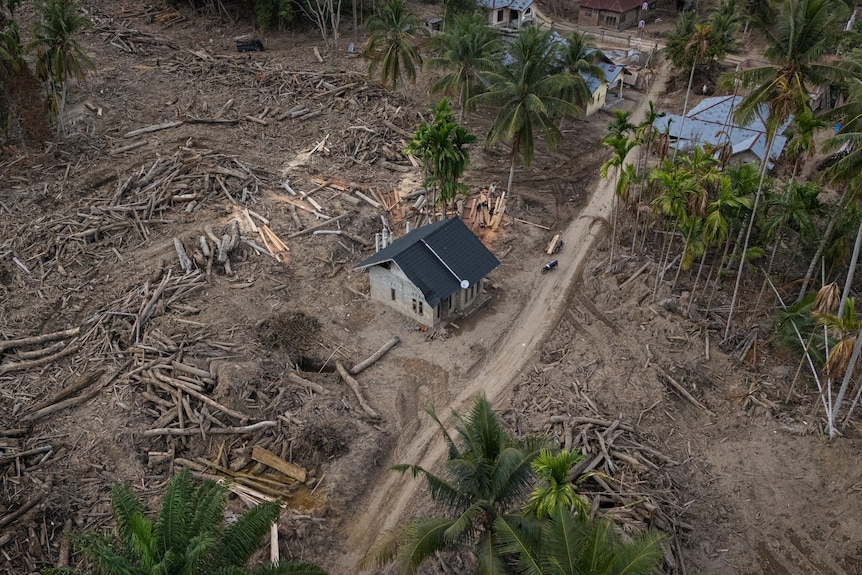 A lone house stands in the middle of debris and logs in Sawang district.
Massive logs came thundering down with the floodwaters, slamming into homes, bridges and roads.
Throughout Sawang’s villages, people describe the same thing: darkness, panic, and then an avalanche of wood.
Firmadi, the head of Lokh Pungki village, said the water began rising while most people were asleep.
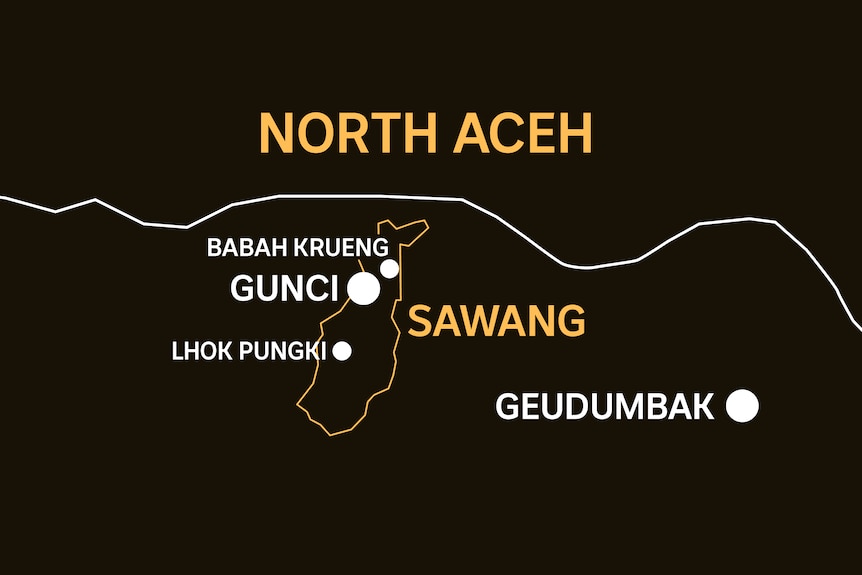 A zoomed in map of North Aceh showing where Lhok Pungki, Babah Kreung and Gunci sit in relation to Sawang district.(ABC Graphic: Cordelia Brown)Loading…
“By 3:00am, the water was already high,” he said.
“Houses were swept away and large logs came with the flood, crashing into homes and carrying them off.
“We don’t exactly know where the logs came from … there is a palm oil plantation upstream, it’s several thousand hectares.”
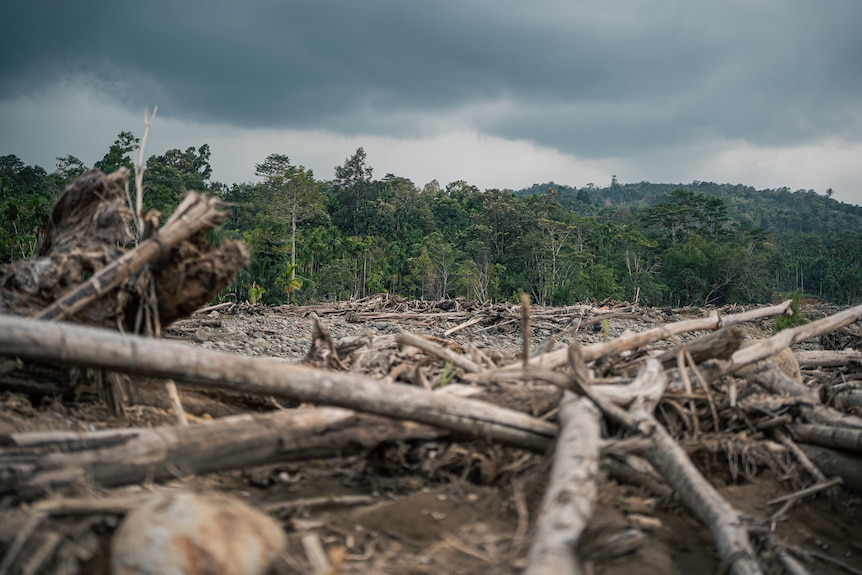 Gunci is one of many locations across North Aceh where seas of broken wood and timber were left behind after the floods.
In nearby Babah Krueng village, Nur Aenun climbed onto the roof of her house with her elderly father as the water kept rising.
In the early hours of the morning, she watched helplessly as the carnage unfolded.
“With my own eyes I saw these massive logs rushing past right in front of my house,” she said.
Loading…”And there was nothing I could do.”
Months later, the survivors are living in tents, nestled among the remains of their homes.
Babah Krueng’s community rice fields and gardens, that once stretched along the valley, have been destroyed, replaced by timber.
“Now all we see are mounds of earth, piles of mud, debris from the flood scattered everywhere, and huge logs that we don’t even know where they came from,” Nur Aenun said.
“People here are deeply saddened.”
Mysterious sea of logs hit ‘powerless communities’ the hardest
The flood was triggered by extreme weather and torrential rain wrought by Cyclone Senyar.
Climate change has been increasing the intensity of cyclones, but environmental groups, disaster officials and residents say another force made the storm far deadlier: deforestation.
Loading…
The island of Sumatra — renowned for its mysterious, dense and expansive forests — has been stripped back over decades.
Loading…
Piece by piece, year after year, the island’s forests are being cleared and replaced by extractive industries, such as palm oil, pulpwood and mining.
The toll is clearly visible from space.
These images show large parcels of forest in Geudumbak and Gunci — 10 years ago versus today — that have been cleared.
Loading…Loading…
Environmental monitor Nusantara Atlas estimates that in the last 25 years, almost 4.5 million hectares of forest in Sumatra has been lost — a land area four times larger than Greater Melbourne.
Many companies have been carrying out significant land clearing legally, with government permits, but large swathes of land have also been illegally cleared.
Muhadi Bukhari, director of the environmental NGO Bytra North Aceh, says his organisation has been sounding the alarm for years.
Loading…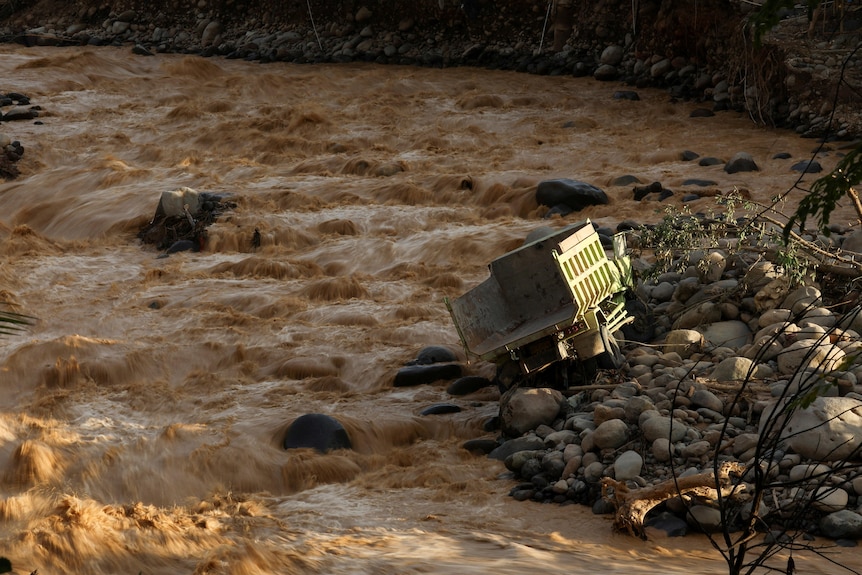 A truck stranded in the river at an area hit by deadly flash floods in November 2025 in West Sumatra.(Reuters: Willy Kurniawan)Loading…
“We’ve long raised concerns about illegal activities inside Aceh’s forest areas,” he said.
“That loss of forest cover has directly contributed to the severity of today’s flooding.”
Bytra estimates Aceh has lost about 82,000 hectares of forest cover in the past decade, including roughly 8,000 hectares in North Aceh.
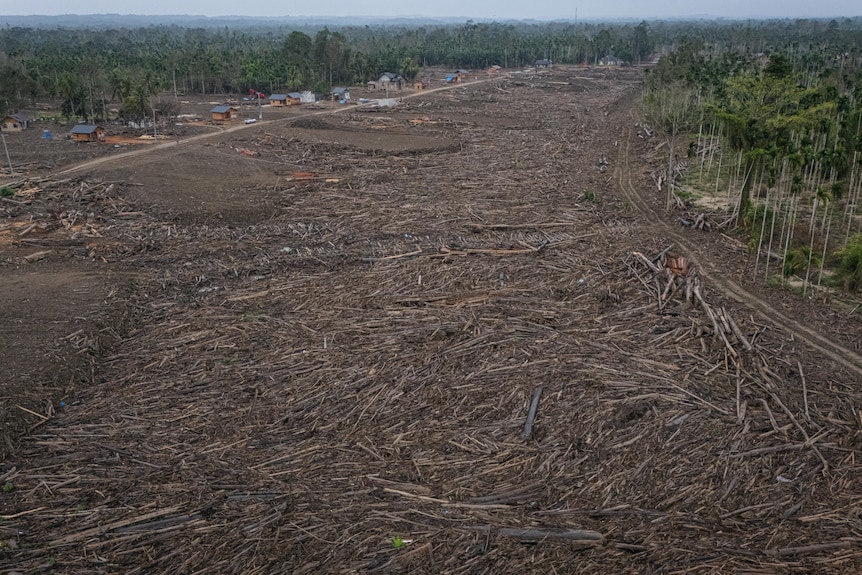 Drone footage showing seas of timber throughout Geudumbak — an area east of Sawang district in North Aceh.
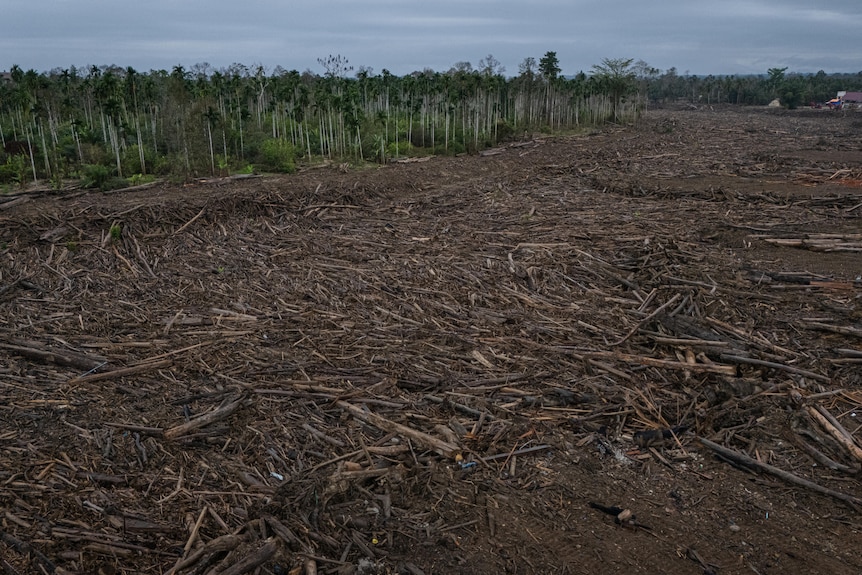 Another angle showing seas of timber throughout Geudumbak.
Forests play a critical role in absorbing rainfall, working like a sponge to slow runoff into rivers.
Deforestation driving catastrophic floods
Remove enough of that cover and the system changes — water moves faster, sediment builds up, and debris is no longer held in place.
“And those who suffer most are not the perpetrators or the investors. It’s the powerless communities,” Muhadi Bukhari said.
Another Indonesian environmental NGO, Wahli, described the disaster not just as “nature’s fury” but one that was “amplified by decades of deforestation”.
Mulyadi, from the district disaster mitigation agency Badan Nasional Penanggulangan Bencana (BNPB), said the presence of large logs in the floodwaters was clear evidence.
“We can’t ignore that deforestation is occurring in forest areas,” he said.
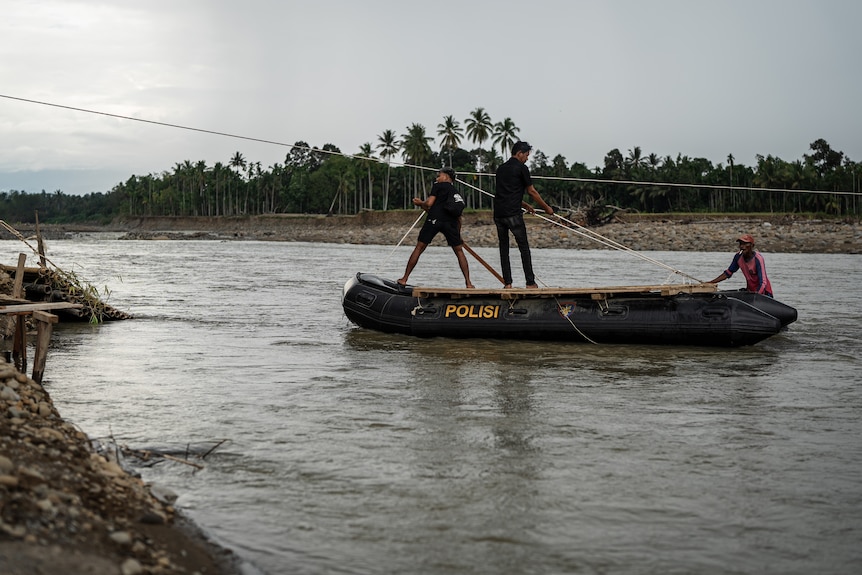 Local police navigating the floodwaters during Sawang district assessment and rescue missions.Loading…
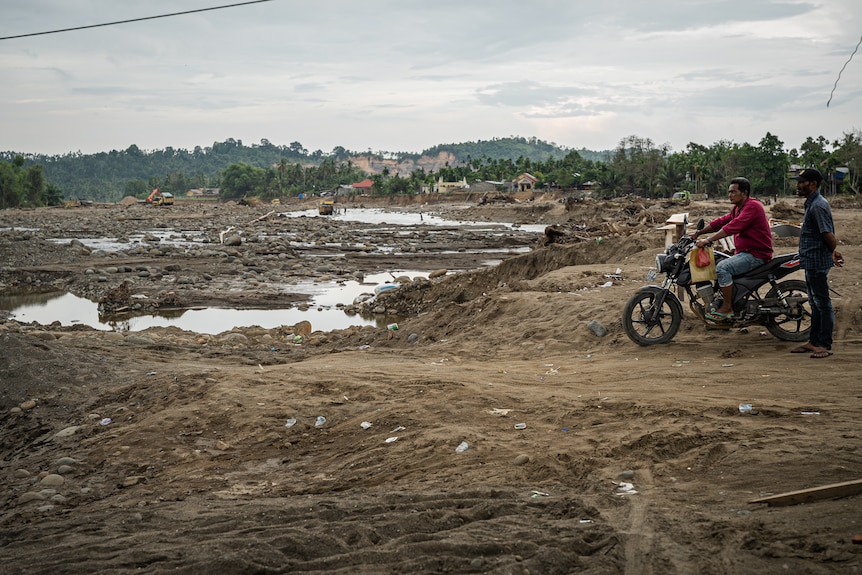 Rampant logging combined with severe flooding devastated regions like Sawang pictured here after the floods.”We await central government action on this.”
Many people in North Aceh agree — logs left behind from land clearing activities made the disaster even more catastrophic.
Rivers and valleys have filled with sediment, embankments remain broken; even moderate rainfall could now trigger flooding in areas already devastated.
Prabowo pledges action but locals struggle to believe
The scale of the disaster has turned the floods into a political test for Indonesia’s government.
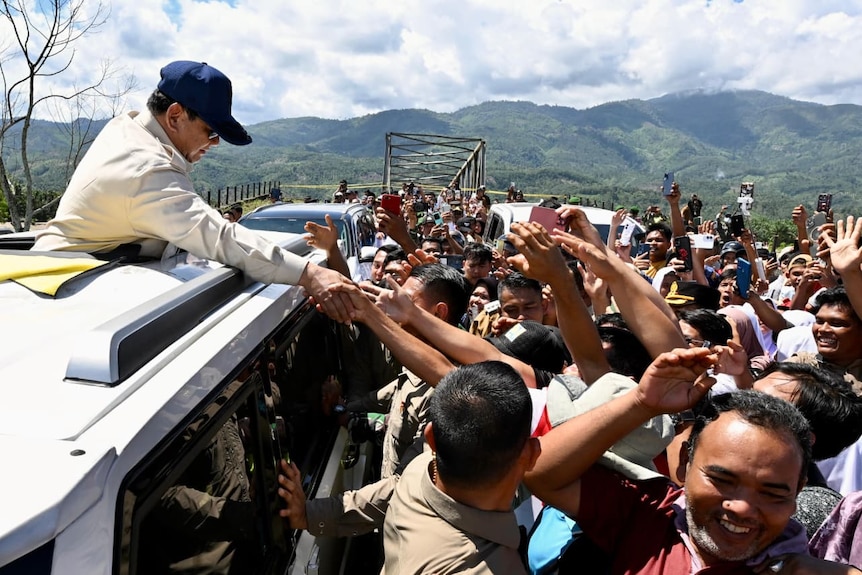 Indonesian President Prabowo Subianto visiting affected areas in Aceh province in December 2025.(BPMI: Indonesian Bureau of Press, Media & Information)
A recent report by environmental group Augira Nusantara said forest loss in Indonesia rose by 66 per cent last year, describing it as “truly distressing”.
A government state-owned enterprise is now the world’s largest palm oil company by plantation area owned, with Indonesian President Prabowo Subianto and his government eager to use palm oil as a biofuel.
In the wake of the Iran war and the ensuing energy crisis, plans have been accelerated to roll out B50 fuel, made from 50 per cent palm oil-derived diesel.
But the toll that palm oil plantations have on deforestation has many across Indonesia worried.
Deforestation across Sumatra has been caused by companies operating with government permits, as well as illegal land clearing.
In a visit to the worst-struck areas, Mr Subianto said his government would “crack down hard on illegal logging”.
His government has said it will review logging licences and tighten restrictions on new land-clearing permits.
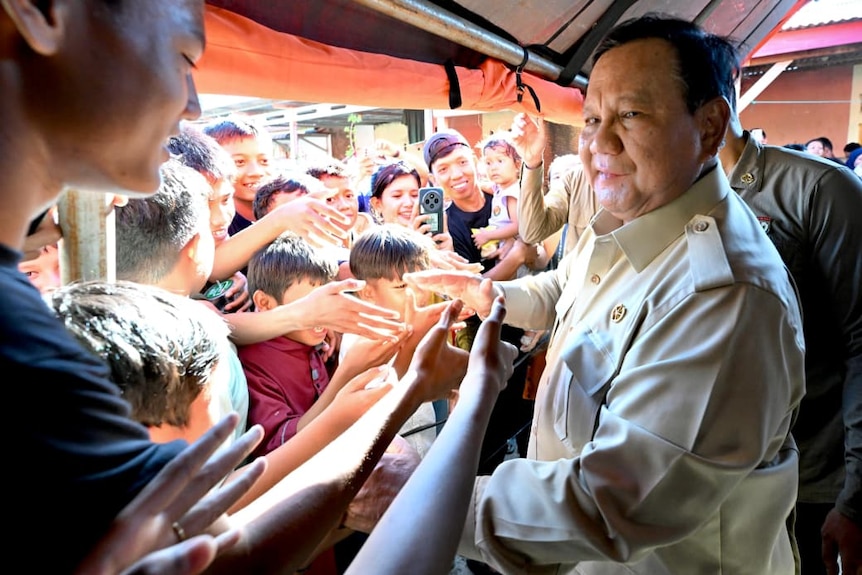 President Prabowo visiting a refugee post in West Sumatra.(BPMI: Indonesian President’s Bureau of Press, Media & Information)
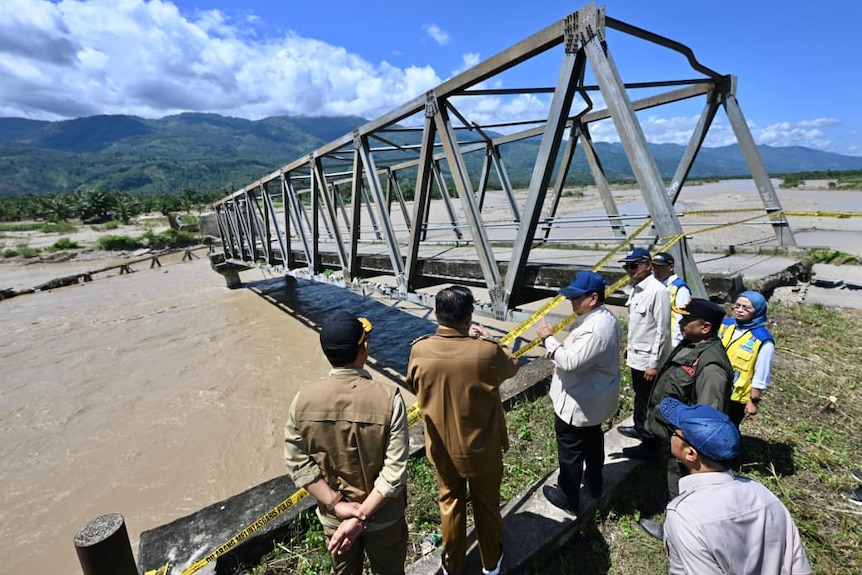 President Prabowo inspecting the damaged Pante Dona Bridge in South-East Aceh.(BPMI: Indonesia President’s Bureau of Press, Media & Information)
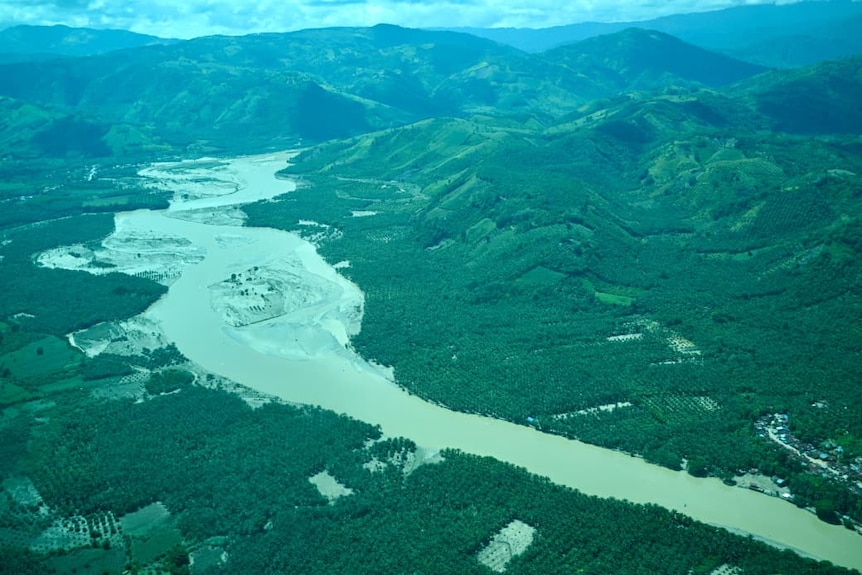 Aerial views of the flooded and damaged areas in December during President Prabowo’s trips.(BPMI: Indonesian President’s Bureau of Press, Media & Information)
Permits from more than two dozen companies have been revoked following an environmental audit and several companies are also facing legal action.
On paper, it is a significant response. On the ground, many remain sceptical.
“We appreciate the central government’s response,” Muhadi Bukhari said.
“That’s a positive step. However, we still need to examine how effective those revocations will actually be.”
The other significant challenge is what disaster management teams and local governments say they’re dealing with — a lack of funding to mitigate, respond to, and help recover from disasters.
As climate change worsens weather systems, the national disaster mitigation agency faces significant budget cuts.
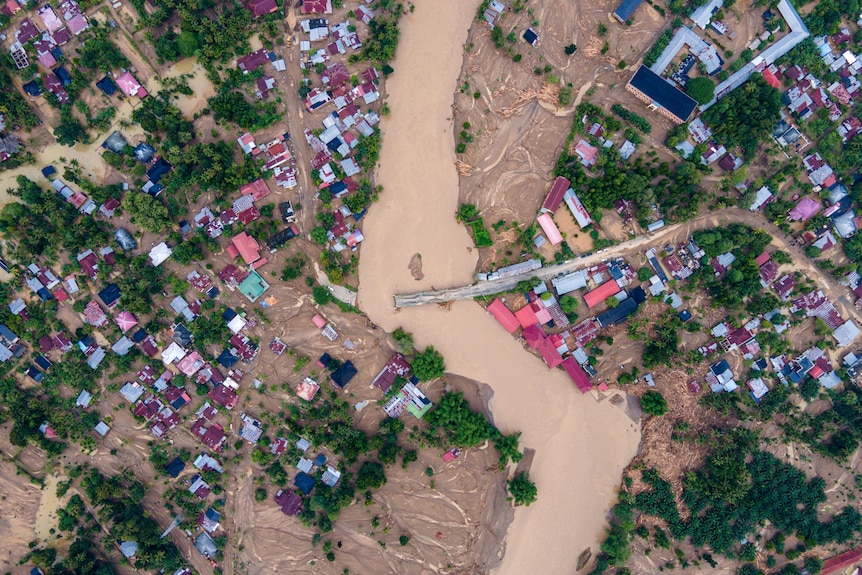 This aerial picture from November shows a bridge damaged by flash floods on a main road connecting Aceh and North Sumatra.(AFP: Chaideer Mahyuddin)
During the pandemic, the National Disaster Management Agency was receiving $646 million.
Last year it received less than a third of that, while a draft 2026 budget has slashed funding even further.
“(Rivers) will flood much faster than before because we haven’t properly addressed all the embankment works due to budget constraints and administrative hurdles,” Mulyadi said.
“We’re extremely concerned that if deforestation continues, the consequences will be catastrophic.”
There are fears these budget cuts, along with continued deforestation, could entrench Sumatra in a cycle of destruction.
Rebuilding in the shadow of the next flood
Officials say the needs in North Aceh are enormous: housing, roads, bridges, schools, clinics, river dredging and agricultural recovery.
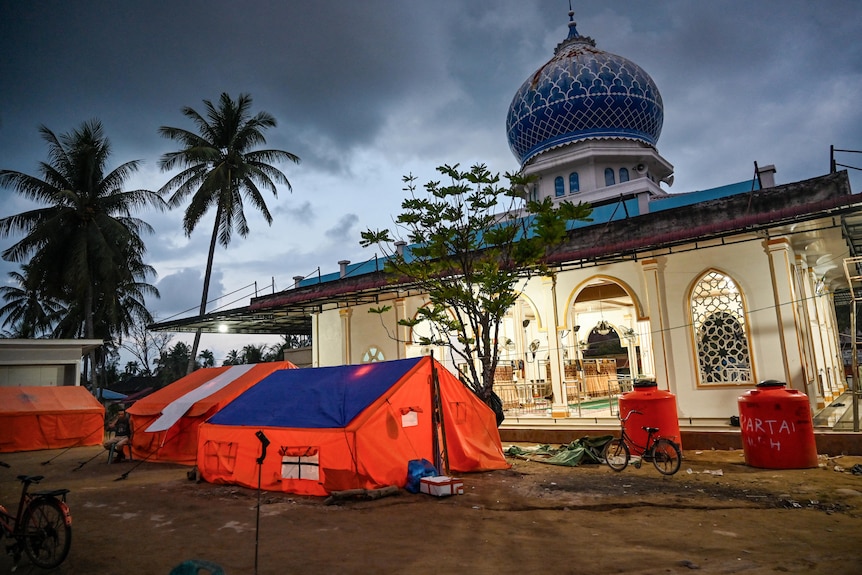 Tents used as temporary housing by flood survivors are seen beside a mosque in Meurah Dua in Aceh province’s Pidie Jaya district back in February.(AFP: Chaideer Mahyuddin)
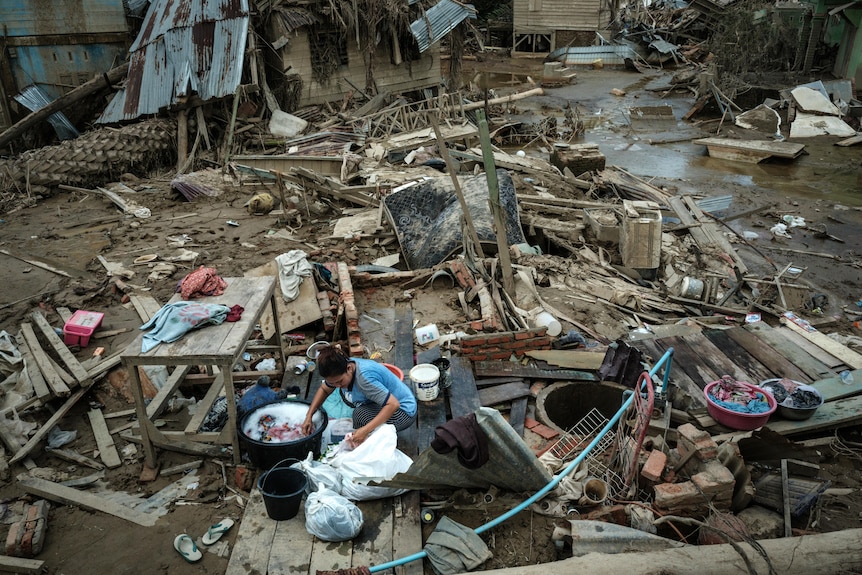 A woman washes clothes amid the flood wreckage in Aceh Tamiang, Northern Sumatra in December.(AFP: Yasuyoshi Chiba)
But the biggest constraint is funding.
Mulyadi said the district disaster agency operates with limited equipment and personnel.
“We only have six rubber boats and four operational vehicles,” he said.
Regional secretary Jamaluddin estimates the damage and economic loss in North Aceh at about IDR 27 trillion ($2.3 billion).
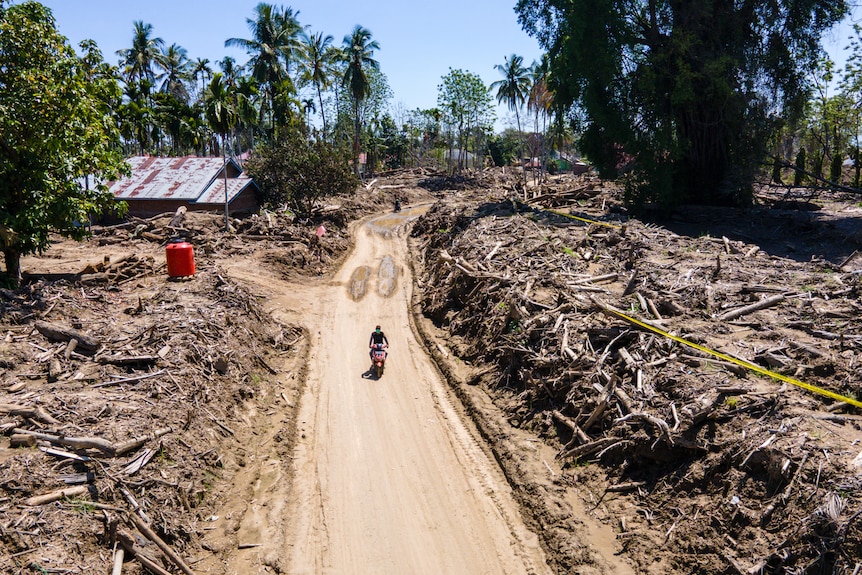 An aerial shot of a man riding his motorcycle past residential flood destruction in February. (AFP: Chaideer Mahyuddin)
In North Aceh alone, thousands of homes were destroyed. Tens of thousands more were damaged.
“Our personnel are ready — what we lack is funding capacity,” he said.
The government was widely criticised at the time of the floods for its decision not to declare a national disaster.
Before tents arrived, Firmadi said villagers slept crowded together in a village hall for a month.
“It felt like we were homeless: when one person cried, everyone cried.”
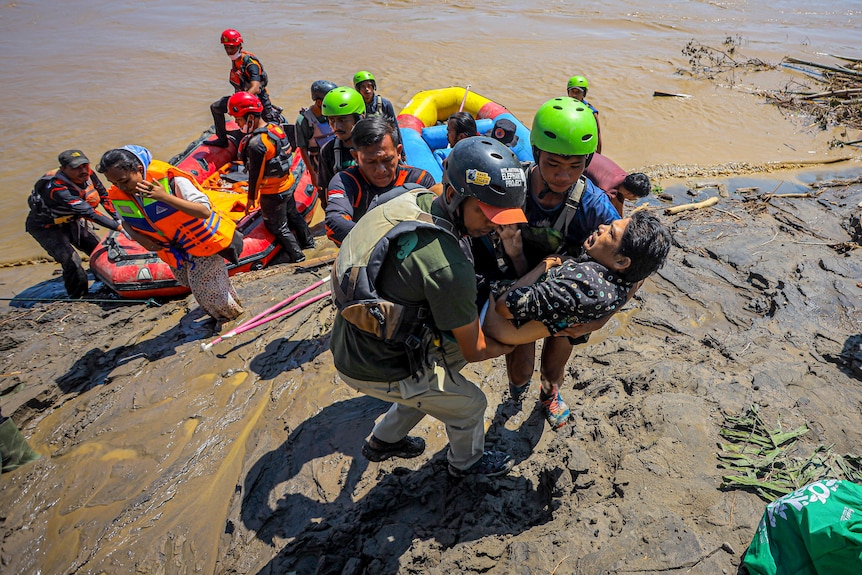 Rescue personnel evacuate a sick villager to be taken to hospital in Aceh province during the November floods.(AFP: Amanda Jufrian)
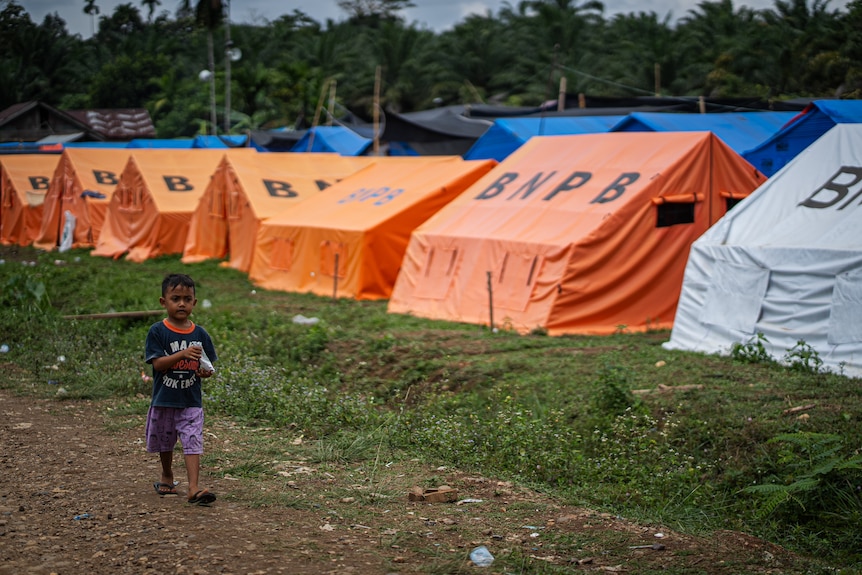 A boy walks past tents housing survivors in Sawang district after the disaster left them homeless.
In Geudumbak village, residents are cutting the logs that were swept into their village into planks and using them to build rough wooden houses.
The debris that destroyed their homes has become the material of survival.
Rosniati says farmland has vanished under layers of mud and timber.
“We don’t have houses anymore,” she said. “So we build houses.”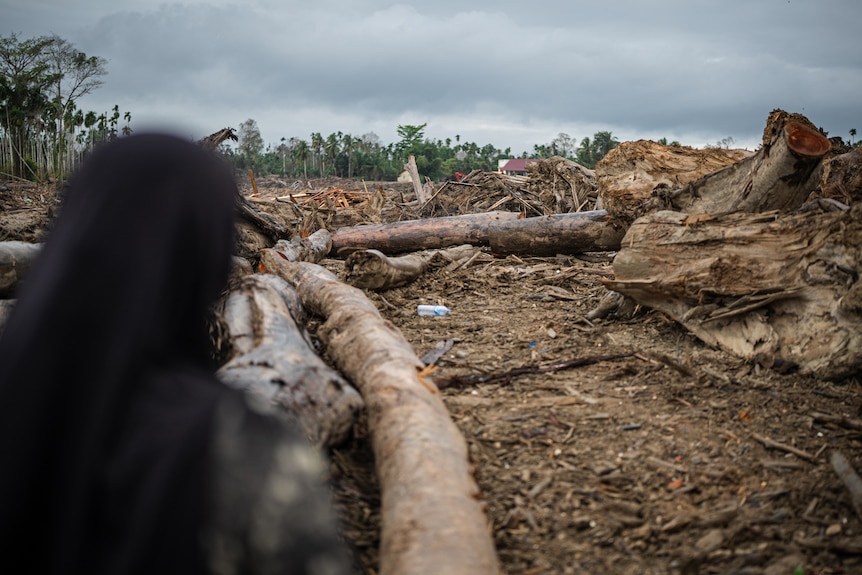 Rosniati laments the destruction left behind where her community once stood.Loading…
But the deeper fear remains.
Riverbeds have filled with sediment, embankments remain damaged and forest cover is thinner. In many villages, officials say even ordinary rainfall now poses greater risks than before.
The people of North Aceh want to rebuild their lives — but many can’t shake the feeling that the next flood, or deluge of timber, is simply a matter of time.
CreditsReporting & Photography: Tim Swanston & Ake Prihantari in North AcehDigital Producing & Editing: Steven VineyVideo Editing & Graphics: Cordelia BrownIndonesian Translations: Natasya SalimAdditional Photography & Media: Google Earth, BPMI (Indonesia’s Bureau of Press, Media & Information), AFP, Reuters