
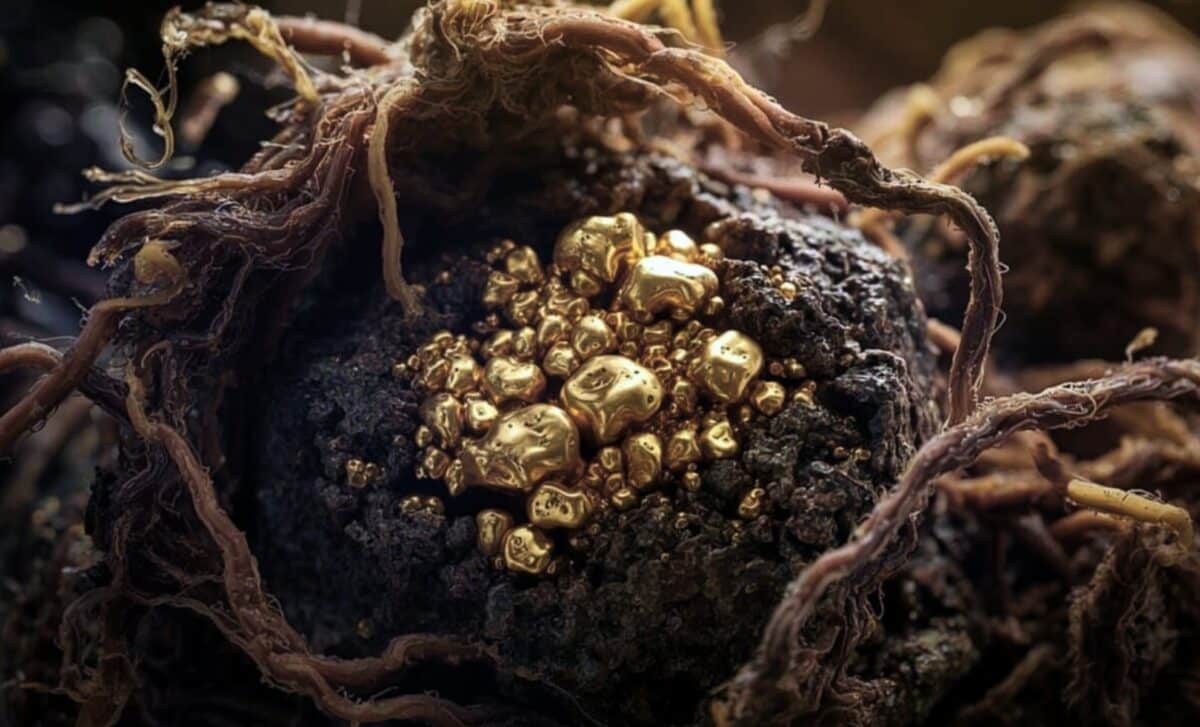
In 2019, researchers at Australia’s national science agency CSIRO discovered that a common soil fungus named Fusarium oxysporum can dissolve gold particles from its surroundings and then coat itself in the precious metal. The finding surprised scientists because gold is chemically inert, meaning it rarely interacts with living organisms.
The gold-coated fungi don’t just wear their discovery. They actually grow larger and spread faster than fungi that don’t interact with gold. CSIRO found that this biological advantage makes the fungus more successful in its environment, and it also supports a more diverse community of other fungi around it.
The fungus pulls this off through a two-step process. It first oxidizes and dissolves gold from its surroundings, then precipitates the dissolved gold back into solid particles that attach to its thread-like strands. According to CSIRO’s transcript, this was the first evidence that fungi may play a role in cycling gold around Earth’s surface.
A Common Fungus With a Very Uncommon Talent
Fusarium oxysporum is not an exotic organism found only in one mine. Wikipedia describes it as a widespread soil fungus, with many strains acting as harmless or beneficial endophytes or saprophytes, though other strains are known as plant pathogens in agriculture. That broader background helps explain why the gold result stood out: researchers were looking at a familiar soil organism behaving in a highly unfamiliar way around a metal that normally resists chemical change.
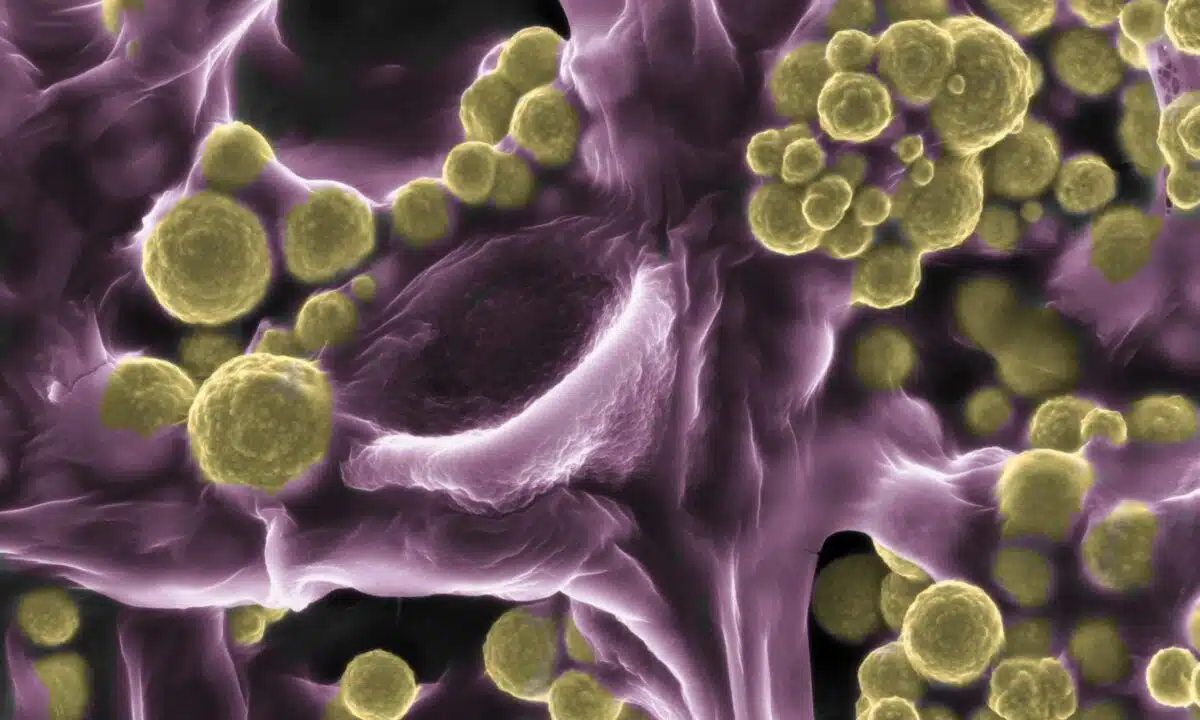 Fusarium oxysporum is widespread but behaves unusually around chemically inert gold. Credit: CSIRO
The discovery was made in Boddington, Western Australia, a region known for its gold deposits. Dr. Tsing Bohu, the lead researcher on the CSIRO study, said that the interaction is “unusual and surprising” given gold’s chemical inactivity. The fungus appears to be doing something that most organisms cannot: turning an inert metal into a biological asset.
Why Miners Want to Follow This Fungus
Australia is the world’s second-largest gold producer, and mining companies are taking notice. The idea isn’t to farm fungi for gold extraction. Instead, companies want to use Fusarium oxysporum as a natural prospecting tool.
By analyzing soil for specific strains of this fungus, geologists could identify promising gold deposits hidden underground. The approach would work similarly to how CSIRO has already shown that trees in the Kalgoorlie region of Western Australia can draw up gold and deposit it in their leaves, and termites can harbor gold in their mounds. The fungus discovery sits in that same line of research: finding surface signals that point to deposits below ground.
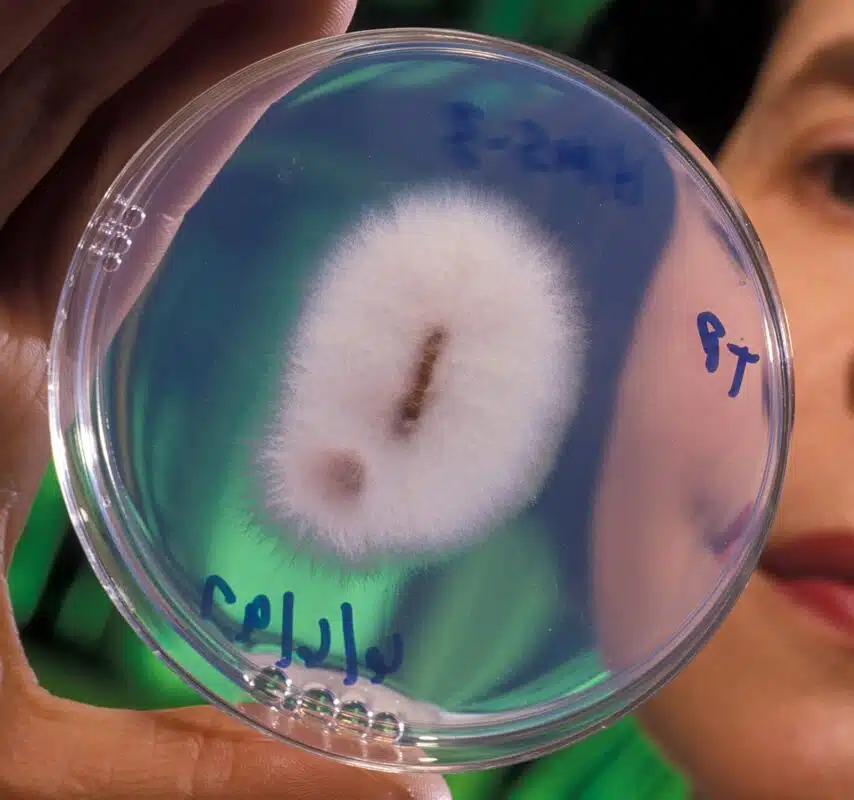 Plant-pathogenic strain of Fusarium oxysporum that causes fusarium wilt. Credit: Wikimedia
The attraction for mining is straightforward. Traditional exploration can be expensive, slow, and environmentally disruptive. A biological indicator that helps narrow down where to drill or sample could reduce unnecessary disturbance and improve the odds of finding ore. The fungal method could make exploration cheaper and less invasive than drilling hundreds of test holes.
From Australian Soil to Asteroids?
The most headline-grabbing part of the renewed attention comes from the space mining suggestion. A 2025 Daily Galaxy article argues that some researchers and companies see promise in using microorganisms, including fungi, to process ores in environments where conventional mining hardware would be difficult to deploy, such as asteroids or other celestial bodies. The article describes this broader concept as metabolic mineralurgy.
But the source record here needs careful handling. The CSIRO transcript does not discuss asteroid missions or operational plans for space mining. Its focus stays on gold cycling, exploration, and sustainable production on Earth. The space angle is best understood as a speculative extension raised in the Daily Galaxy article, not as a demonstrated application from the original CSIRO material.
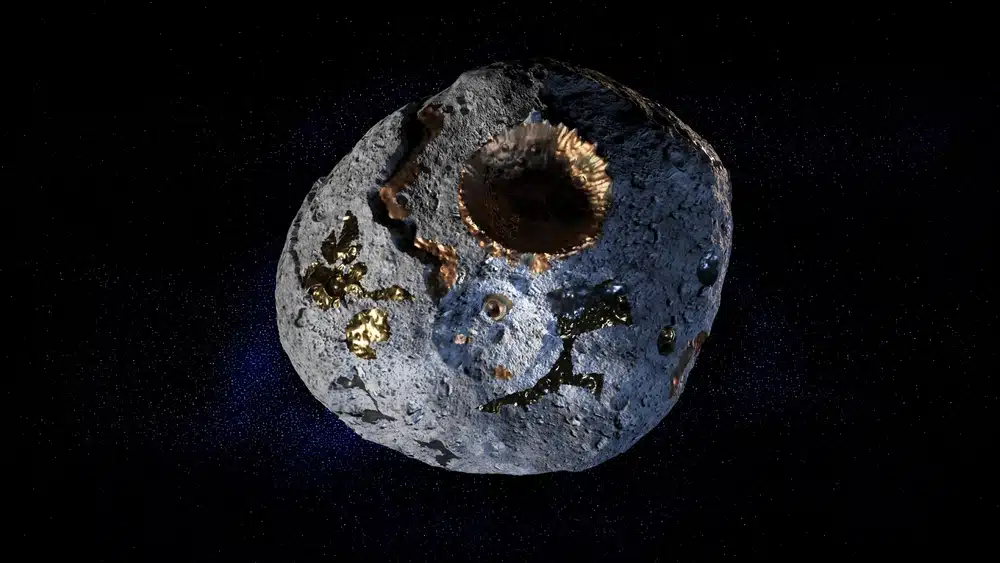 Space mining remains speculative, but the fungus attracts interest for off-world use. Credit: Shutterstock
That does not make the idea meaningless. It simply places it in the right category. A fungus that can interact with metal in a low-energy, self-organizing way is the kind of organism that naturally attracts interest wherever traditional extraction would be difficult. The same ability that lets Fusarium oxysporum interact with gold on Earth might be adapted for use in space, though no company has yet sent fungi to an asteroid.
The Dark Side of a Gold-Hungry Fungus
Fusarium oxysporum is not just a gold-mining curiosity. The species has a long and complicated history. It is found in soils worldwide, from the Sonoran Desert to Arctic tundra. Most strains are harmless soil dwellers or plant partners.
But some strains are serious plant pathogens. The fungus causes Fusarium wilt, a disease that affects more than 100 plant species, including bananas, tomatoes, and melons. In agricultural settings, it can destroy entire crops. The species has also been studied as a potential mycoherbicide, and the Colombian government once considered using a strain to eradicate coca plants under pressure from the United States.
This dual reputation matters for any practical application. Using Fusarium oxysporum for prospecting or space mining would require careful control to prevent unintended ecological consequences, particularly in agriculture-dependent regions.
Why This Odd Discovery Keeps Coming Back
Part of the fascination comes from the contrast between the organism and the element. Fusarium oxysporum is a common soil fungus, while gold is one of the least reactive metals people encounter. The idea that an ordinary fungus can manipulate that metal enough to coat itself with it makes the discovery feel counterintuitive, which is why it keeps resurfacing in popular science coverage.
The other reason is that the discovery fits a broader pattern in modern mineral exploration: using biological systems as detection tools rather than relying only on brute-force excavation. CSIRO’s own examples of trees, termites, and fungi all point in the same direction. Scientists are looking for living signals that can reveal what lies underground before a mine is ever dug.