
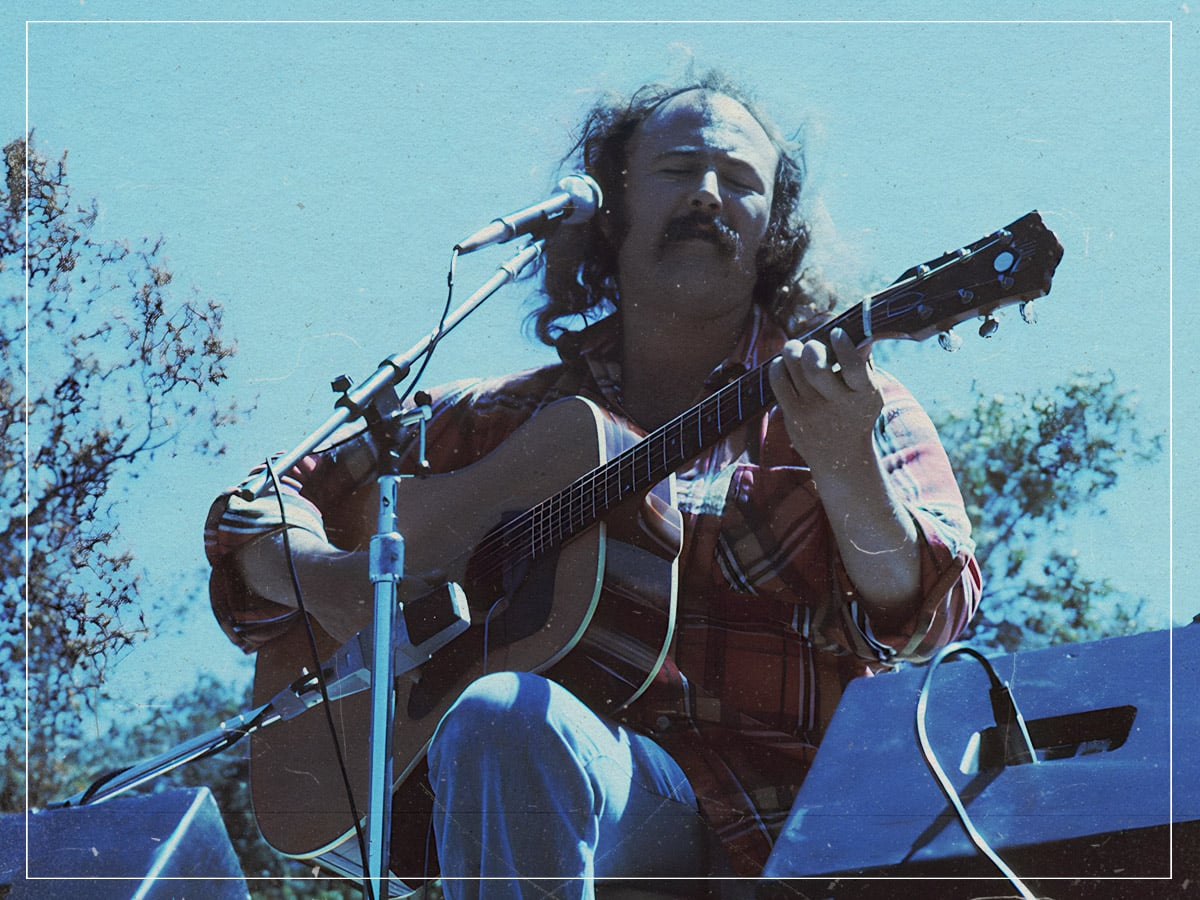
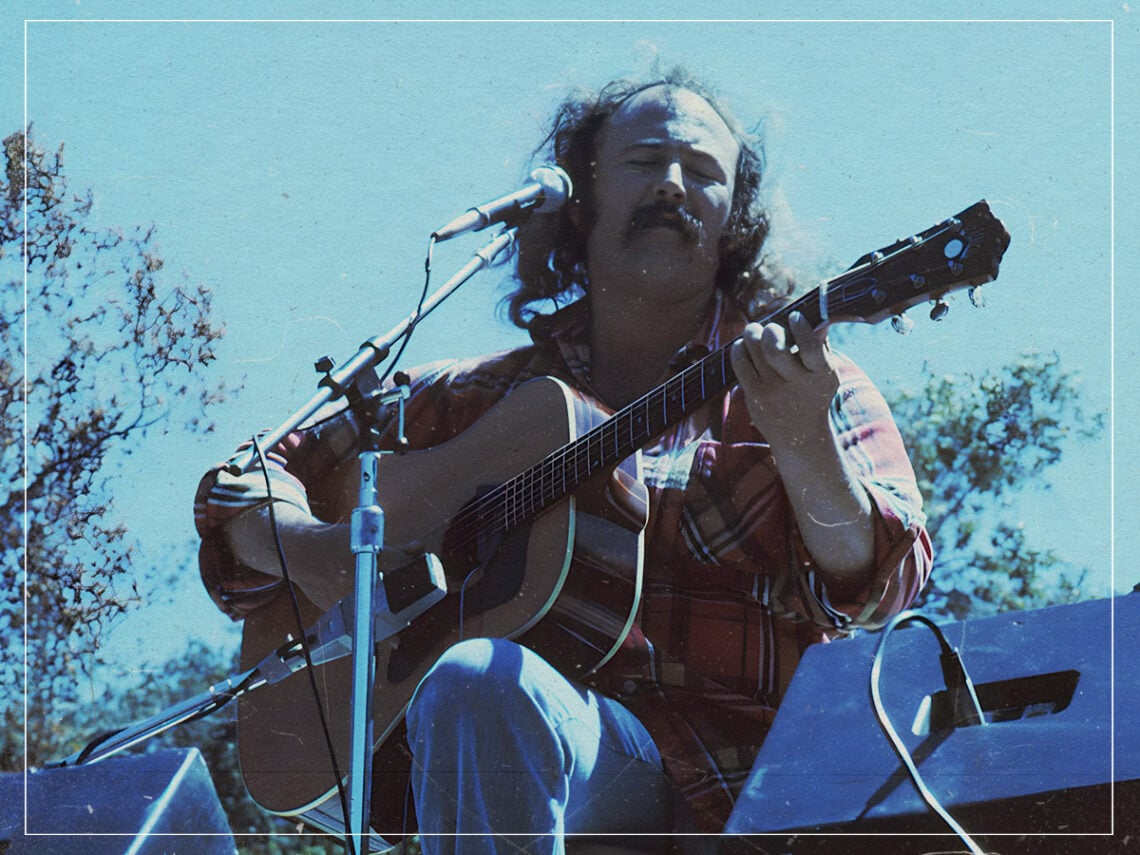
(Credits: Far Out / David Gans)
Sun 5 April 2026 20:30, UK
The music that David Crosby was always on the lookout for needed to have something more going on than a decent hook.
He had grown up listening to some of the finest musicians of all time, and all of them seemed to be more interested in the kinds of tunes that took a few more chances than what was played on the radio every single day. But even if he could help out some of his friends here and there, there was a difference between those that he believed in and those that he was doing as a favour.
Because if you look at where he was when he first decided to quit The Byrds, Crosby couldn’t have been asked to make another by-the-numbers pop rock song. He needed to break out of his shell, and when joining Crosby, Stills and Nash, he had a lot more wiggle room to work on his more experimental stuff. But even if ‘Deja Vu’ pushed him sonically, there was nothing that could replace someone who was singing a great song on one instrument, whether that was Joni Mitchell on Blue or Bob Dylan singing his heart out about the greater problems with the world.
And while the singer-songwriters had pretty much died out when Crosby reached the 1990s, they were still out there if you were willing to look for them. Tracy Chapman was turning in some of the greatest folk-adjacent music in the late 1980s, and right before the grunge wave hit, Marc Cohn had knocked him out when he first heard the song ‘Walking in Memphis’. Cohn does have the distinction of being one of the worst victims of the Grammys’ Best New Artist curse by never having a hit again, but Crosby felt that he deserved much better than what other rootsy rockers were doing.
There was plenty of room for older heartland rock acts like Tom Petty to gain a foothold, but Hootie and the Blowfish wasn’t the kind of band that Crosby was looking for. Although he was generous enough to turn in time working on their first single on backing vocals, he felt that the world needed to reconsider Cohn as opposed to Hootie becoming a flash in the pan after one record.
Crosby was still rooting for them, but he knew that a band of some of the most average dudes in the world was never going to end up working out in the long run, saying, “If you have a hit on the radio, they can market it fantastically well. You know, witness Blowtie and the Hoofish. They were nice kids. But, you know what the deal is. That’s how most major record companies deal now. They’re after that bomb, and they do not sustain with an artist and they do not have any follow-through with an artist.”
But in the case of Hootie, they feel more like one-album wonders than anything else. They did have a lot of great songs on that first record, but when you listen to what came out on their follow-up, Fairweather Johnson, it was clear that they had saved all of their good ideas for that first record and had nothing left to offer by the end. And even if Cohn didn’t have a hit afterwards, he did at least get the respect of other singer-songwriters like Jackson Browne along the way as well.
And while Darius Rucker was able to turn his Hootie career into a much more lucrative stint in Nashville, Cohn seemed to have a little bit more of a rock and roll heart to him. You didn’t see it very often, but considering all of the chops that he had, a song like ‘Lose You in the Canyon’ showed that he was capable of doing a half-decent Tom Petty impression when he wanted to.
But the tale of Hootie and the Blowfish only served to remind Crosby of what the labels fail to see in the industry. Any executive in a boardroom is only interested in the dollar signs that come with the act that they are signing, and if they don’t have the kind of momentum that they should, it only takes a matter of seconds before they start moving on to someone else who has a half-decent hook.
