
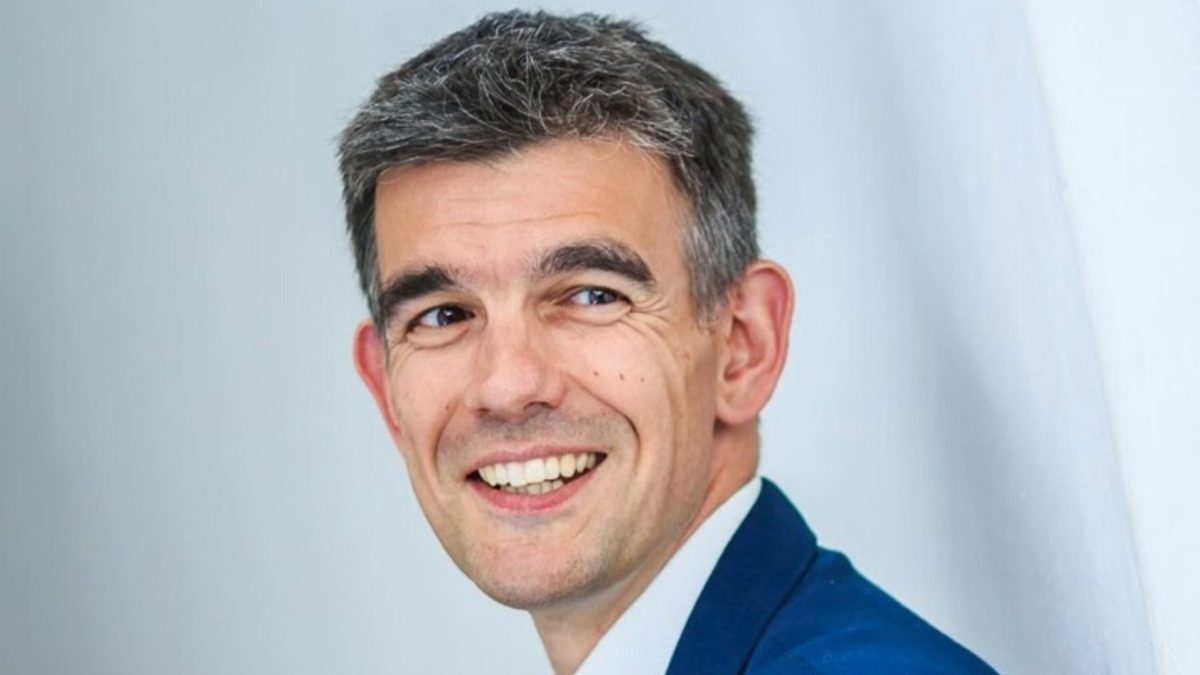
New BBC director general, Matt Brittin, was kept “in the loop” over the sacking of Scott Mills, ahead of his formal arrival at the corporation, insiders said.
Despite not taking over until mid-May, the presence of the former Google president is already being felt at Broadcasting House, where he was spotted last week.
Brittin was kept informed over the rapidly developing Mills situation as part of preparations for joining the BBC on 18 May, it is understood.
New FeatureIn ShortQuick Stories. Same trusted journalism.
The BBC sacked the Radio 2 breakfast host last Monday after learning the alleged victim of a police investigation into Mills was under 16, sources said.
The police investigation into allegations of serious sexual offences was closed in 2019 after prosecutors decided there was insufficient evidence to bring charges.
One of Brittin’s first tasks as director general is likely to be to oversee an internal investigation into what actions the BBC took in 2017, when the corporation first became aware of the investigation into Mills.
“There will have to be an inquiry into which executives knew, what actions were taken and whether this was raised when Mills was given the Radio 2 breakfast show,” a BBC insider said. “It will be the new DG’s first test.”
The figure added: “Last week, there were three directors general in the building at the same time, Tim [Davie, who left on Thursday], Brittin and Rhodri Talfan Davies [interim DG]. It was like a Doctor Who special.”
“Matt will have been kept in the loop on the Mills sacking. It’s a brutal initiation into the kind of scandals that can consume a BBC boss. He will also have asked to rattle the cupboard for any other skeletons to be dealt with before he starts.”
One BBC News figure added: “The HR department will be going through every complaint and asking how they were handled, are there any more potential problems.”
It is not known if Brittin’s approval was sought for the decision to abruptly remove Mills from the airwaves, taken by Davie in his final act as BBC boss.
A BBC spokesperson said Brittin was undergoing “an onboarding process”, which includes “detailed introductory meetings to get a full understanding of the business”.
In his first statement since he was sacked, Mills said he had “fully co-operated and responded” to the police investigation at the time. He did not comment on the BBC’s termination of his contract.
A former Olympic rower, Brittin joined Google in 2007 to head the UK business and left in 2025 after running its Europe and Middle East operation for 10 years. He is unlikely to have managed the kind of high-profile personnel issues which regularly dogged Davie’s leadership.
Admired as a top-level tech strategist, his greatest brush with controversy came when he defended Google’s UK tax affairs in 2016. He was criticised by members of the Public Accounts Committee, after Google agreed to pay £130m in back taxes, for being unable to say how much he earned.
Brittin, who does not have editorial or programme-making experience, promised to “listen, to learn, to lead” when his appointment was confirmed. A deputy director general, expected to have senior editorial experience, will be appointed to help act as a “trouble-shooter”.
With viewers flocking to streaming rivals, the licence fee under question and scandals continuing to swirl around its top talent, Brittin faces a number of challenges when he formally takes office.
Brittin’s in-tray
BBC culture
Tim Davie admitted the BBC still has a way to go in tackling bad behaviour among its biggest stars. The new rule, after the Huw Edwards scandal, is to act decisively when potentially contract-breaking behaviour comes to light, as Scott Mills discovered. Brittin takes over with court cases involving Russell Brand and Tim Westwood likely to raise further questions about managerial oversight of talent.
Trump lawsuit
Brittin inherits Donald Trump’s $10bn (£7.5bn) lawsuit over Panorama’s misleading editing of his 2021 speech before the Capitol riot. Set for a February 2027 hearing in Florida, the BBC has asked a US court to throw out the “groundless” case. Brittin must decide whether to fight the suit or broker a settlement, with either outcome draining precious BBC resources.
Licence fee future
The £180 a-year charge should be extended to everyone watching streaming platforms, not just the BBC, the corporation suggested before Brittin’s appointment. He has yet to disclose a preferred option for reform but Brittin’s experience in negotiating Whitehall’s corridors of power at Google is seen as a key asset in upcoming discussions with ministers.
BBC cuts
The BBC needs to slash nearly £500m from its annual budget to plug a hole in its finances, a move almost certainly meaning cuts to jobs and programming. Brittin has had to take tough decisions – during his Google tenure, the company cut 400 UK jobs as part of post-Covid restructuring. But closing roles won’t make the new boss popular internally.
News and impartiality
The Panorama error followed mistakes such as the Gaza documentary narrated by the son of a Hamas official. The BBC is seeking a new head of news after Deborah Turness’s departure. Asserting where BBC impartiality lies in highly-contested areas such as the Middle East is bound to give Brittin headaches.
TV switch-off
The BBC and other broadcasters want free-to-air digital TV signals switched off in the mid-2030s as viewers migrate to streaming over the internet. Campaigners say the move could disenfranchise licence fee payers in isolated areas and force those in poverty to pay for high-speed broadband. Ministers will announce a plan for switch-off this year.