
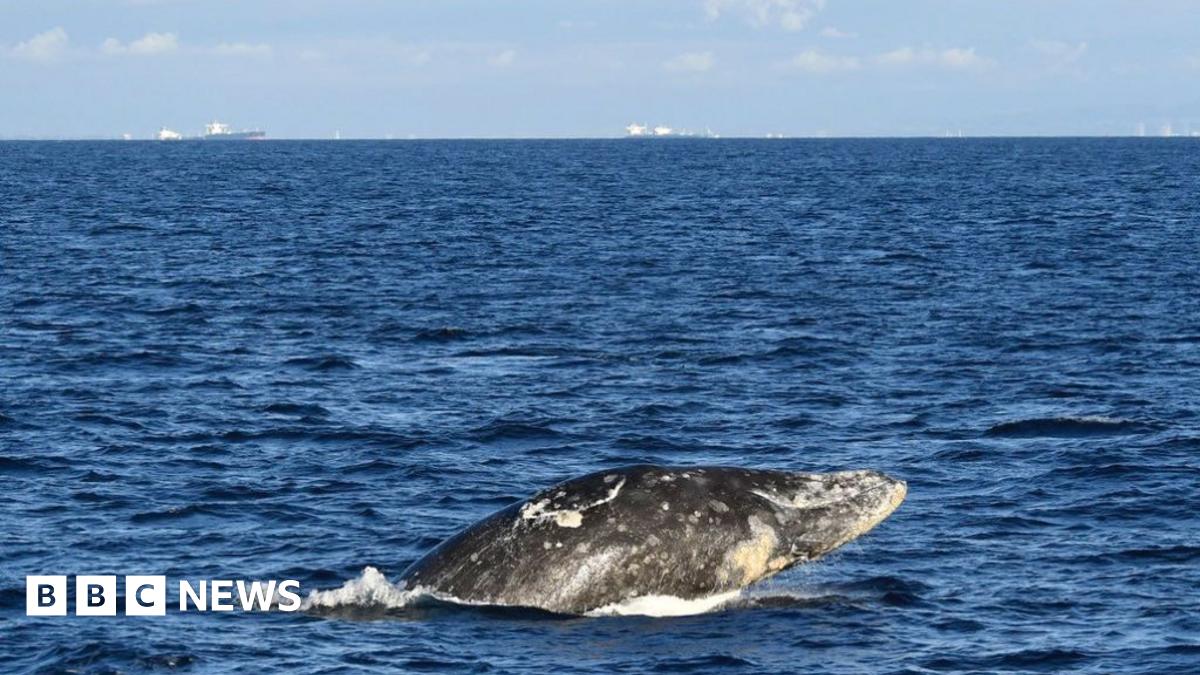
The whale, “although thin, was behaving normally,” the group said at the time, with no sign of injuries.
Its teams had hoped the whale would find its own way out of the river but it failed to do so.
Gray whales undertake long spring time migrations north up the Pacific Coast to feed in the Arctic using up their nutritional reserves along the way, John Calambokidis, a research biologist with the Cascadia Research Collective, told the Associated Press, external. “When that happens, you often see gray whales in a more desperate search for new areas to feed,” he added. “That’s the most likely context for this whale.”
Gray whales in the eastern part of the Pacific Ocean have faced reduced food availability in the northern Bering and Chukchi seas off Alaska’s coast in recent years, Calambokidis said.
“Gray whales are facing a major crisis and the heart of it does seem to be feeding on their prey in the Arctic,” he added.