
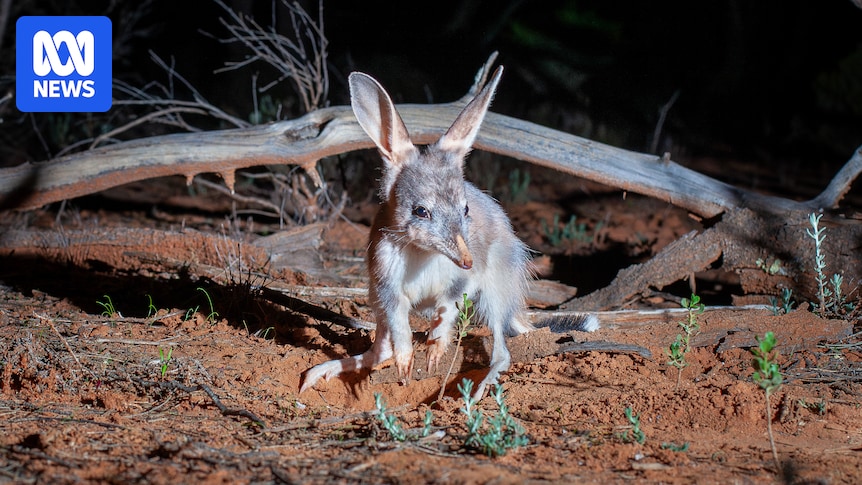
The greater bilby population is booming at multiple sanctuary sites across Australia, with impressive results seen in the red centre of the Northern Territory.
Conducted by the Australian Wildlife Conservancy the survey recorded 5,330 animals, more popularly known as the Easter bilby, across its six sanctuaries in the NT, Western Australia, South Australia and New South Wales.
The non-profit organisation said it was the biggest increase in recent years, and the population is four times larger than it was in 2021.
Greater bilbies once ranged over three-quarters of Australia but were dramatically reduced by colonisation and the introduction of feral predators, according to the federal government.
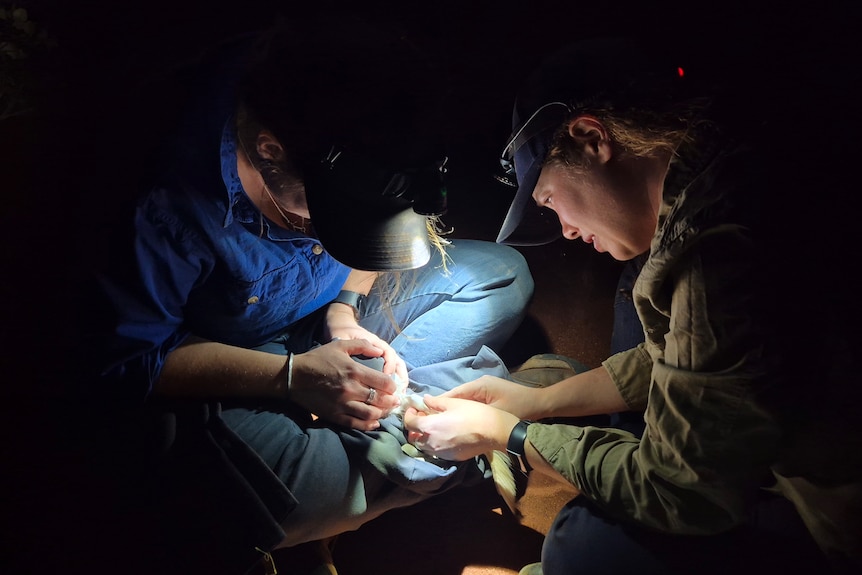
A bilby receiving a health check at Newhaven Animal Sanctuary. (Supplied: AWC)
AWC said the population boom was partially driven by the reintroduction of the species to Newhaven Animal Sanctuary, a former NT cattle station turned wildlife conservation area where the local population has grown to 530 bilbies from the 66 released in 2022.
The population at Mallee Cliffs National Park in NSW was also singled out where the number of bilbies rose to 1,840 individuals, compared to the 107 released between 2021 and 2023.
The Newhaven bilbies live across a 9,450-hectare predator-free fenced area 350 kilometres north-west of Alice Springs.
The most recent census was the first population estimate at the site since the animals were reintroduced.
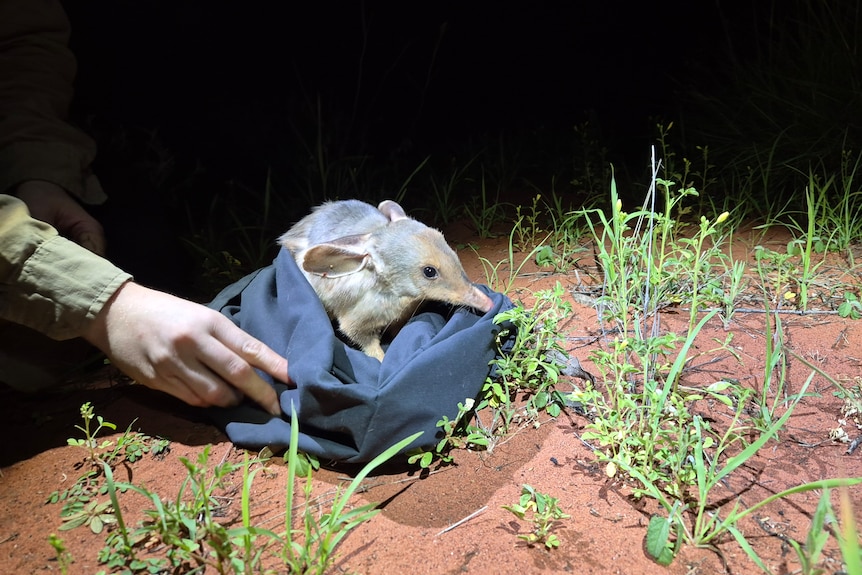
The reintroduction of bilbies at Newhaven Animal Sanctuary has helped drive the species’s population boom. (Supplied: AWC)
Newhaven’s wildlife ecologist Tim Henderson said the bilbies benefited from fencing which kept predatory feral animals at bay.
He said further progress was made due to ongoing fire management, weed spraying and fence checks.
Also helping numbers was several years of above-average rain which brought out food sources the bilbies would usually need to dig for.
“The abundance of resources and a landscape that has no predation pressure from feral cats or foxes has really allowed them to just pretty much go nuts,” Dr Henderson said.Benefit to country
Dr Henderson said the return of bilbies brought broader benefits to the country at Newhaven, as well as other creatures that call it home.
“Bilby diggings … turn over the soil and they promote seed growth,” Dr Henderson said.
“And that does allow the vegetation to become really rich [and] diverse throughout the landscape.”
He said other species, such as the burrowing bettong, have also flourished as a result, as they expand on burrows the bilbies leave behind.
“They turn that burrow into a large communal warren system,” Dr Henderson said.
“[It’s] like from a single-storey apartment into a multi, 20-storey complex full of holes and entrances, and that becomes their communal warren that might support up to 15 or 20 individuals.”
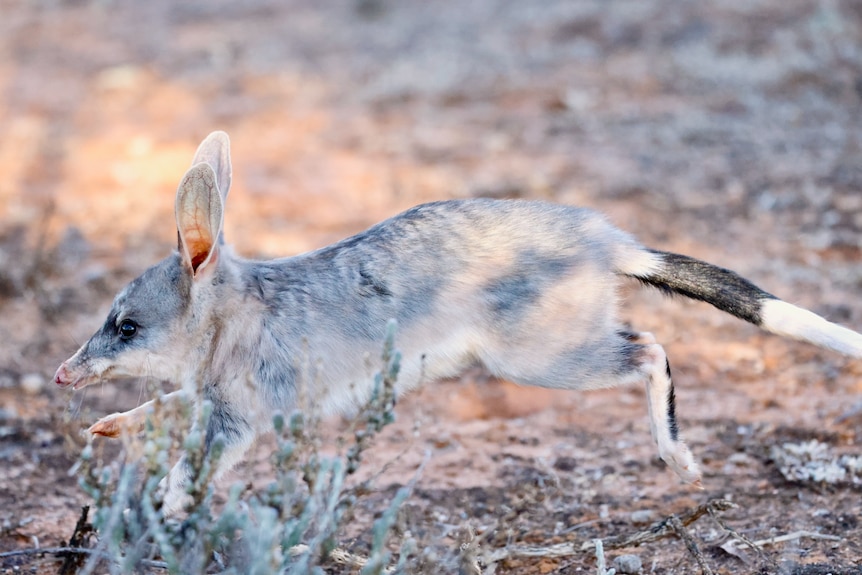
The growth of the bilby population has been a benefit to other species. (Supplied: AWC)
Potential population peak?
Dr Henderson believes the species will potentially plateau, or maybe even dip in numbers at Newhaven during the region’s next drought.
He said the population was well positioned for any drop in numbers during dry conditions in the desert.
“We expect, probably when the next drought hits, that the population will decline, but they’ll be able to bounce back again when that drought ends,” Dr Henderson said.