
Dr Milli Raizada knows how poor health can impact a person’s life, as she tells Lancashire Life magazine. Suffering with burnout and hormone imbalance as well as recurring UTIs, she was diagnosed with Premenstrual Dysphoric Disorder. PMDD is a severe and disabling form of PMS that causes intense emotional and physical symptoms in the week or two before a period begins. She knew she wanted to make changes.
‘I’ve been through a battle with my hormones, weight management and have been a patient myself. I’ve tried every diet under the sun,’ she says. ‘I was at the lowest ebb, but I turned my health around.’
The Preston-based lifestyle medicine physician, a qualified GP and medical practitioner, is making it her mission to help people change the way they think about their own health. It is due to her own wellness issues that Dr Milli believes she has the passion to help her clients find health and happiness, or, as her best-selling book puts it, Happy Hormones Happy You.
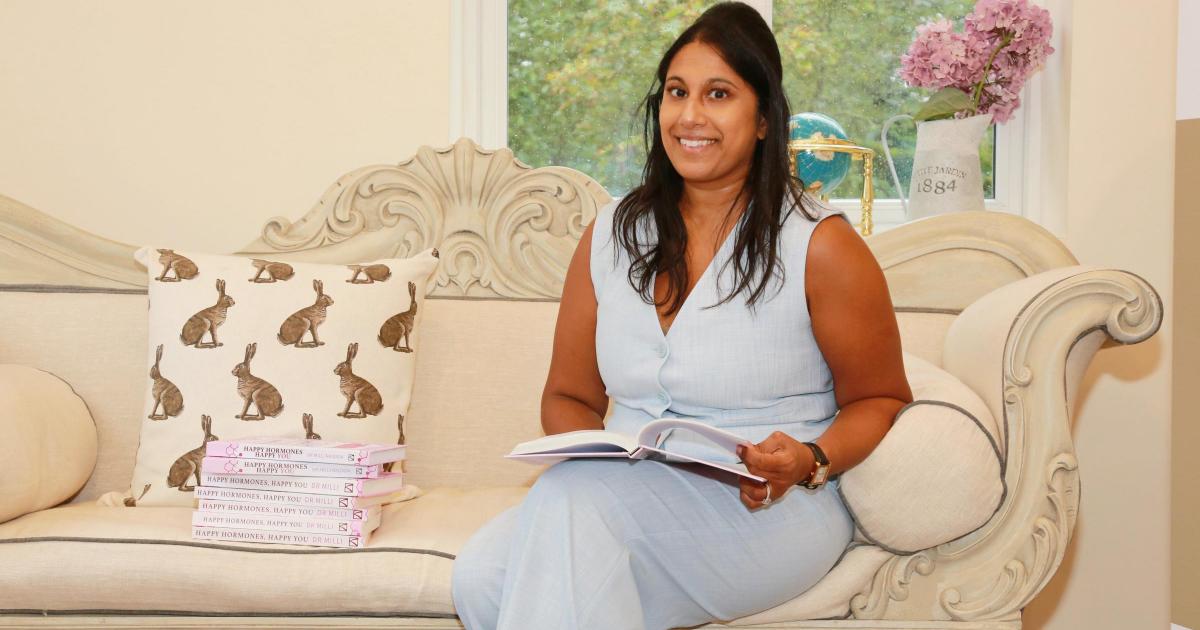
Dr Milli Raizada supports clients through health concerns. (Image: Kirsty Thompson)
‘I’m hugely passionate about changing the narrative around wellbeing,’ she says. ‘Healthcare is an art, and you should prioritise your health.
‘People will pay for gym membership but, because the NHS is free, they expect their health to be looked after for free. But this is not a preventative healthcare service, it’s not proactive.’
Dr Milli, who has practised as a doctor for more than 15 years, sees people with symptoms that are making them miserable. In hour-long appointments, she helps patients get to the bottom of an issue. As well as having a discussion with the client at her clinic, she offers blood testing, nutrigenomic testing and more, offering a medical analysis of the results and helping to create a next steps plan for her client, including personalised meal plans to help nurture good gut health.
‘I’m very much a believer that, in time, the patient is their own evidence,’ she says. ‘There is a massive demand for people to be seen, to be heard and to be treated individually, not “alright you’re 45, feeling a bit low, here’s an antidepressant”. That’s really poor.
‘I feel women’s health and hormones is such a poorly understood and managed area and I am committed to help empower and educate women to use natural lifestyle medicine principles and conventional medicine, if needed, to help heal their hormones and improve health and happiness in the premenstrual, perimenopausal and menopausal phases.’
Dr Milli helps to create a next steps plan for her client, including personalised meal plans to help nurture good gut health (Image: Getty Images)
Dr Milli, who hosts her own podcast and is known as the root cause doctor, is determined to discover where the issues in a body start. As an NHS GP, she is a supporter of the service but has concerns about the extent to which a doctor can assess, diagnose and support in a 10-minute surgery slot, the norm in many of the country’s GP surgeries.
‘My work is looking at what drives a person ’s illness. If someone is suffering with ADHD symptoms or hormonal imbalances or hair loss issues, I look at what is driving the problem and get to the root cause.
‘I work that way instead of just putting a plaster on things – that’s why it’s grown so quickly. It’s very rewarding.’
In the TEDx NHS talk Dr Milli gave last year, she addressed the impact hormones have on the body, causing everything from moodiness and weight gain to emotional distress and tiredness.
She says that getting her own diagnosis showed her the limitations of the NHS and now she says clients feel like they have space to discuss what is wrong.
‘One of the biggest issues I find is that I just don’t feel people are heard enough in a 10-minute slot. At my clinic, they are speaking with me for an hour, and they feel seen, they feel heard, they feel validated.
Dr Milli Raizada. (Image: Kirsty Thompson)
Read interviews with more fascinating people in the latest edition of Lancashire Life magazine
‘A lot of the women I see, they feel like they’ve been told everything is normal, but they don’t feel normal. They’re being told it’s all in their head or there’s nothing wrong with them, but they just don’t feel themselves.’
She says the younger generation understand they have a role to play in their own health and wellbeing.
‘Clients want to be more involved in their healthcare, and they want to have a conversation about it,’ says Dr Milli. ‘It’s not just “here, take this and go away and do it”. A lot of lifestyle driven chronic illness involves the patient making changes and choices to improve things. They have to be empowered to make those changes.
‘I’ve always had a passion for educating and empowering women and people in general. I do enjoy medicine, it’s finding a bit that excites me, something that fulfils the preventative healthcare needs of the population. I think we need to start treating our health that way.’
Dr Milli, who has a ten-year-old son and 13-year-old daughter, is due to open a new private clinic facility, offering red light therapy and cryotherapy among other treatments . She also enjoys focusing on family.
She says: ‘I’d love to be a professor in hormonal health. I feel like I’m happy with what I’m doing, I’m making a difference.’