
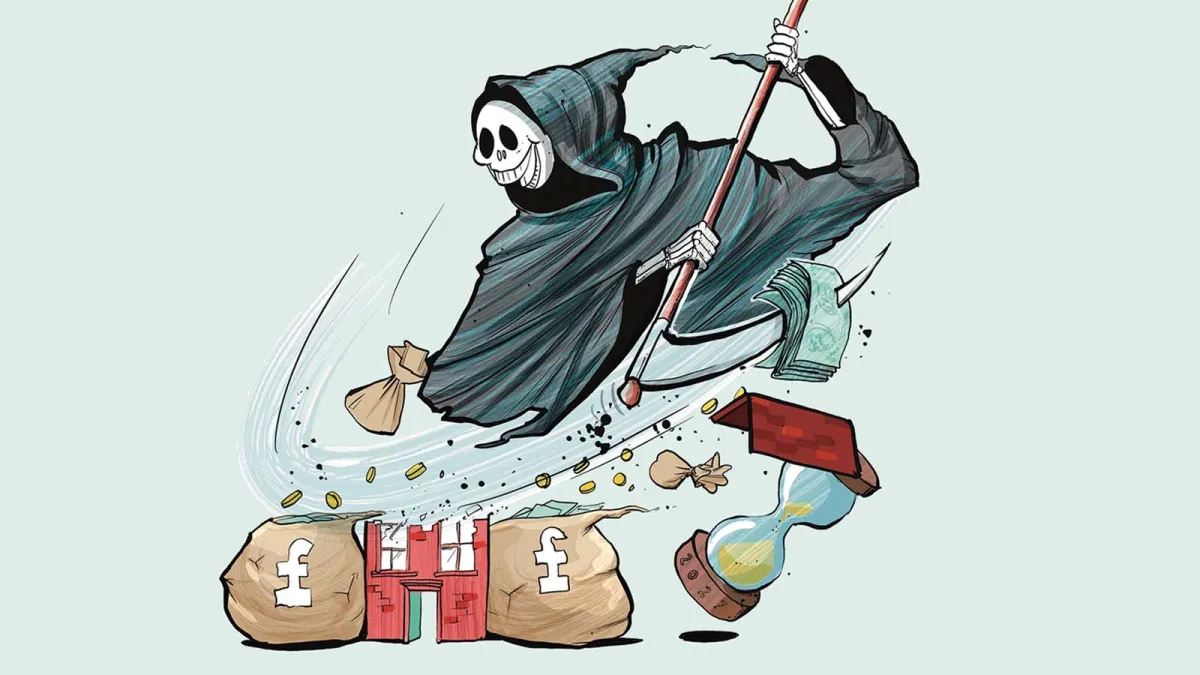
One year from now pensions will be brought into the inheritance tax net, potentially catching millions of families who were previously free of it.
It is one of the government’s big reforms and could mean an inheritance tax bill for one in five households.
The countdown is on and many are rushing to protect their family wealth before pensions become part of taxable estates from April 2027. Lawyers and accountants have reported a surge in clients trying to mitigate their inheritance tax liability.
To help you prepare, Money has launched an inheritance tax calculator with the help of experts at the accountancy firm RSM. The tool will help you to understand how much your loved ones might have to hand over to the taxman, before and after April 2027 — and how you can reduce that bill.
Research has found that many families do not understand what is coming. The investment platform Transact found that fewer than a third of households were fully aware of the changes coming next April. Wealthier households are more prepared, it said, but more guidance is needed for the wider population.
An estimated 32,000 deaths triggered an inheritance tax bill in 2025-26. The Office for Budget Responsibility (OBR) assumes this will rise to 57,000 in the first year of the changes, with an average bill per estate of £194,700, according to the analyst Trajectory. It found that by the OBR’s estimates, in 2030 the number of estates paying inheritance tax will have risen to almost 68,000 — a jump of 24 per cent — with a typical bill of £213,800.
Over the same period, the Treasury is expected to boost its take from inheritance tax by £3.4 billion, from £11.1 billion in 2027-28 to £14.5 billion in 2030-31.
Inheritance tax was once a preserve of the rich but a growing number of families have paid it thanks to years of property price growth, asset inflation and frozen tax thresholds. Adding pensions to the equation will accelerate the trend.
Laura Suter from the investment platform AJ Bell said: “The freeze on inheritance tax thresholds is quietly pulling tens of thousands more families into paying the tax, even though they haven’t seen a dramatic increase to their wealth.”
Inheritance tax is typically charged at 40 per cent on the value of an estate above any tax-free allowances. Everyone can pass on £325,000 free of tax, which rises to £500,000 for most people if a main home is left to a direct descendant (for example a child or grandchild) and the estate is worth less than £2 million.
The £325,000 threshold has stayed the same since 2009 and will remain frozen until at least 2031. There is no tax charged on anything passed between spouses and this will remain the same after April 2027.
Money newsletter
The latest personal finance and investment news from our money team.
Sign up with one click
The changes will hit those with defined contribution savings pots, where the value depends on the amount paid in and investment performance, rather than those with salary-linked defined benefit deals that are now largely only offered in the public sector.
Upon death, any pension savings registered in someone’s name will be added to the total value of their estate. Death in service payments from pension schemes will not be included. Loved ones who inherit pensions from someone over the age of 75 will also face income tax bills on top of any inheritance tax paid.
A much bigger problem than first predicted
Some 5 per cent of deaths trigger an inheritance tax bill at present, and the OBR expects this to increase to about 9 per cent by 2031. But other sources suggest this forecast underestimates the scale of the change.
As many as 20 per cent of households in the UK could be liable for inheritance tax after pensions are included in estates, according to Trajectory and Transact. They analysed the latest Wealth and Assets Survey, last published for the years 2020-2022, and found that levying inheritance tax on pensions “fundamentally altered the landscape for middle Britain”.
 More families are expected to incur late payment interest with HMRCGetty IMAGES
The research looked at households of all ages and found one in five would have assets exceeding the inheritance tax-free allowances once retirement pots were included, and therefore could potentially face a bill.
Andrew Cullen-Jones from Transact said: “Including pensions in estates brings a generational increase in households potentially liable to inheritance tax, as most household wealth is held within property and pensions. Seeking advice and planning early are going to be key to helping households navigate this change.”
Many parents and grandparents are giving money away in their lifetime earlier than planned. If they arrange the gifting properly and live for seven years after doing so, it falls outside of their estate for inheritance tax. Those with surplus income, for example from a pension, can give as much as they like under the “normal expenditure out of income” exemption, provided that the payments are regular and meet certain requirements such as not reducing their standard of living.
Professionals are also seeing a surge in demand for life insurance policies, which cover the cost of an inheritance tax bill, and trusts.
Others are taking a more extreme approach to beat next year’s changes. Raquel Plaza from the advice firm Blevins Franks said the company was fielding lots of inquiries from people weighing up whether to remain in the UK.
She said: “With one year to go until pensions fall within the scope of inheritance tax, the change needs to be seen in the context of a broader shift in the UK tax framework, where inheritance tax thresholds remain frozen and capital taxes have increased.
“A retired couple in the southeast of England, with a family home and two defined contribution pensions, can exceed the combined £2 million tax-free threshold relatively easily, at which point the residence nil rate band begins to taper away.”
An impending red tape nightmare
Levying inheritance tax on pensions has proved politically divisive. The government says it has closed a loophole and this will lead to more savers using their pensions for the primary purposes of funding retirement, rather than ringfencing funds to be passed on to the next generation free of tax.
But the shadow chancellor Mel Stride accused the government of using a tax on families to plug the fiscal hole. He said: “People who have worked hard, saved responsibly and planned for retirement are finding themselves caught out by a tax system that has quietly expanded far beyond its original intent.”
Pensions can be left to a spouse or civil partner free of inheritance tax, but this does not mean there will not be administrative hurdles for them to clear.
One of the biggest sticking points, even within the government’s own party, has been the additional administrative complexity soon to be faced by personal representatives — usually a family member or solicitor responsible for tying up an estate.
They will need to locate all the deceased’s pension pots, contact each firm and get accurate valuations of those pots at the date of death. The process will be particularly difficult in the event of sudden death or where clear instructions have not been left in a will.
The representative will then need to calculate any tax liability and co-ordinate with the pension beneficiary to decide how the tax will be paid — from the estate or through the pension firm.
A House of Lords Finance Bill committee, led by the Labour peer Lord Liddle, has called for the deadline for payment of inheritance tax to be doubled from 6 to 12 months after death where pensions were involved to account for the added administrative burden. It also asked for a “soft-landing” period, during which late payment interest would be suspended for a minimum of two years while the new rules were bedded in.
But the Treasury rejected the suggestion. More families are expected to incur late payment interest with HM Revenue & Customs (HMRC) for missing the crucial deadline.
The Treasury said: “We continue to incentivise pensions savings for their intended purpose of funding retirement instead of being openly used as a vehicle to transfer wealth – more than 90 per cent of estates each year will continue to pay no inheritance tax after these and other changes.”