
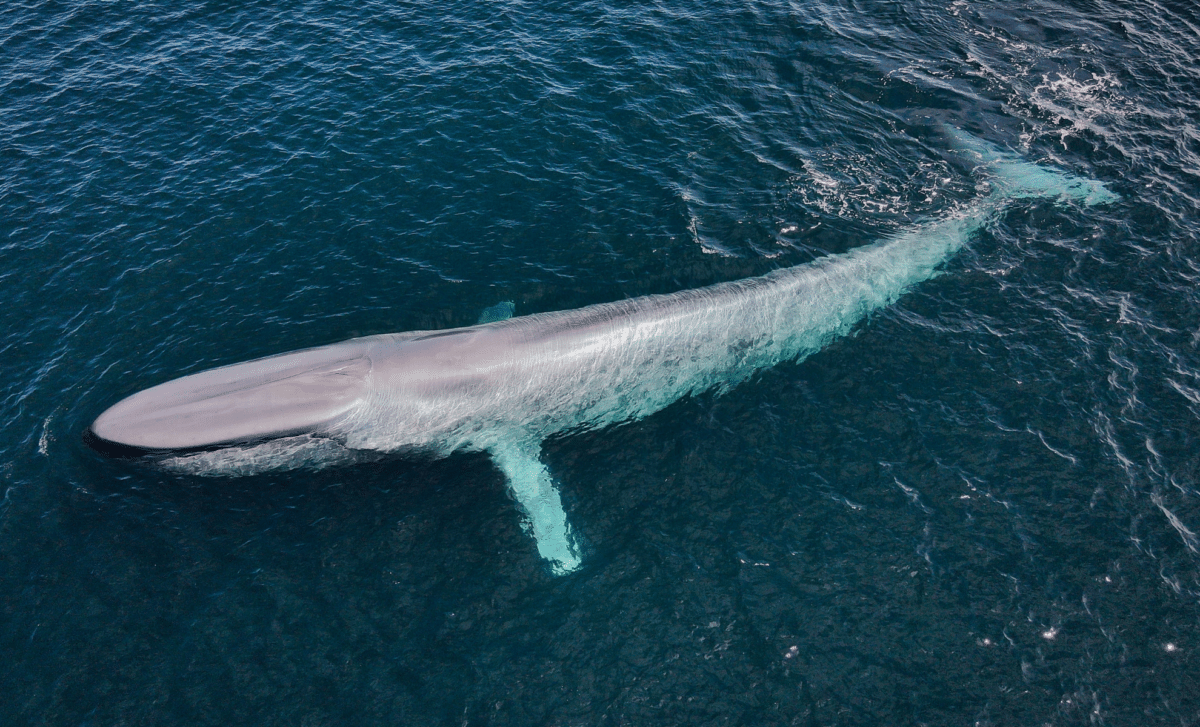
Conservationists in Argentina’s southern Chubut Province have captured rare footage of a blue whale, a species so elusive in the region that this sighting marks a significant milestone for marine conservation efforts. The encounter, which took place within the Patagonia Azul Provincial Park, is the first of its kind in the area and provides vital evidence of the presence of these endangered giants in a location where they had never been observed before. According to the Buenos Aires Times, the team of scientists was initially monitoring other whale species when they stumbled upon this giant marine mammal, stunning the researchers with its sheer size and rarity.
A Rare Encounter: The Blue Whale in Patagonia Azul
The blue whale, known as the largest animal on Earth, is an endangered species that has long been a subject of fascination and concern among marine biologists. This recent sighting in Patagonia Azul Provincial Park represents not only a thrilling moment for researchers but also a critical step forward in understanding the distribution of blue whales in the Southern Hemisphere.
On this particular expedition, the team was conducting a photo-identification study focused on humpback and sei whales when they unexpectedly encountered the blue whale. Tomás Tamagno, a biologist on the research team, recalled the moment with awe: “We came across this whale surfacing, but this one was different – it was gigantic, far larger than any we had ever seen,” he shared with the Buenos Aires Times. The team’s initial reaction was one of surprise, as they had never anticipated seeing a blue whale in these waters.
Carefully closing the distance, the team soon found themselves face to face with the majestic creature. “We moved a little closer, carefully, to see what it was and found ourselves face to face with a blue whale,” Tamagno continued. “Fortunately, we were able to get reasonably close and take some good photographs.” This rare opportunity allowed them to document the blue whale, furthering our understanding of its presence in this remote region.
🐋 Hito en Chubut: registran por primera vez la presencia de una ballena azul en el Parque Patagonia Azul.
🌅 El equipo de conservación del Parque Provincial Patagonia Azul confirmó la presencia de una ballena azul dentro del área protegida.
🏞️ El hallazgo marca un hito…
— Cholila Online (@CholilaOnlive) February 13, 2026
The Significance of This Discovery
The significance of this sighting goes far beyond the excitement of witnessing an extraordinary creature. Blue whales are classified as endangered, and their populations continue to face significant threats from human activities, such as whaling, boating, and entanglement in fishing gear. Although blue whales have been recorded in other parts of Argentina, their presence in Patagonia Azul was previously undocumented.
This discovery highlights the importance of ongoing conservation efforts in the region. Local organizations have been working tirelessly to protect marine biodiversity and establish safe environments for these and other endangered species. By capturing this unique footage, conservationists are not only documenting the presence of blue whales but also providing valuable data that can be used to bolster protection measures in the area.
As Tamagno reflected on the moment,
“It was an incredible day, surrounded by jumping humpbacks and the appearance of this specimen. We are very happy to have been able to confirm the presence of the blue whale within the Park.”
The confirmation of the blue whale’s presence further solidifies the role of the Patagonia Azul Provincial Park as a crucial area for marine life conservation.
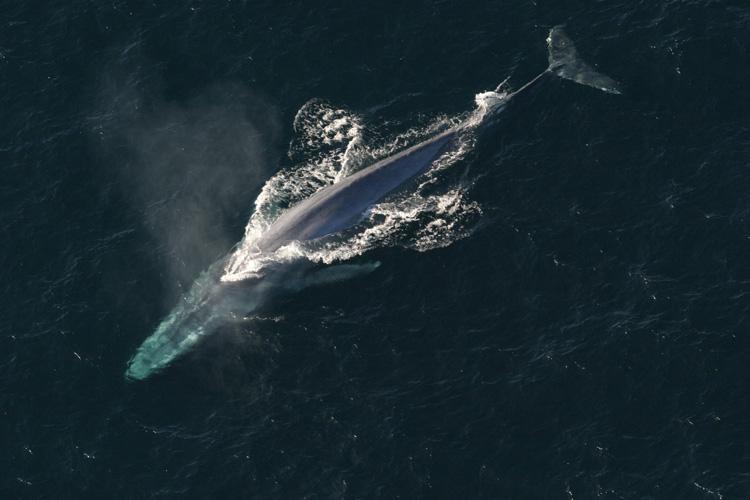 Blue whale swimming in the ocean. Credit: NOAA Fisheries
Challenges to Blue Whale Conservation
Despite the hopeful sighting, blue whales continue to face a series of challenges that threaten their survival. These immense creatures are vulnerable to ship strikes, climate change, and pollution. As migratory animals that traverse vast ocean distances, blue whales are particularly susceptible to environmental disturbances that can affect their food sources and migratory routes.
Marine conservationists have long advocated for the creation of protected marine corridors to help safeguard species like the blue whale. Efforts to reduce ocean noise, minimize ship traffic in key whale habitats, and prevent entanglement in fishing gear are essential to ensuring that blue whales can thrive in their natural environment.