
Photo by NASA via Getty Images
As we speak, four astronauts are very, very far from home, and everyone seems delighted. Back here on Earth, we delight in their IT issues and plumbing troubles, and respectfully thirst after middle-aged scientists performing sky-showers. The BBC’s science correspondent had a very-nearly-indecent reaction to the launch itself, erupting into an outburst of pure joy that likely breached impartiality rules. We can only hope the broadcaster see the error of their ways, and invite some wreckage from the 1984 Challenger Disaster on for balance in coming days.
The reason for all this clamour is that Nasa’s Artemis II is the first manned moon mission since 1972, although careful observers will note that these space-farers will not actually be touching down on the lunar surface. What precisely Artemis II is doing up there is hard for lay people to parse, and I’ll admit that some of the explainers don’t quite get the heartbeat racing, but the tentpole claim is that this is the first step to placing a permanent base on the moon, and a mission which has already taken humans further away from Earth than ever before, 252,757 miles away, to be precise. (This, apparently, constitutes “deep space” which, considering how big space actually is, feels a little like saying Tower Bridge is on the outskirts of London, but I digress.)
To see it all ramping up again, therefore, should be a matter of excitement, not least when there seems so little else to cheer about in earthly matters. It might also raise the question of why this kind of thing has become so rare. If I’m to believe the reading of events which has embedded in my own cultural memory – that offered by the episode of The Simpsons in which Homer goes to space – Nasa more or less realised that people had got bored of space travel and shuttered their programmes accordingly. As such, the whole phenomenon been preserved in aspic, the Space Race consigned to an eternal hinterland of yesterday’s shining tomorrows. It certainly seems like a more civilised yesterday: the buzz cuts, crackly comms, and shiny white interiors; the vaulted language of mankind’s progress and adventure; the pleasingly grandiose patina afforded by the programme’s hifalutin’ allusions to Greek mythology.
Even discounting the surface-level sheen of its more propagandistic presentations, the progress of man’s ascent into space is still a jaw-dropping endeavour to consider. In 1958, the longest commercial flight on Earth was Honolulu to Los Angeles (6 hours, 21 minutes). Eleven years later, a man would land on the moon. Between July 1969 and December 1972, 12 humans stood on our nearest cosmic neighbour. And then, well, none have done it since. It’s a strange fact, rarely dwelt on, that every single moonwalk was done not just five decades ago, but within a single 41-month period. To put that into context, it’s currently just over 41 months since Liz Truss lost her brave battle against a lettuce. In all of human history, less than 800 people have ever been in space, (and, yes, despite internet scepticism, one of them is Katy Perry).

Subscribe to the New Statesman today and save 75%
The mission comes into public view, and public excitement, just as the Trump administration is proposing a 23 per cent cut to Nasa’s budget, while the agency is still reeling from cuts swung its way during the reign of Elon Musk’s DOGE, at one point estimated to involve cutting 20 per cent of all employees and rescinding $420 million in funding. And to some critics, many of whose opinions I respect on many other topics, funding space travel is not worth doing anyway; an overspend on adventurism which, in light of the poverty and misery throughout our home planet, reaches for the grotesque.
On this, I strongly disagree. I’ve always considered the purported choice, between advancing to the stars and solving problems back on earth, a false one. Obviously, if the only two options were solving world hunger and funding, say, the International Space Station, the choice would be clear. But such a binary is nonsensical, given that there are scores of other things I’d rather sacrifice before targeting the planet’s vanguard of scientific inquiry. I suspect the reason this dichotomy comes up so often is that the numbers involved in space exploration are, inarguably, massive (I am resisting every urge in my body to use the word “astronomical” here). Artemis’s purported budget of $93 billion may seem hard to justify for a programme whose output appears, in layman’s terms, to be a few rocket launches and some admittedly charming zero gravity footage of bulky astronauts surrounded by floating pens.
But this elides the truth that massively subsidised space programmes provide a titanic boost to science, technology, and economies back home. It’s widely reported that Nasa’s Apollo-era programmes returned around $7 to the US economy for every $1 spent. Developments made at the bleeding edge of the space race were obviously a boon to high-tech industries we will never fathom, but they’re also visible in all our homes. If you’ve ever used a portable computer, a camera phone, or a memory foam mattress, you have Nasa to thank. Ditto modern advancements in water purification, landmine removal, and artificial limbs, not to mention the invention of ear thermometers and CAT scans. If I were to rank all the things I’d prefer the American government spent billions on subsidising, these would not find themselves particularly close to the bottom of the pile. To place this in bleak contrast, Trump’s war with Iran is reportedly costing $1.3 million per minute.
Moreover, such arguments mean engaging with this question in purely vulgar terms, to deploy a miser’s algebra in assessing points on a balance sheet, and the returns on investment they imply. At the risk of losing my reputation as a dead-eyed cynic whose heart has been calloused by the evils of the world, I do hold within myself an optimism about space travel that supersedes matters of cost and capital. I think there is value – moral, philosophical, intellectual value – in exploring the one universe in which we find ourselves, and to so as deeply as we can. To gaze at distant stars from Earth, and gaze back home from as close to those stars as we can get.
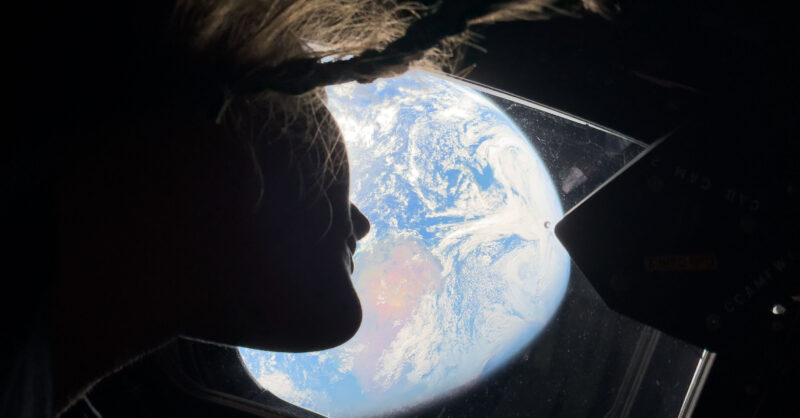
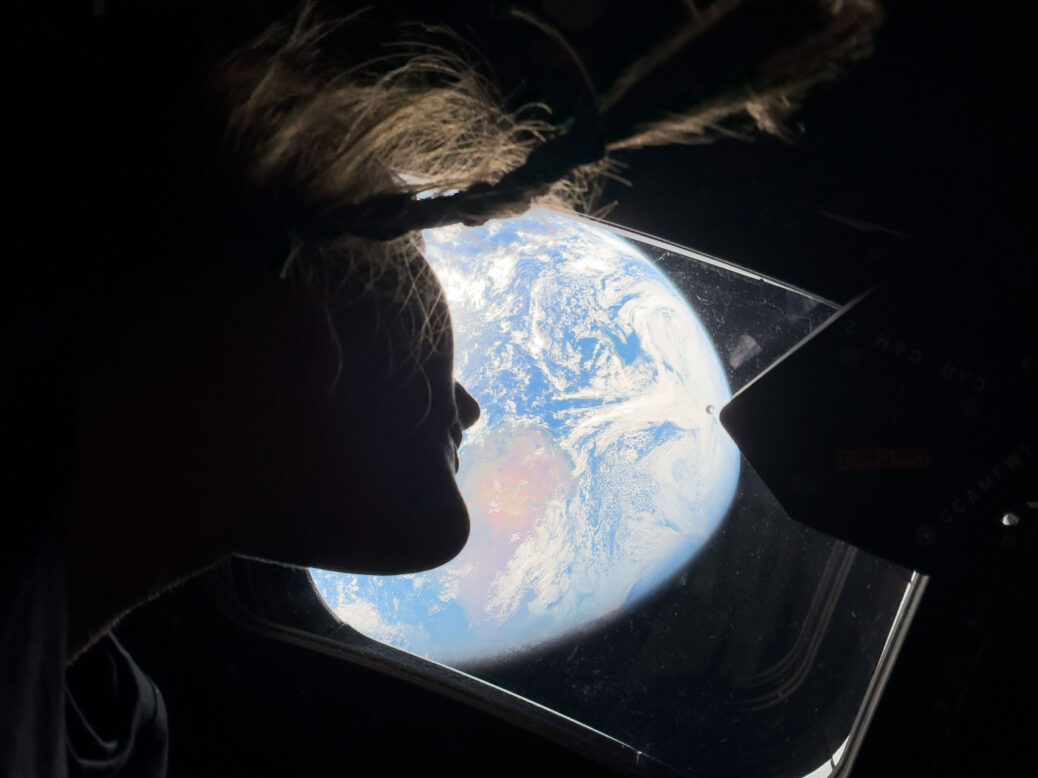
Looking at the images beamed back from Artemis II, flying by the Moon from 4,000 miles above, or capturing the whole Earth in its single, gimlet eye I won’t burden you with a lecture about the whole world becoming-as-one in sight of the pale blue dot we all inhabit. My optimism, sadly, stops some way short of truly believing Carl Sagan’s moving words about interplanetary travel ushering in a brave new world of cosmic peace. I just think the urge to go into space, and the co-operation, dedication and joyful exploration it takes to achieve that feat, is still worth the effort no matter how short we fall. Shoot for the stars, as the saying goes, and you may still reach the moon.
[Further reading: Do not celebrate the social media “addiction” ruling]
Content from our partners