
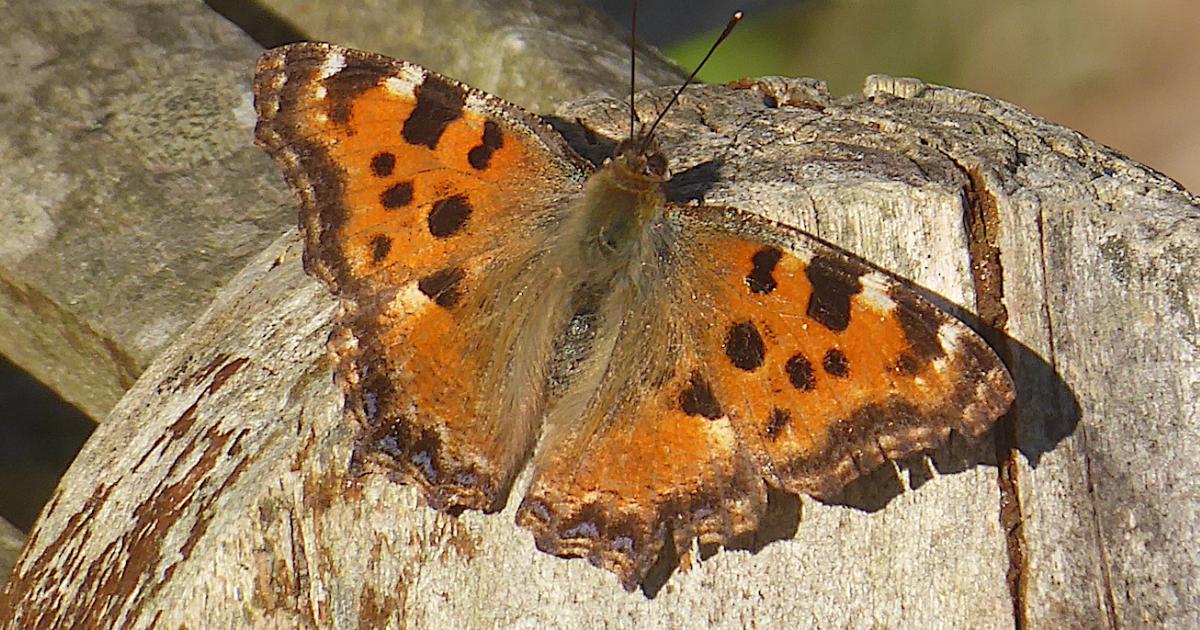
The Large Tortoiseshell, absent as a ‘resident’ breeding species for almost four decades, has been recorded on the Isle of Wight.
The year’s first confirmed UK sighting was made by West Wight resident, Nikki Kownacki, on February 24, in her garden.
Nikki photographed two of the butterflies together in her garden.
A Large Tortoiseshell butterfly snapped in the West Wight in 2026 (Image: Nikki Kownacki)
She submitted the record through the iRecord butterflies app, which guides users through identification, to feed data to the national database of national charity, Butterfly Conservation.
Nikki described the moment as ‘exciting’, especially given the butterfly’s long‑held status as ‘extinct’ in the UK.
“This is a rare species and needs to be protected,” said Nikki, who first spotted one near her home in 2020, then in her garden in 2023 and last year.
“I recorded the first Large Tortoiseshell sighting in the UK for the year. This was again in our garden and two were seen together.
A Large Tortoiseshell butterfly snapped in the West Wight in 2020 (Image: Nikki Kownacki)
“The sighting was recognised and added to the First Sightings listing of breeding butterflies in the UK for the very first time. What a great record!
“So far this year I have recorded a Large Tortoiseshell many times, all within the confines of our garden. What a great start to the year.
“There were at least eight distinct individuals.”
Other sightings of the rare insect have also been made on the Island recently, which includes Freshwater, Wootton, Parkhurst Forest, Bouldnor Forest and even in the grounds of Osborne House.
The species has also been seen in other southern counties — Hampshire, Dorset, Kent, Sussex and even as far west as Cornwall — during a remarkable two‑week spell from late February to early March.
While occasional sightings have been logged over the years, nature enthusiasts say the recent surge marks a clear rise in encounters.
Prof Richard Fox, head of science at Butterfly Conservation, says the species’ status is now under serious review.
According to him, if the charity were to update its official endangered species list today, the Large Tortoiseshell would likely be reclassified as “no longer extinct”.
Known scientifically as Nymphalis polychloros, the Large Tortoiseshell is a vibrant relative of the familiar Small Tortoiseshell — distinguished by its larger size and different wing patterns.
It was once widespread across England and Wales, but vanished as a breeding species in the 1980s.
Its decline has been closely linked to Dutch elm disease, which devastated the elm trees the butterflies rely on for egg‑laying.
Although individual butterflies have been spotted sporadically since, there has been no confirmed evidence of a stable UK breeding population.
However, ecologists say a growing population in the Netherlands may now be sending increasing numbers of Large Tortoiseshells across the North Sea, raising hopes the species’ long absence from Britain may soon come to an end.