
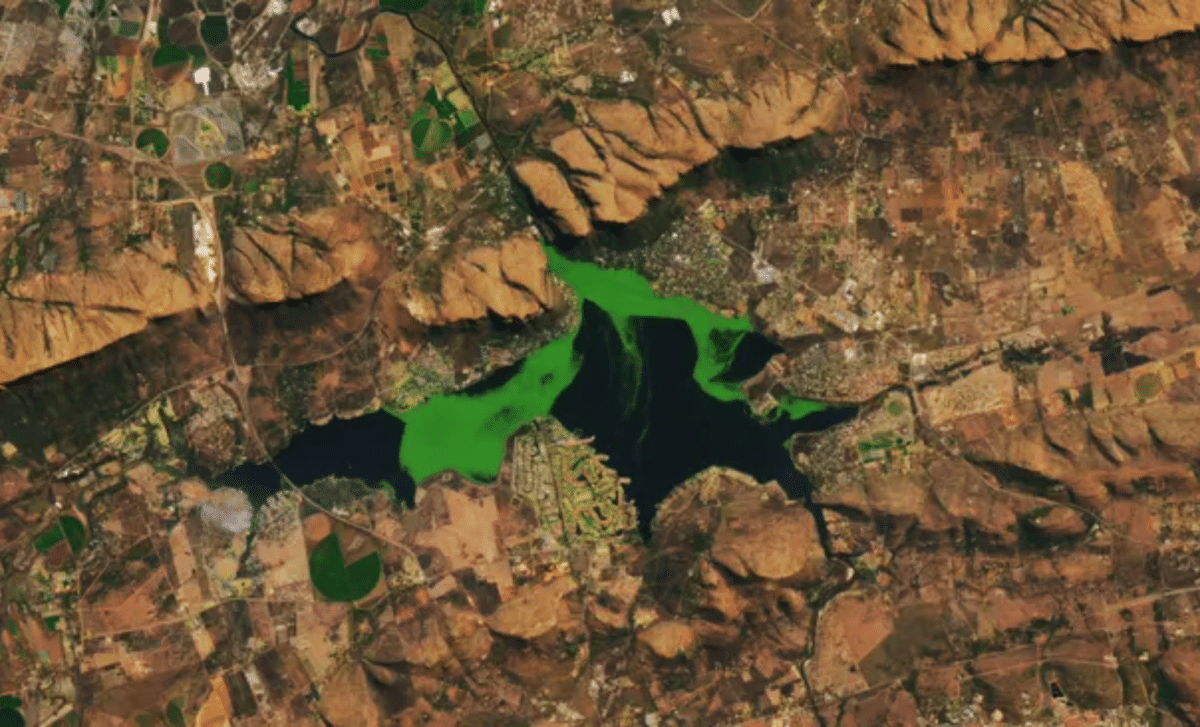
A recent satellite image from NASA’s Earth Observatory has uncovered a disturbing sight over South Africa’s Hartebeespoort Dam: a sprawling, vivid-green mass of toxic algae and invasive aquatic plants. This spectacle is more than just an environmental anomaly, it is a stark visual representation of the dam’s ongoing battle with hypereutrophication, a condition caused by excessive nutrient pollution. The consequences of this phenomenon are far-reaching, from toxic water to fish die-offs, shedding light on the urgent need for better management of water bodies around the world.
The Green Menace: Unveiling the Algal Bloom
On August 10, 2022, the Landsat 8 satellite captured a striking image of the Hartebeespoort Dam, revealing a vast green expanse across its surface. This image, although visually stunning, is a stark indicator of a growing environmental crisis in one of South Africa’s most well-known reservoirs. The vibrant algae bloom is not just a colorful phenomenon, its presence signifies a toxic surge of cyanobacteria and aquatic plants, exacerbating the water’s pollution levels. This is not a rare occurrence. Algal blooms at Hartebeespoort are frequent, thriving in waters rich in nitrogen and phosphorus, nutrients that are often introduced by agricultural runoff.
Bridget Seegers, an oceanographer at NASA’s Goddard Space Flight Center, explains the explosive growth of these blooms. “It’s like having a garden,” she said, highlighting how nutrient abundance fosters rapid plant growth. “If you add a lot of nutrients, you’re going to have a lot of growth.” This natural cycle, however, becomes a hazardous one when the nutrients come from human activities like farming and urbanization. The water is continually overfed with nutrients, which has led to the dam’s state of “hypereutrophication” for decades.
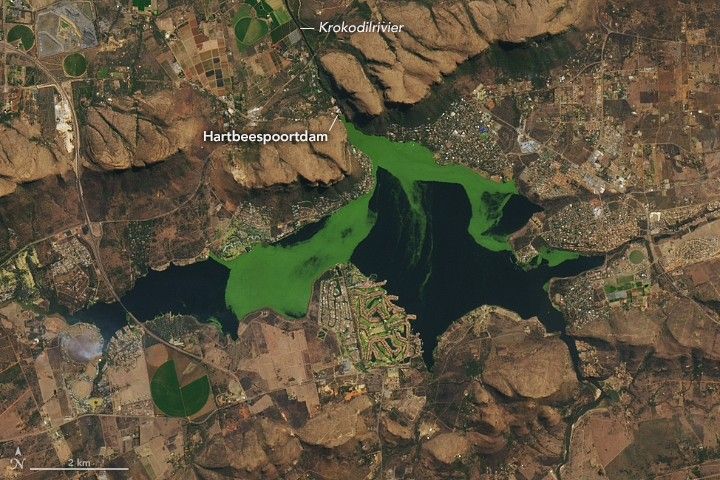 Image credit: NASA/Landsat 8
The Science Behind the Bloom: Eutrophication and Its Effects
At the heart of Hartebeespoort’s ongoing ecological struggles lies the phenomenon of eutrophication, where excess nutrients in water lead to the overgrowth of algae. In this case, hypereutrophication, an extreme form of this process, is the driving force behind the blooms. The dam, constructed in the 1920s, has been suffering from this condition for almost 50 years, leaving the reservoir in a constant state of ecological distress.
The massive influx of nutrients, particularly from fertilizers used in nearby farms and golf courses, promotes the growth of cyanobacteria. These bacteria, while natural in small amounts, thrive and bloom in over-nutrient-rich waters, creating oxygen-deprived “dead zones” that are lethal to aquatic life. These blooms not only disrupt the ecosystem but also generate harmful toxins, which can make the water unsafe for both humans and animals. On clear days, NASA’s Earth Observatory often sees the reservoir’s once-deep blue waters interrupted by large patches of vibrant green algae. This change is an alarming sign of the environmental toll being taken on the dam’s aquatic system.
The Dangers of Algal Blooms
While the sight of vivid green patches may seem beautiful at first glance, these algal blooms are deadly to the reservoir’s ecosystem. Some types of algae, when in bloom, can produce potent toxins that contaminate the water. These toxins pose a threat to both wildlife and humans. For example, water-sports enthusiasts have reported rashes from direct contact with the contaminated water, while pets, particularly dogs, have fallen ill after drinking from the reservoir.
But the most concerning impact is the formation of “dead zones.” These areas are devoid of oxygen, making it impossible for fish to survive. With the algae and plants sucking up the oxygen needed by fish, entire populations have been decimated in the past. In April 2023, the dam witnessed a massive fish die-off, with hundreds of large carp found dead, suffocated by the lack of oxygen. Such die-offs are becoming all too common, with another reported in November 2025, when the oxygen levels plummeted again, leaving fish “gasping for air” at the surface.
 (Image credit: NASA)
A Legacy of Mismanagement
Hartebeespoort Dam’s struggle with hypereutrophication isn’t new. A study conducted by NASA’s Earth Observatory analyzed the dam’s nutrient levels over the past 40 years and pointed to the Crocodile River as a major source of pollution. The river has been increasingly polluted with runoff from agricultural and urban areas, where excessive fertilizer use has compounded the problem. Despite brief successes in the 1990s with bioremediation efforts to manage the nutrient overload, the program was eventually abandoned due to high costs, leaving the reservoir to spiral back into ecological decline.
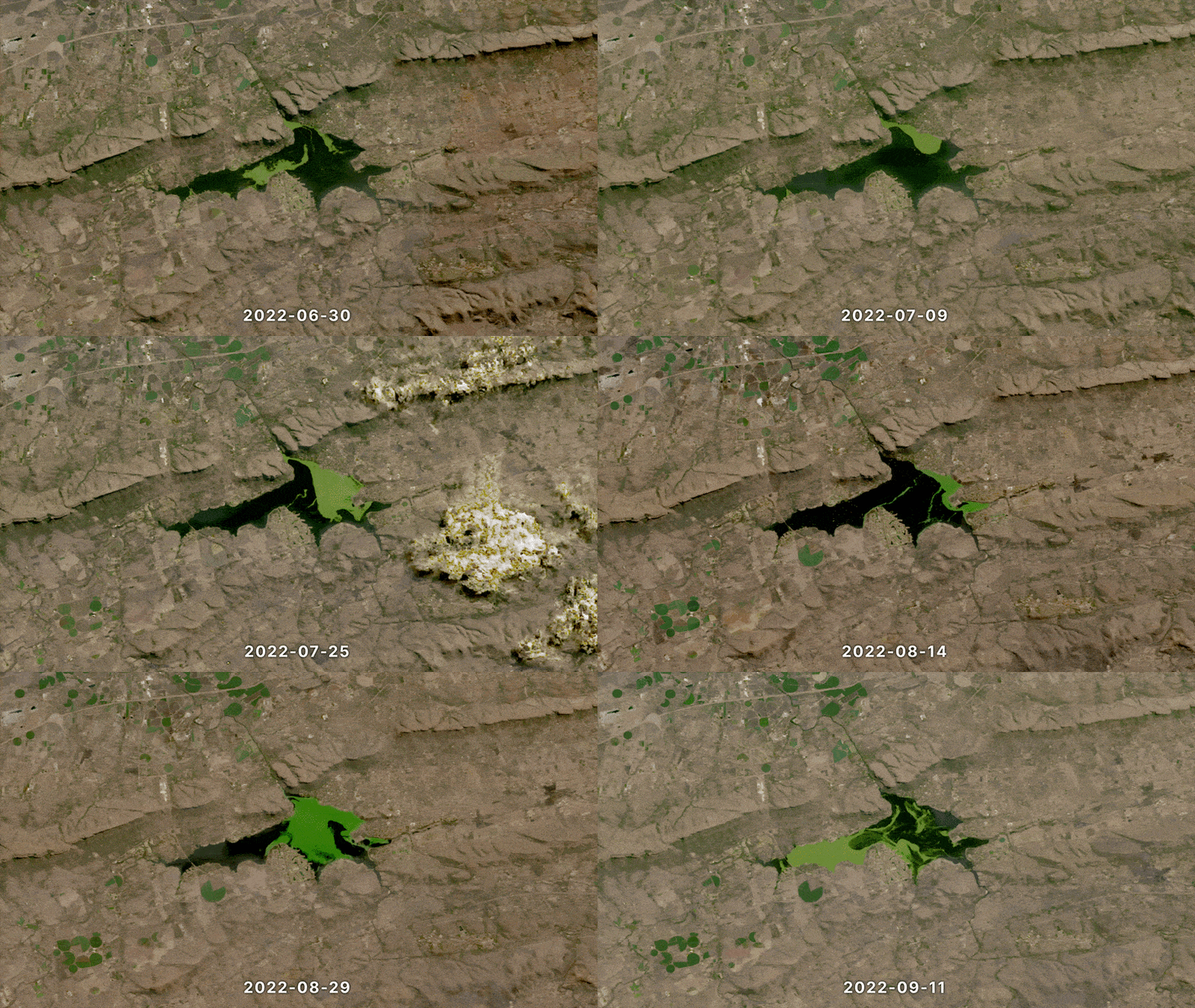
The satellite data collected between June 2022 and July 2023, through a collaboration of Landsat 8, Landsat 9, and Sentinel satellites, reveals that these blooms have become an almost constant fixture in the dam. The periodic disappearance of these blooms offers no real relief, as they quickly return, signaling that the reservoir remains in a precarious state. The repeated failure to adequately address nutrient pollution has left the dam vulnerable to further damage, making it a cautionary tale for other bodies of water around the world.