
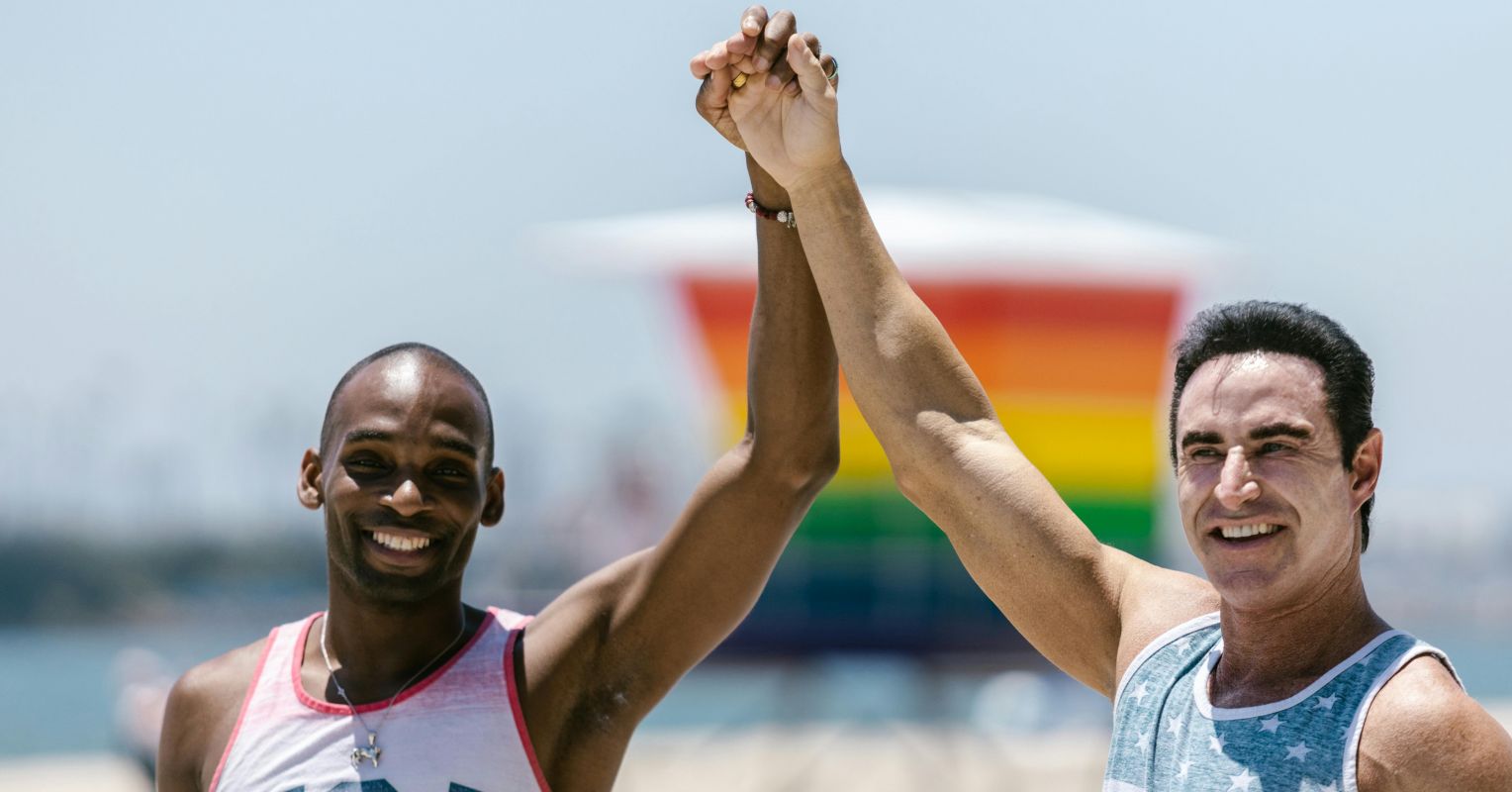
In high-performance environments, athletes must navigate pressure, evaluation, and constant feedback. But for LGBTQ+ athletes, there is often an added layer that goes unspoken: managing how much of themselves feels safe to show in their environments. This management shows up as filtering conversations, adjusting behavior, or deciding what parts of their identity and life stay hidden depending on who is in the room.
The Hidden Cost of Hiding in Sport
This vigilance takes a toll over time, contributing to anxiety, emotional exhaustion, and disconnection from teammates. Research consistently shows that LGBTQ+ athletes experience higher rates of discrimination and exclusion in sport settings (Denison et al., 2021). When these athletes are navigating sport environments with a sense of caution rather than authenticity and freedom, both performance and well-being take a hit.
Minority Stress as a Performance Variable
Minority stress theory (Meyer, 2003) highlights how ongoing exposure to stigma, discrimination, and anticipated rejection creates a chronic stress load for LGBTQ+ individuals and others with minoritized and intersecting identities across race, gender, ability, and social context. In sport environments, this burden shows up in training, competition, recovery, and relationships.
Psychologically, athletes may experience increased anxiety, hypervigilance, and a reduced sense of belonging.
Physiologically, chronic stress can disrupt sleep, slow recovery, and elevate the risk of injury.
Performance-wise, when part of the brain is scanning for social threats, it becomes harder to stay fully engaged in training and competition.
Liberating athletes from this chronic stress related to minoritization not only improves well-being, but also removes barriers to high performance that should not have been there in the first place.
Belonging as a Competitive Advantage
When athletes experience a genuine sense of belonging within their teams and broader athletic environments, their mental energy shifts back to where it is most useful. Athletes communicate more openly, take appropriate risks in training, and recover more quickly from mistakes. Confidence, in both sport and life more broadly, also becomes more stable because it is not constantly being negotiated within the sport or social environment.
Research links inclusive climates to better team outcomes. Cunningham and Nite (2020) found that environments that actively include and value LGBTQ+ individuals are associated with greater organizational success, in part because they foster cohesion and engagement.
Belonging creates the conditions where athletes can fully access their abilities and perform more freely, without leaving the most important parts of themselves at the doors of their fields or gymnasiums.
The Weight of Being ‘The Only’
For athletes who are the only openly LGBTQ+ person on a team, the experience can feel uniquely isolating in ways that may not be obvious to others. There is often a quiet pressure to represent or respond to misconceptions about an entire community. Even in environments that intend to be supportive or promote inclusion, that role can be exhausting.
Deciding whether to come out as an LGBTQ+ athlete is rarely a simple or purely personal choice. Athletes, especially those who have experienced multiple layers of marginalization, are constantly reading cues in their environments. They notice how teammates talk, how coaches handle conversations about inclusion, and whether policies are actually enforced when violated. These experiences shape not only whether it feels safe to be known, but also whether it feels possible to be fully expressed in a sporting environment.
The (Invisible) Mental Load
The ongoing assessment that LGBTQ+ and other minoritized athletes engage in becomes an almost automatic process. Athletes track conversations, reactions, and potential consequences without consciously recognizing it. The cognitive load adds up, pulling necessary attention and energy away from what should be devoted to training, recovery, and competition.
Sport and Competition Essential Reads
It also affects life beyond sport. Mental energy that could be spent on relationships, rest, or personal values is instead used to navigate uncertain environments. That imbalance can wear down an athlete’s capacity for both well-being and performance over time.
Creating sport environments where athletes no longer have to carry this mental load is a form of liberation, or the process of being set free from oppression, that directly impacts how they show up in both sport and their lives more broadly.
From Support to Liberation
For parents supporting athletes who have experienced identity-based marginalization, moving from support to liberation means moving beyond conditional acceptance and toward true affirmation. Athletes benefit from knowing that their value is not dependent on performance or identity, and that who they are (and in some cases, who they love) will be celebrated rather than just accepted. Listening, advocating when appropriate, and respecting privacy all contribute to this process.
For coaches, staff, and administrators, one of the most common missteps is silence. Harmful language or behavior often goes unaddressed because no one is sure whether it is “necessary” to step in. From the athlete’s perspective, silence often signals, quite loudly, what is tolerated in a sports context.
Another pattern is placing the responsibility for education on LGBTQ+ and other minoritized athletes themselves. Liberation requires shifting that responsibility to those who have historically caused harm. Coaches, staff, and broader organizations play a role in actively building their own awareness and shaping team culture.
Building Environments That Liberate Athletes
So how does this look in practice? The most effective teams move beyond symbolic gestures and embed inclusion into their culture. That includes setting clear expectations for respectful language and providing education before violations occur, and enforcing policies and creating systems where athletes can report concerns without fear of retaliation when they inevitably do.
Equally important are the relational and structural supports that allow athletes to thrive in sport environments. Affirming coaches, connected teammates, and access to identity-affirming resources and mental health care all serve as protective factors for both well-being and performance. Community outside of sport can also reinforce identity and resilience in ways that are necessary to navigate high-pressure environments.
Liberating LGBTQ+ Athletes
Supporting LGBTQ+ athletes is not just about allowing them to participate or making space for them on a team. It is about actively creating environments where their full selves are liberated and celebrated.
When athletes are no longer managing whether it is safe to be fully known in a sports space, energy once spent on monitoring, filtering, and self-protection becomes available for connection, growth, and performance. What emerges is a more authentic, fully expressed version of athletic excellence.
For coaches, parents, and athletic organizations, the goal is to create environments where gender, sexual, racial, ethnic, ability, and other social identities are visibly affirmed and embedded in everyday culture. In these spaces, athletes are more connected, more engaged, and better positioned to perform at their highest level.