
Trump issued an apocalyptic warning to Iran’s leaders to increase the pressure on them to reopen the Strait of Hormuz, a narrow Gulf waterway through which about 20% of global oil and gas shipments pass.
“A whole civilisation will die tonight, never to be brought back again. I don’t want that to happen, but it probably will,” the president wrote on Truth Social.
“However, now that we have complete and total regime change, where different, smarter, and less radicalised minds prevail, maybe something revolutionarily wonderful can happen, who knows? We will find out tonight,” he added.
He said the US military could destroy every bridge and power plant in Iran within four hours if his deadline passes without a deal.
Vice-President JD Vance also said he hoped for a deal but that the US had “tools in our tool kit we have so far decided not to use” against Iran if that was not possible. He did not elaborate, but the White House later denied that he was alluding to nuclear weapons.
A White House official also said that US forces had carried out strikes on military targets on Tuesday on Kharg Island, the main terminal for Iranian oil exports in the Gulf. Iran said its oil facilities were not disrupted by the attack.
Israel’s Prime Minister, Benjamin Netanyahu, meanwhile said Israeli fighter jets had attacked railway tracks and bridges across Iran on Tuesday which he alleged were used by Iran’s Islamic Revolutionary Guard Corps (IRGC) to transport personnel, weapons, and the raw materials to produce them.
“I tell you constantly that we are crushing the terrorist regime in Iran. But we are doing so with even greater vigour, and with increasing force,” he declared in a video.
Iranian officials told state media that a railway bridge in the central city of Kashan was struck, killing two people, along with a section of tracks in Karaj, near Tehran.
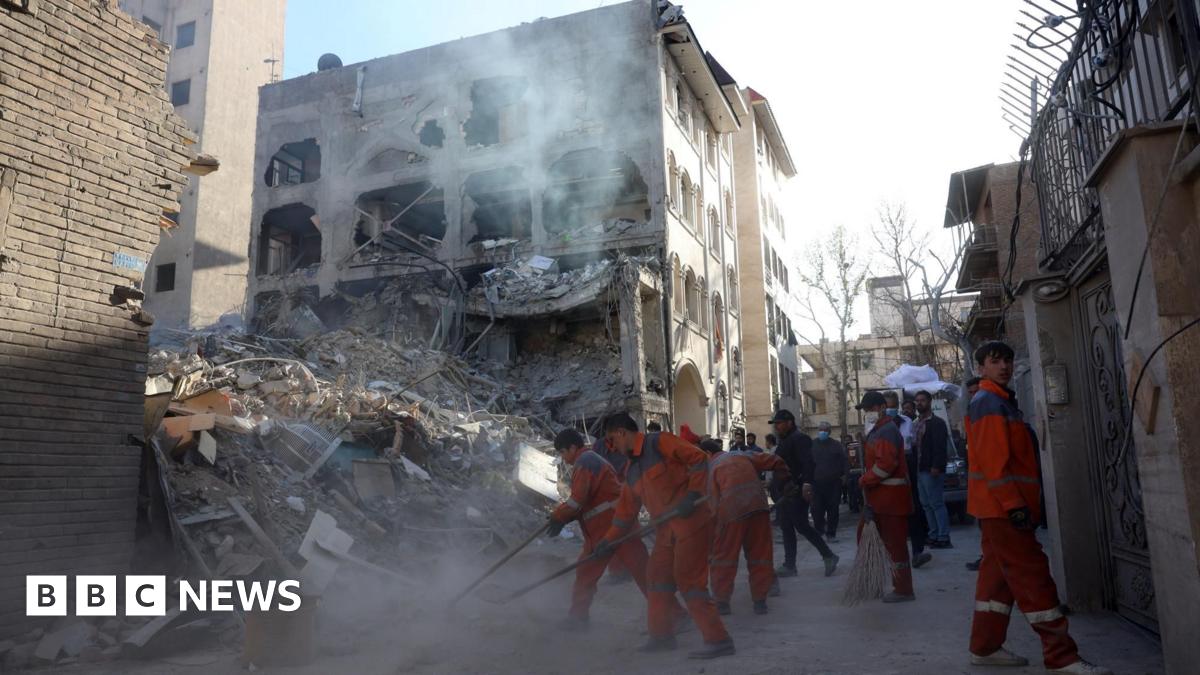
Iranian media also reported that 18 people were killed in strikes in Alborz province, and that the Rafie‑Nia synagogue in the capital was destroyed in a strike.
Israel’s military expressed regret over what it described as the “collateral damage” to the synagogue, saying the strike had targeted a senior Iranian military commander.