
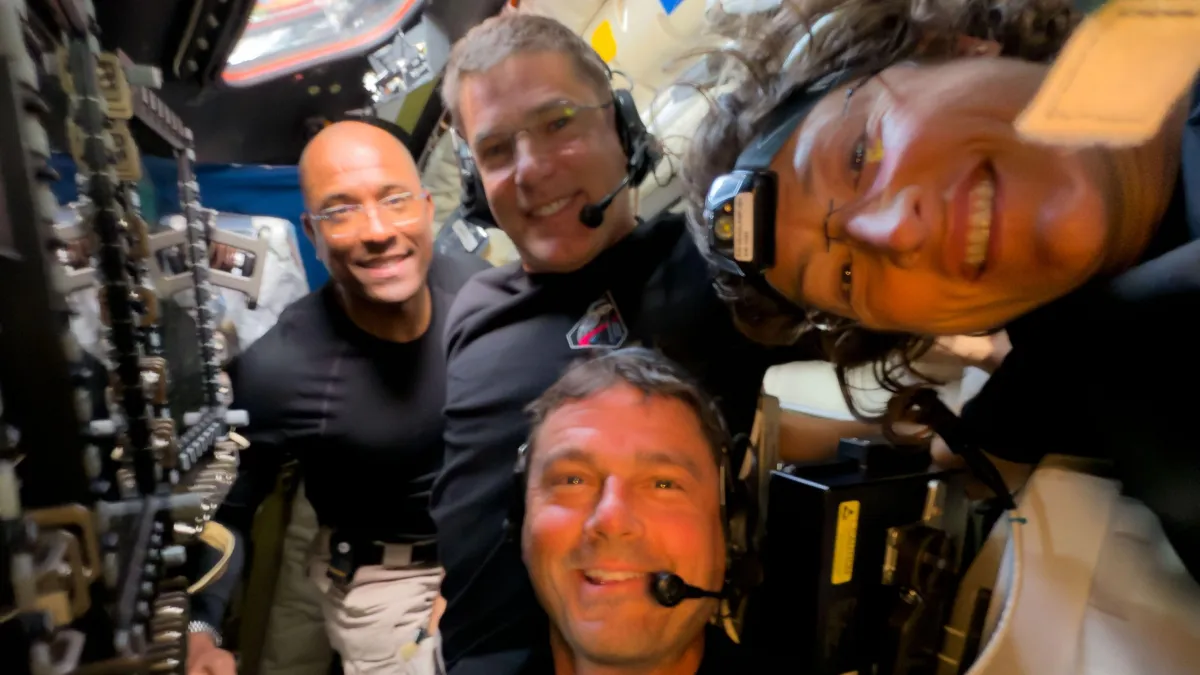
It was during a routine dinner aboard the International Space Station — as routine as dinner can be while orbiting one’s home planet — that Mike Fincke was suddenly rendered speechless.
Unable to speak for about 20 minutes yet fully conscious, aware and pain-free, the 50-year-old astronaut’s health episode in January was sufficiently serious for his mission to be cut short and for Nasa to bring him and his crewmates home.
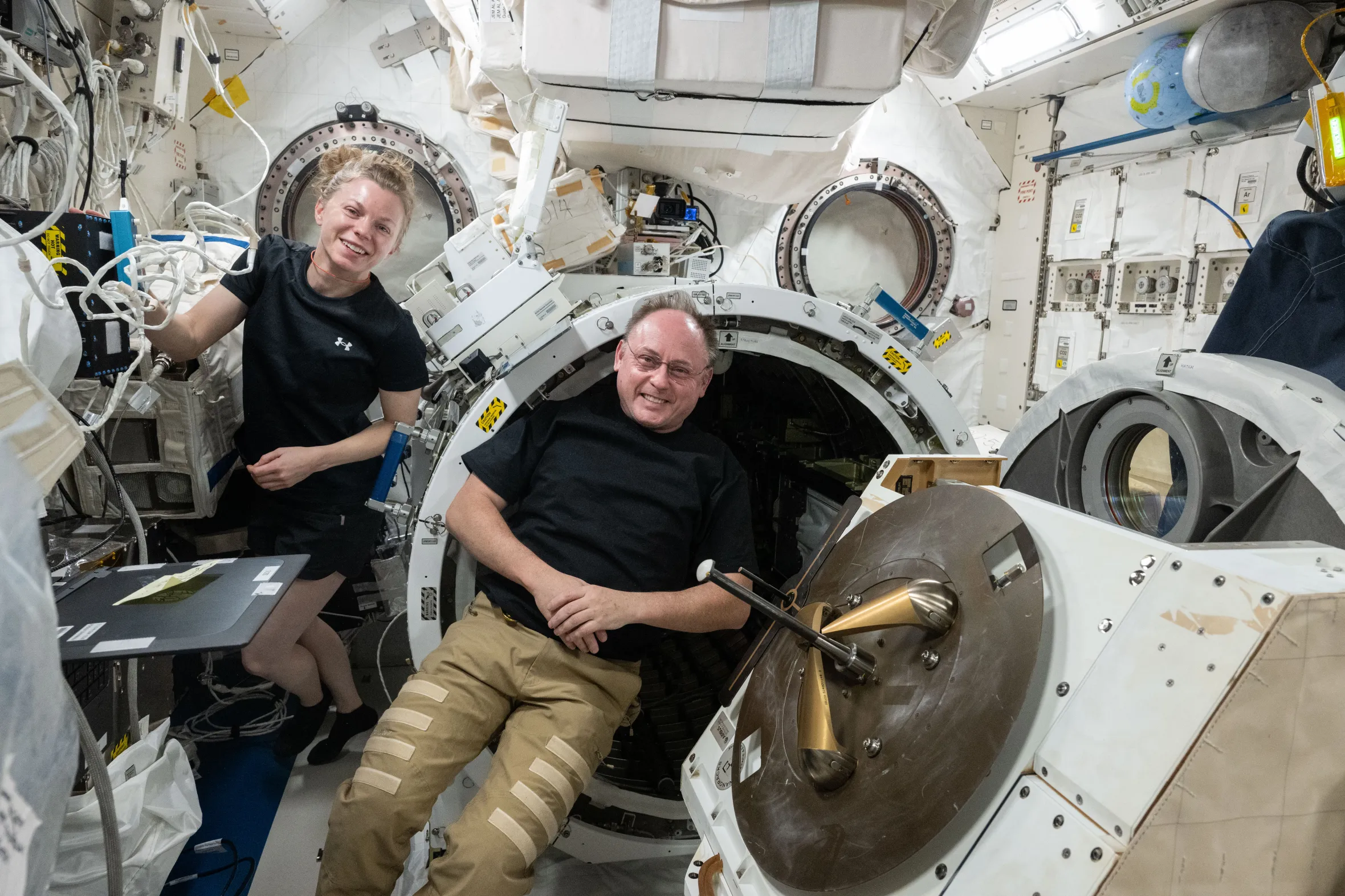 Mike Fincke and Zena Cardman, part of the SpaceX Crew-11 mission cut short due to Fincke’s health complications
The incident underscored the precariousness of human life outside Earth’s cradle, where the greatest danger may not be the emergency itself but the inability to get help fast.
“They’re only 250 miles above us on the ISS and as we saw, if we need to evacuate them and have them come home early, it’s a possibility. But we can’t do that for Mars,” said Steven Platts, chief scientist of Nasa’s human research programme (HRP).
That reality has implications for Nasa’s Artemis campaign, which aims to build a sustained human presence on the moon as a precursor to Mars. Humans were not built to survive off their own planet and deep space is a fundamentally more dangerous realm.
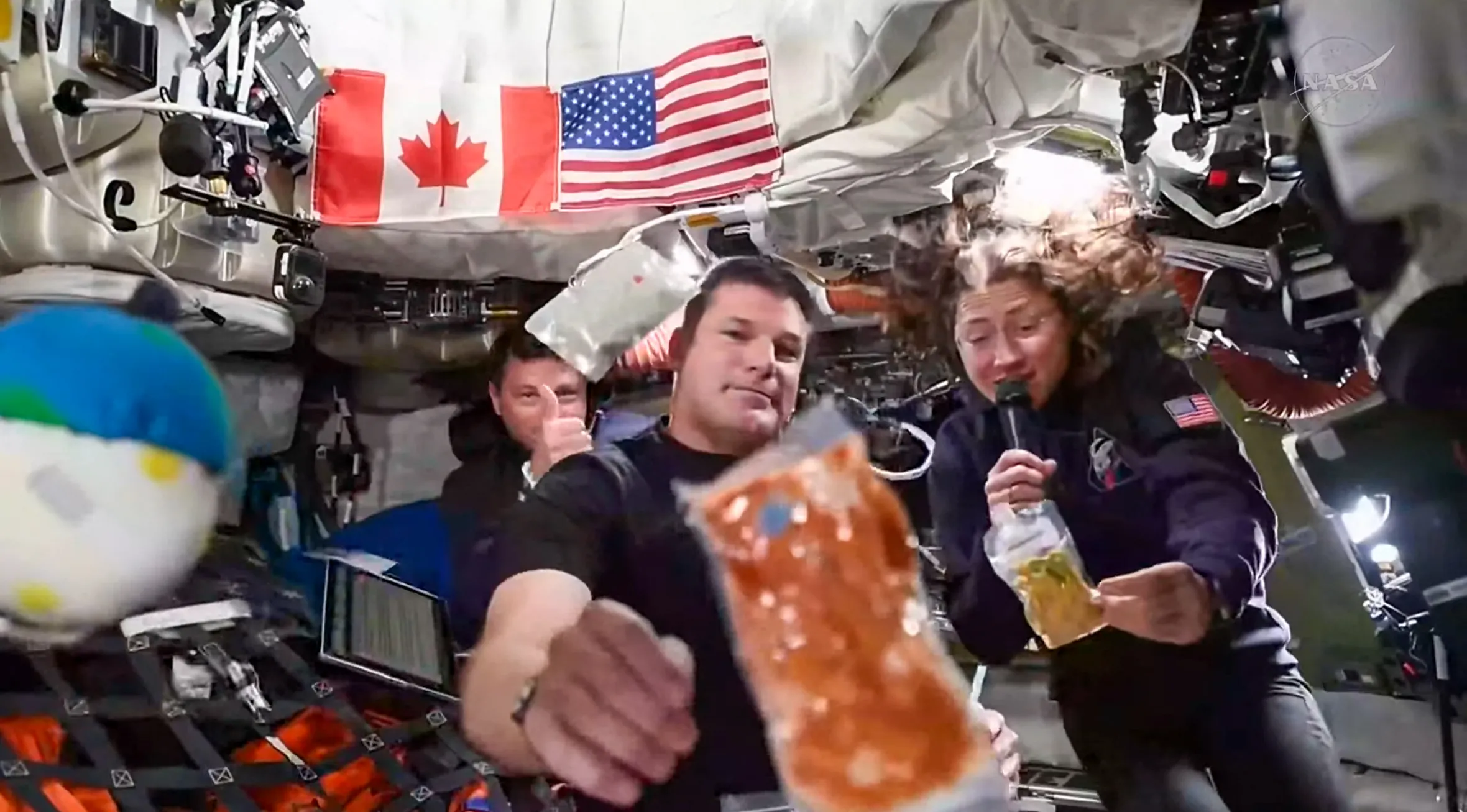 Wiseman, Hansen and Koch show off the food they eat in space last weeknasa/AFP/getty images
The journey home from the ISS takes a few hours. The moon, from where the Artemis II mission is returning after a flyby mission, is a four-day journey. Mars is up to 140 million miles away and takes six to nine months to reach.
“For future moon and Mars missions it’s super-critical that we understand the hazards and mitigate them,” Platts said.
The Artemis II astronauts are generating biological data as part of a shift towards personalised medicine in space, examining immune system changes, hormone levels and metabolism. Saliva-based diagnostics tools, wearable monitors and tissue-chip technology are tracking their health
Space radiation, isolation and confinement, distance from Earth, reduced gravity and enclosed or hostile environments are the five key hazards HRP identifies. Stress hormone levels are elevated during spaceflight and the immune system altered. Changes in the gravitational environment can affect the bones, muscles and heart, and affect spatial orientation, balance, hand-eye co-ordination and locomotion.
At the milder end of the hazard scale is space motion sickness. After Artemis II’s crew — Reid Wiseman, Victor Glover, Christina Koch and Jeremy Hansen — reached space on Thursday, Nasa’s flight operations director, Norm Knight, suggested that some might not be feeling their best.
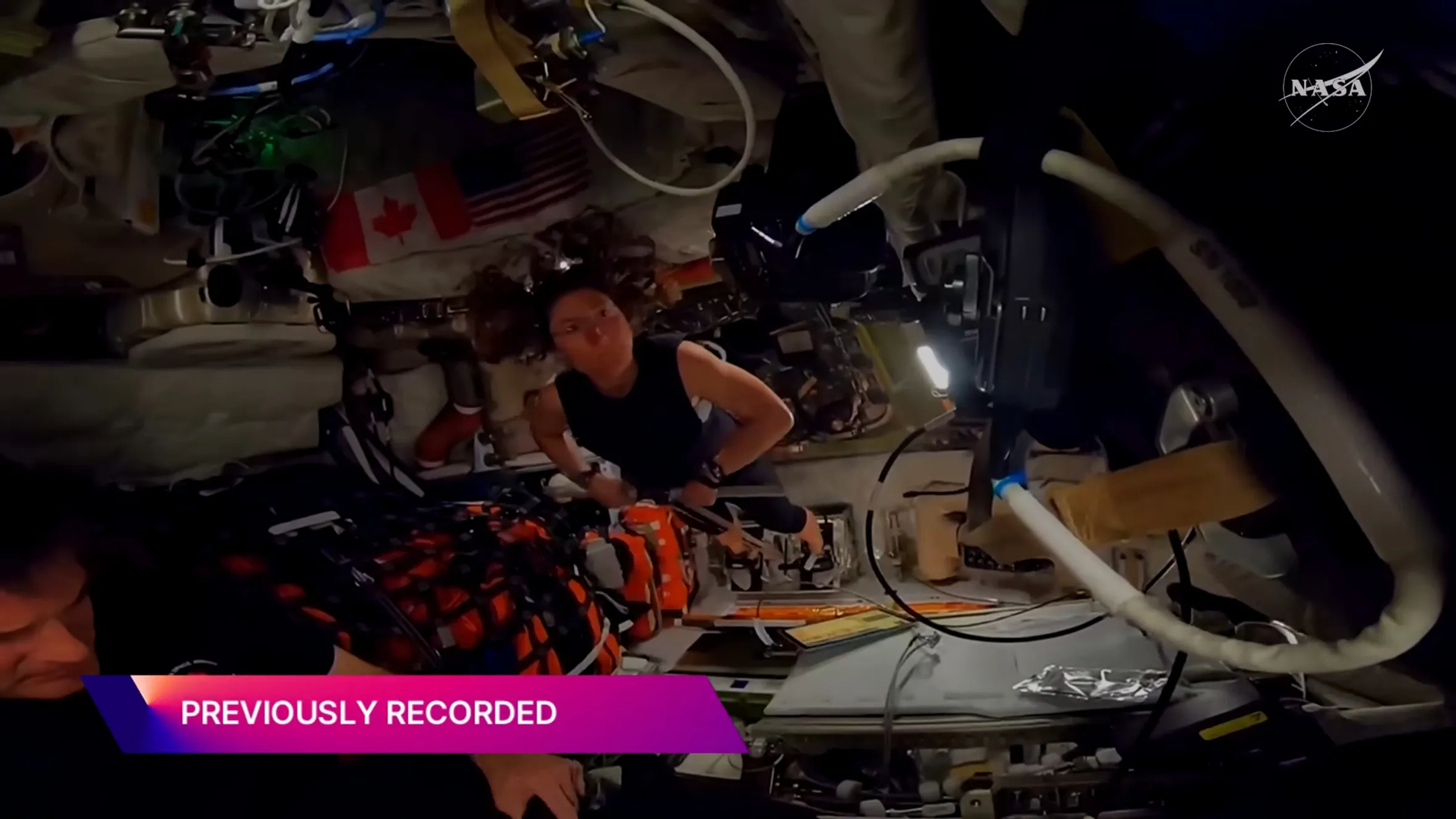 Koch uses exercise equipment en route to the moonNASA
More than 50 per cent of astronauts contracted space sickness, Platts said. “It’s the first couple of days usually. We call it space adaptation syndrome and it’s nausea, potentially vomiting, they’d feel very congested. You also have this fluid shift when you go up into microgravity, so you have up to a litre and a half of fluid from your lower body that moves up into your chest and into your head.”
That shift can overpower one’s sense of taste. Platts said: “We have to give them hot sauce or soy sauce and all these things to add to the food so they can taste it … If you can’t taste your food you don’t eat as much, then you lose weight, then you lose strength. We don’t want that.”
The crew will demonstrate cardio-pulmonary resuscitation techniques aboard their Orion spacecraft. Wiseman and Glover will also try out medical kit such as the thermometer, blood pressure monitor and stethoscope. All have a workout schedule despite the cramped space.
Koch’s place on the crew brings added value. “Early medical research treated women as small men and we all know that that is not true and it’s really important to understand. Data will help us do that,” Platts said.
Orthostatic hypertension, a blood pressure condition, affects up to 25 per cent of male astronauts, but 80 per cent of women. “All of our research, all our counter measures, have to be designed to look at both sexes,” Platts said.
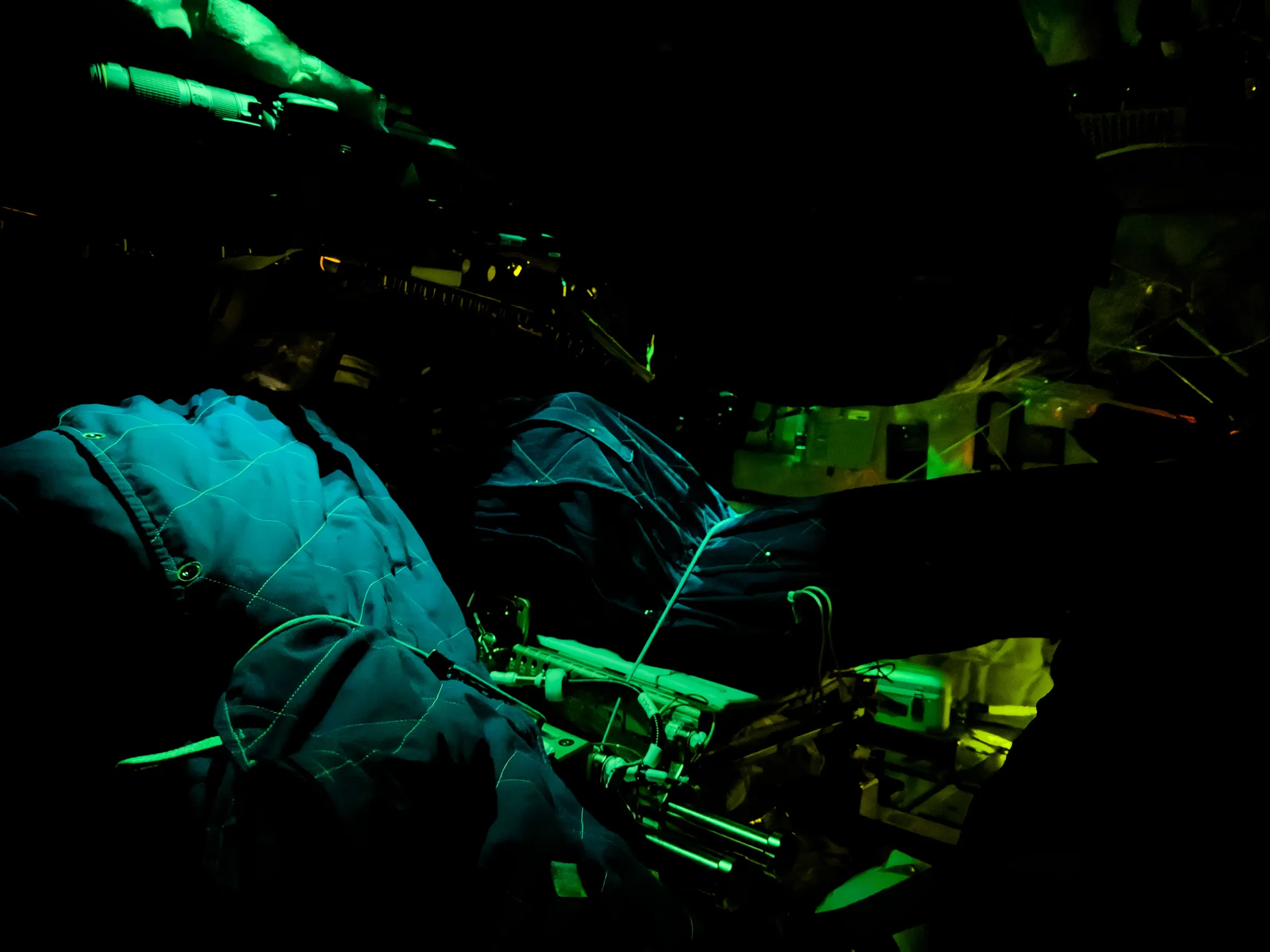 The crew’s sleeping bags are lit up inside the craftnasa/Getty images
The mission is also investigating how the body responds to partial gravity. Scientists have an understanding of microgravity from three decades of research in Earth orbit and of Earth’s gravity, but the moon’s one-sixth gravity sits somewhere in between. No one yet knows where and the brevity of the visits made by 12 astronauts during the 1969-1972 Apollo missions was too short to tell.
“There’s a big debate,” Platts said. “Is one-sixth gravity closer to one G, or to microgravity? We really don’t know.”
On Orion, Koch suspends herself upside down to sleep “like a bat”, Wiseman said. On Earth, scientists are trying to simulate those conditions and more through tilted bed studies, isolation experiments and analogue habitats, where crews live under mission-like constraints.
The Artemis II crew have private medical conferences and communicate with psychologists from space. “They can get any kind of support they need and a lot of that is just relying on them to be open and honest and say ‘my wrist hurts’ or whatever,” Platts said.
Non-transparency can be devastating to the team dynamic. In 1985, Vladimir Vasyutin, 33, a Soviet cosmonaut, was evacuated from the Salyut-7 space station with an inflammatory disease that it emerged he had hidden for months before the launch. Crewmates who had to leave early with him never forgave him for the cover-up.
For Fincke, who said his still unspecified episode came “out of the blue”, colleagues sprang into action and administered an ultrasound scan that allowed doctors on the ground to direct treatment. Platts said: “It’s really important that those teams function well. They rely on each other for their lives.”