
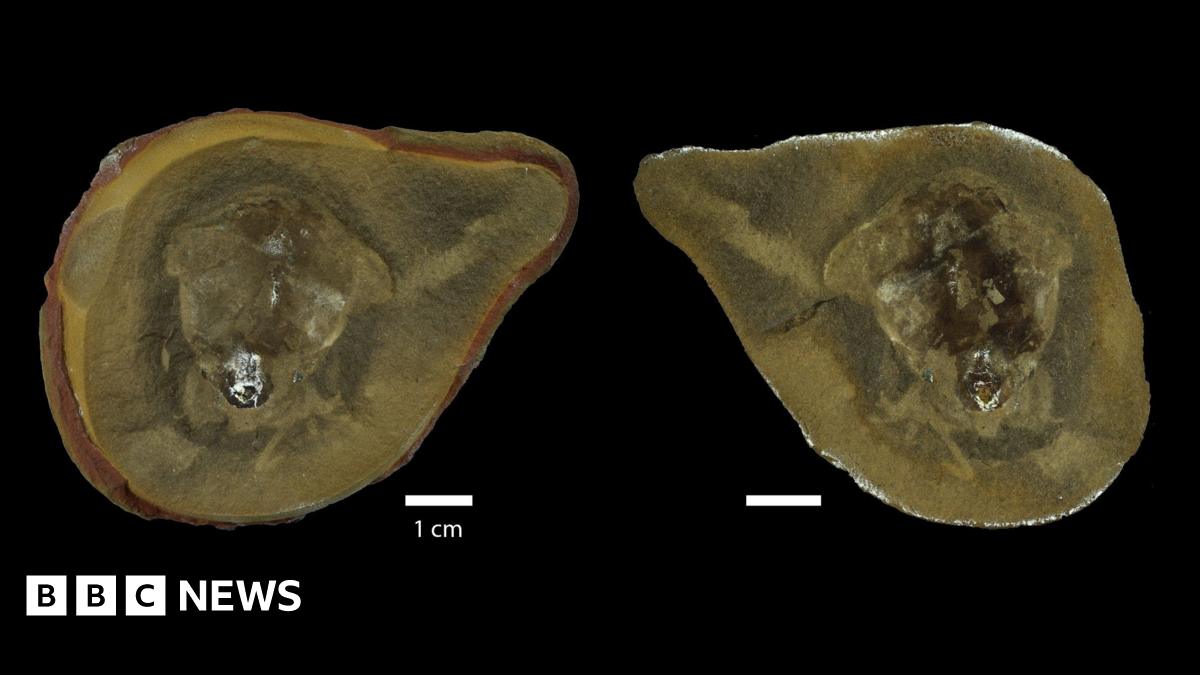
The fossil was discovered at a site at Mazon Creek in Illinois, US, with the first analysis of it published in 2000.
Scientists thought the fossil showed eight arms, fins and other features typical of an octopus.
Synchrotron imaging, a modern technique that uses beams of light brighter than the sun, was used to scan the fossil, revealing new details within the rock.
The teeth revealed matched those of a fossil nautiloid that was found at the same site.
These findings mean that data now supports octopuses appearing during the Jurassic period, much later than thought.
Scientists now believe the split between octopuses and their 10-armed relatives happened in the Mesozoic era, not hundreds of millions of years earlier as previously thought.