
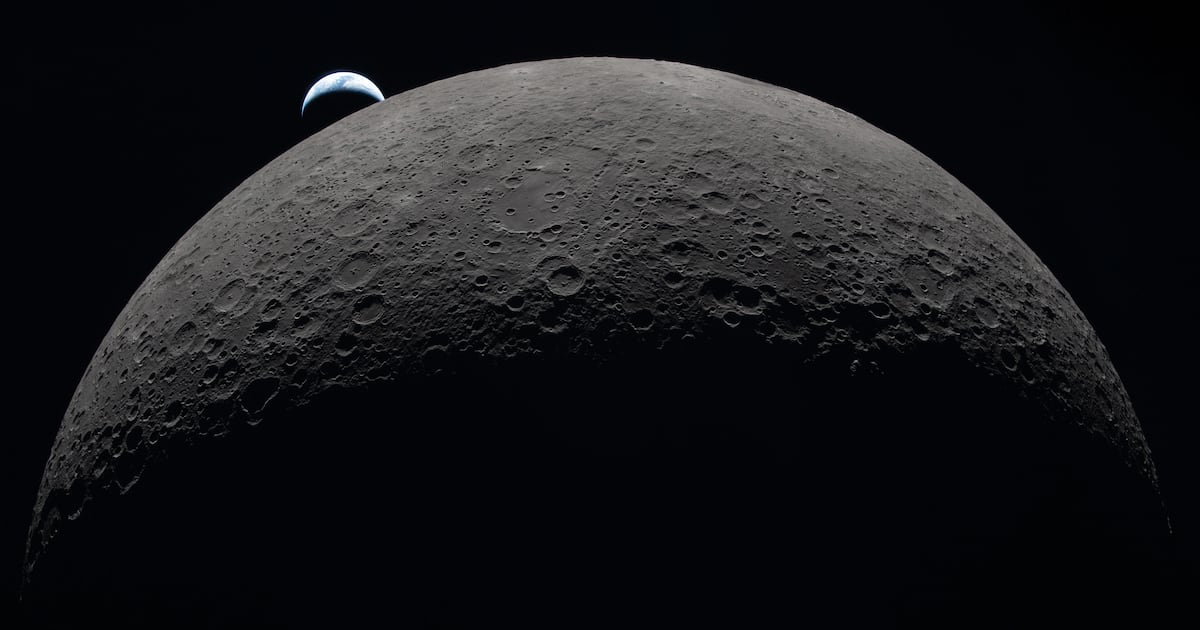
A day after passing over the far side of the moon, the crew of Nasa’s Artemis II mission is on the return leg of its journey, and the pace of activity has slowed.
The spacecraft carrying the astronauts, named Integrity, left the sphere of lunar influence at 6.23pm Irish time on Tuesday. That meant that the attraction of Earth’s gravity was stronger than the moon’s, accelerating them toward a splashdown in the Pacific Ocean on Friday.
The first batch of photographs and data was sent back to Earth overnight, sped up by a new laser communication system.
“We got 20 gigabytes down in a little more than 45 minutes,” Rick Henfling, one of the mission’s flight directors, said during a news conference on Tuesday. That was much faster than the rate at which data is usually transmitted through space using longer wavelengths, he said.
Scientists on the ground have just begun analysing the reams of new information.
“I’ve spent most of my morning just flipping through, you know, the thousands of images that have started to come down,” Young said. “And there is something in every image that surprises me.”
The photographs included an ‘Earthset’, showing the Earth behind the moon, and a solar eclipse.
– This article originally appeared in The New York Times.
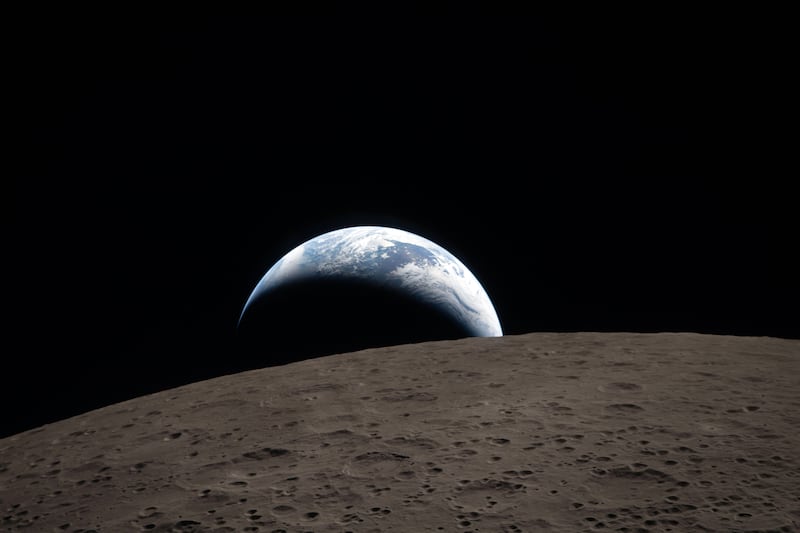 An “Earthset”. Photograph: Nasa via The New York Times
 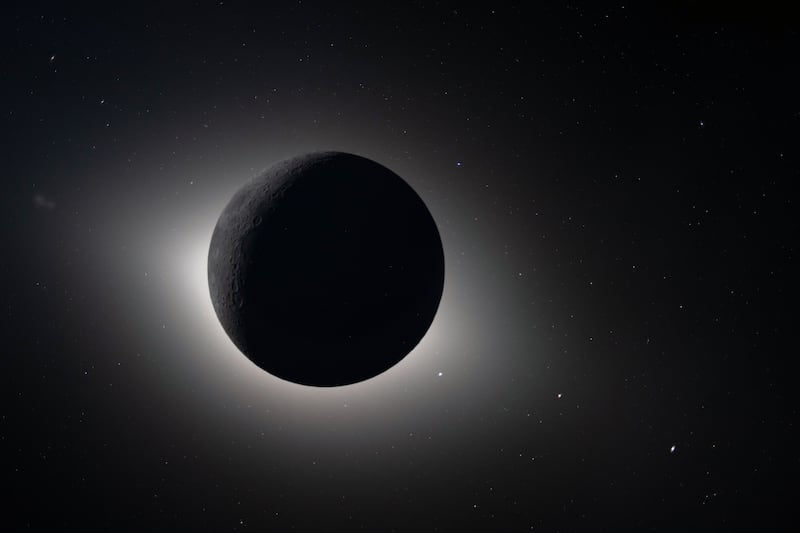 A solar eclipse, captured by the Artemis II crew from the Orion Integrity spacecraft during their flyby around the far side of the moon. Photograph: Nasa via The New York Times
 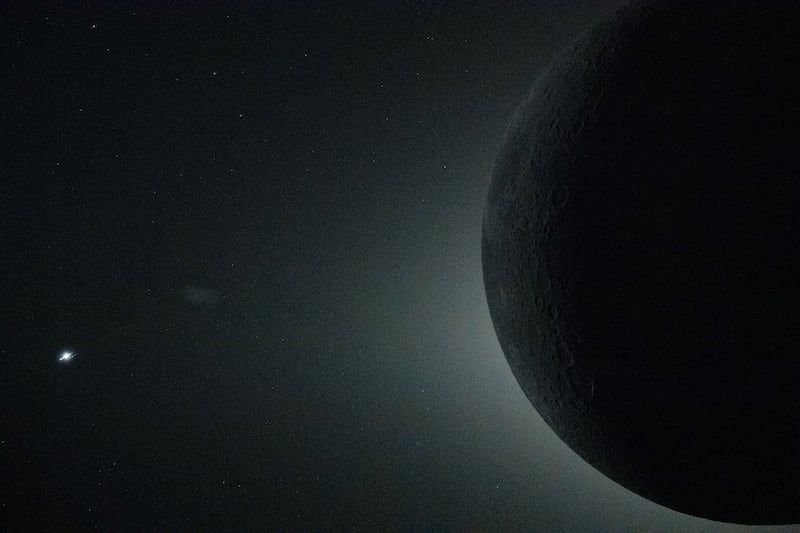 Another view of the solar eclipse. Photograph: Nasa via The New York Times.