


Don’t prepare for lift-off when it comes to astronauts’ pocket rockets (Picture: Getty)
In space, no one can hear you scream. But that’s not the only anomaly you’ll experience if you venture outside of Earth’s atmosphere.
Since NASA’s Artemis II crew set off on their mission around the Moon last week, the intricacies of life on board the Orion shuttle has been a constant source of intrigue.
From what the astronauts eat (Nutella, mango salad and beef brisket, apparently) to how they use the toilet, we’re all fascinated by what they get up to between lunar surface observations or trajectory adjustments.
There’s one thing they’re probably not doing however, and that’s having erections.
While it’s estimated men have an average of 11 erections a day — a figure that varies depending on factors like age and lifestyle — Orion’s male passengers will likely rack up zero throughout their entire 10-day voyage.
And it’s all down to how interstellar travel impacts the body’s internal organs.
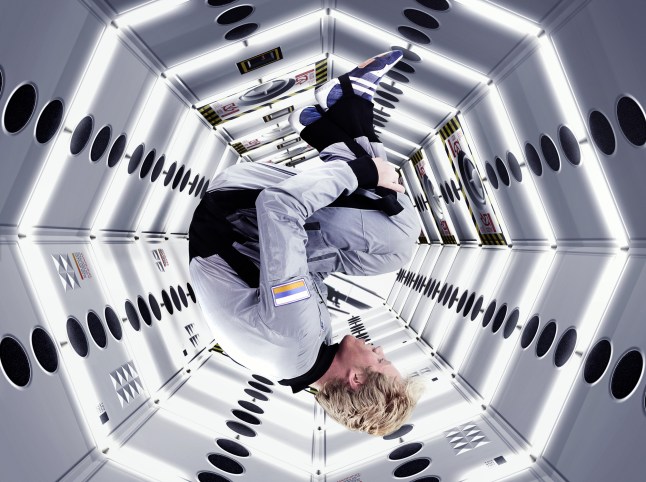
Turns out, gravity is pretty necessary (Picture: Getty Images)
‘In space, the cardiovascular system is under constant stress,’ Dr Earim Chaudry, chief medical officer at digital healthcare provider, Voy, tells Metro. ‘Microgravity causes fluids to shift toward the upper body, reducing overall blood volume and disrupting how blood pressure is regulated throughout the body, which has real consequences for sexual function.’
The physiological mechanics involve the dilation of blood vessels in the penis, with blood filling its erectile tissue and helping maintain rigidity.
Sex. Love. Modern Mess. Listen to new Metro podcast Just Between Us
X Factor icon Diana Vickers and writer, broadcaster, and LGBTQ+ advocate Jack Guinness dive into your wildest sex, love, and dating dilemmas – every Tuesday.
Listen wherever you get your podcasts or watch on YouTube. And be sure to follow and subscribe so you never miss an episode.
You can also join the fun on our WhatsApp Group Chat here – share your dilemmas and Diana and Jack may just give you a call.
Basically, blood flow is key to getting hard, and ‘if the driving pressure is reduced or circulation is compromised, achieving and sustaining an erection becomes significantly harder.’
Sex in space: the final frontier
NASA maintains no sexual activity has ever taken place on its missions, despite rumours (now debunked) about a ‘sex in space’ experiment in the 90s.
And since astronauts are under 24/7 surveillance and follow a strict schedule, with no ‘private time’ on shuttles or the ISS, they can’t exactly sneak off.
There have been a few attempts otherwise though; back in 2015, Pornhub started a crowdfund to produce the first pornographic film in space, but struggled to raise the funds or find a carrier to host the actors.
An adult entertainment company, Private Media Group did make a movie (The Uranus Experiment) featuring a zero-gravity sex scene in 1999, but it was filmed on Earth, in an aircraft designed to simulate the experience of weightlessness — and because of budget and technical issues, they only managed a 20-second shot.
While biological studies in the field of ‘space sexology’ have been conducted , there are no confirmed cases of anyone actually taking the giant leap and giving it a go.
This is also the case when it comes to female arousal, which relies on genital blood flow and engorgement in a process called vasocongestion.
But that’s not the only thing hindering this metaphorical lift-off for astronauts.
Dr Chaudry explains: ‘Beyond the mechanics, reduced blood volume and cardiovascular dysregulation can cause fatigue and light-headedness, both of which are fairly effective libido dampeners.
‘Sexual desire is shaped by hormonal and psychological factors too, but the physical conditions for arousal simply become less favourable in space.’
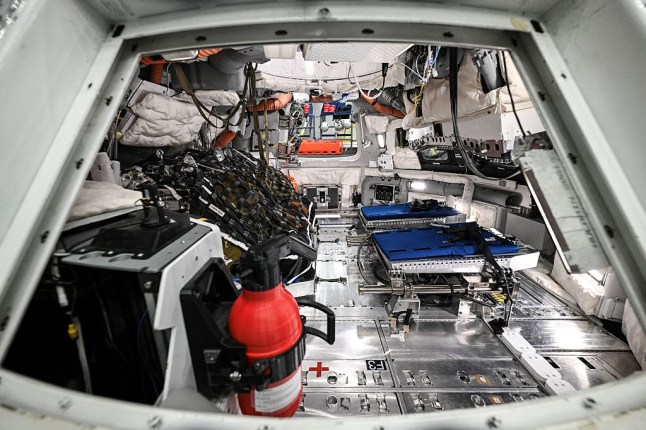
A spacecraft isn’t exactly a sexy setting (Picture: AFP via Getty Images)
Experiencing the wonders of the cosmos like few have ever done before, the last thing on the Artemis II team’s minds will be sex — and removing the potential for awkward, unexpected boners is surely no bad thing.
But even if they did want to give it a go and somehow managed to get their pocket rockets working, without gravity, Newton’s third law of motion (for every action, there is an equal and opposite reaction) would turn bumping and grinding into drifting and floating away.
Then there’s the lack of natural convection, causing sweat to be trapped against the skin in a hot, sticky ‘shell’ of liquid enveloping the body; uncomfortable and messy at the best of times, let alone during intimacy.
Still, with space travel gradually becoming more accessible for civilians, and scientists suggesting life on Mars may actually be a somewhat realistic prospect, mastering the art of procreation in orbit could potentially become critical to the survival of the human race.
And once they get the biology and physics of it down, the term ‘engage thrusters’ could take on a whole new meaning.
Do you have a story to share?
Get in touch by emailing MetroLifestyleTeam@Metro.co.uk.
Arrow
MORE: Donald Trump claims ‘Space Force’ is watching Iran in latest rambling post
Arrow
MORE: People think Nasa’s Artemis II has found a face on the dark side of the moon
Arrow
MORE: I had four inches of my penis amputated after a ‘death smell’ from my privates
Comments
Add Metro as a Preferred Source on Google
Add as preferred source
The Hook Up
Metro’s hottest newsletter, with juicy stories and tips for spicing things up in the bedroom. 18+