
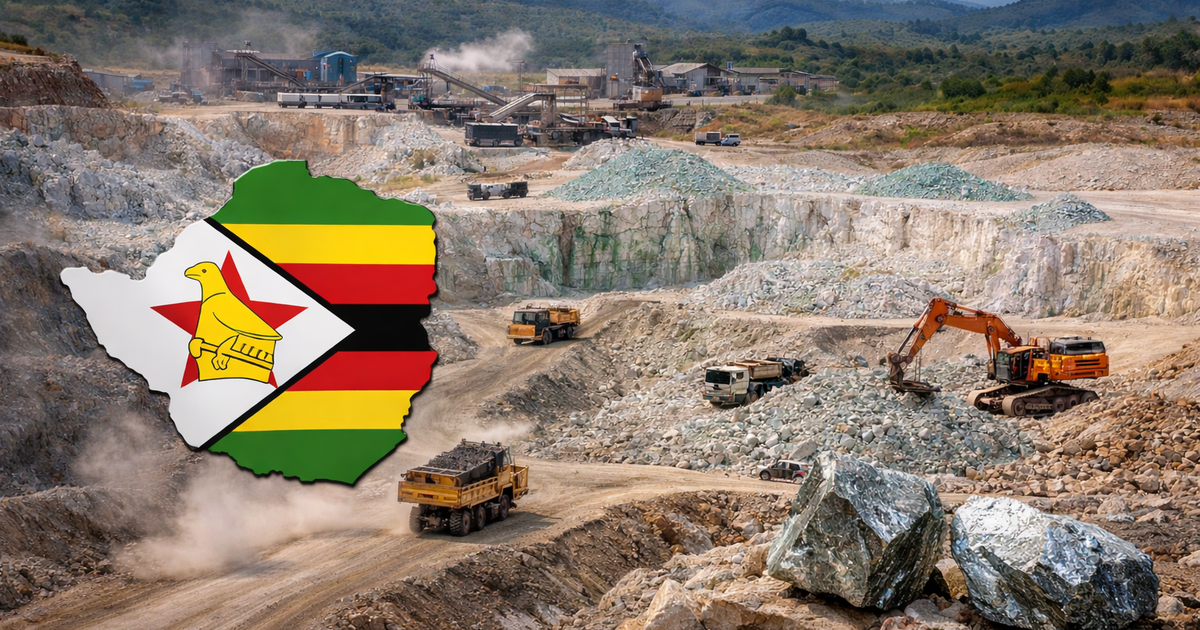
The mines ministry told producers that lithium concentrate exports will now be subject to mandatory quotas and that companies must commit to establishing domestic processing facilities before shipments can restart.
The policy comes after exports were suspended in February amid government allegations of malpractices and leakages in the sector.
In a letter to the Chamber of Mines seen by Reuters, the ministry outlined the requirements, including the publication of annual financial statements and compliance with labour, safety, and environmental standards.
Export quotas will be communicated individually to producers, while a 10% export tax will remain until a January 2027 ban on unprocessed concentrate shipments takes effect.
Companies are also expected to provide written timelines for building lithium sulphate plants, a key intermediate step toward producing battery-grade lithium hydroxide or carbonate.
Driving local beneficiation and economic gains

Zimbabwe’s policy reflects a broader continental trend of nationalisation and value addition in Africa’s mining sector.
By requiring lithium to be processed domestically, the government is ensuring that more revenue, skills development, and industrial capacity remain on the continent, rather than leaving raw materials for foreign buyers.
Chinese firms such as Zhejiang Huayou Cobalt, Sinomine, Chengxin Lithium, and Yahua dominate Zimbabwe’s lithium mining, highlighting both foreign investment and the importance of national policies to capture greater local benefits.
In 2025, Zimbabwe exported over 1.1 million metric tons of lithium-bearing spodumene concentrate to China, accounting for roughly 15% of its imports.
With the new rules, Africa stands to gain from higher domestic value addition, while global buyers like China may face tighter supplies highlighting the continent’s growing leverage over its critical mineral resources.